
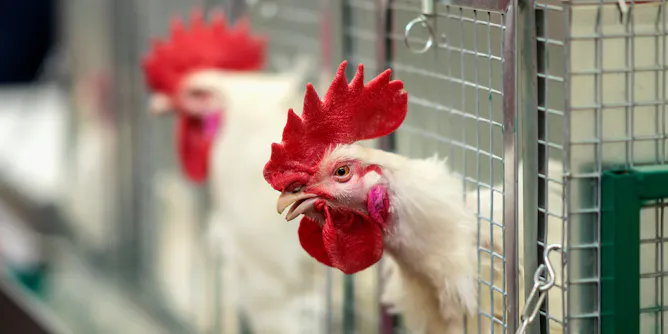
Our research shows that, millions of years from now, fossilised chicken bones will mark the era of human domination.
Articles on Geology
Displaying 281 - 300 of 454 articles
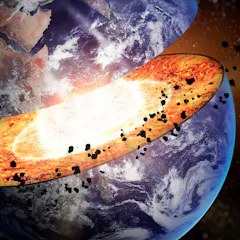
The Earth’s core is cooling down, and one day it will be completely solid – when that happens, Earth might look a lot like Mars.
Liquid minerals containing sulfur behave like a hot knife through butter – they’re so corrosive they can melt their way through solid rock.
Academics from different disciplines come Head to Head in this series to tackle topical debates.
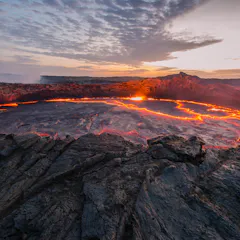
To be better prepared for future eruptions there’s a need to understand and monitor poorly known volcanoes, even in remote places.

Setting the scene for ancient Silk Road trading and now China’s Belt and Road initiative, the Tianshan has changed humanity. Geological evidence shows us how this incredible mountain range formed.

Australia’s slowly heading north to one day become part of Asia, but a study of the rocks tell us that’s not the first time there’s been a connection.

A meteorite hitting Earth at many kilometres per second puts ‘ground zero’ target rocks under immense pressure. A shock wave faster than the speed of sound can result – and new materials created.
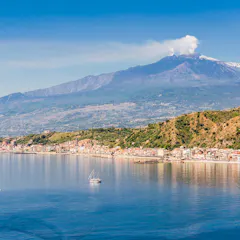
Gravity, not magma, is forcing Etna to move, increasing the chances of collapse.
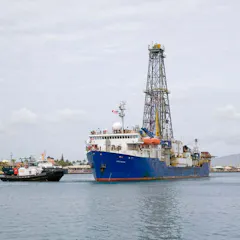
The ocean floor holds unique information about Earth’s history. Scientific ocean drilling, which started 50 years ago, has yielded insights into climate change, geohazards and the key conditions for life.
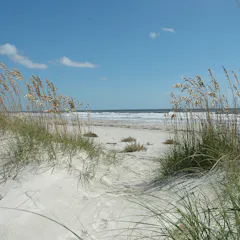
How do the narrow ribbons of sand that line the Atlantic and Gulf coasts withstand the force of hurricanes? The answer lies in their shape-shifting abilities.
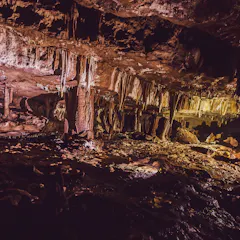
2018 brought the announcement of a new geologic age that covers the last 4,200 years. How do scientists divide up Earth’s timeline and what do these demarcations mean?
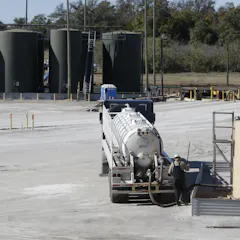
New research shows that injecting wastewater deep underground can cause earthquakes far from the injection site. It also raises questions about which rock layers are the safest injection targets.
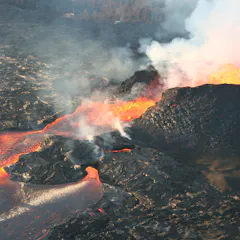
Melbourne lies at the eastern end of a volcanic province, but when’s it going to blow? Understanding the geology of Melbourne and comparing it to Hawaii is really helpful in calculating risk.
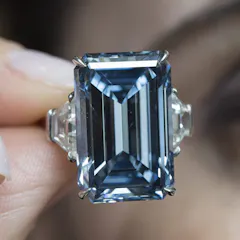
Some diamonds come from depths of more than 650km. Tiny imperfections in these gems give us clues about what’s happening in Earth’s hidden geological layers.
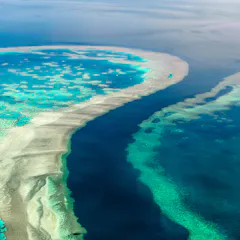
The $444 million awarded to the Great Barrier Reef Foundation has been criticised as a politically calculated move. But governments have been asking what the reef can do for them ever since colonial times.
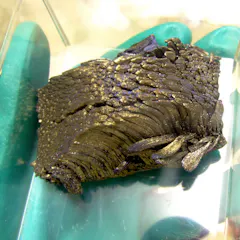
A geologist explains the basics about these elements, which are crucial for modern electronics.

Zirconia is a mineral with a crystal structure made from the elements zirconium and oxygen. It looks pretty like diamond, but is only worth a fraction of the value.
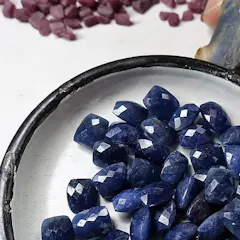
Sapphires and rubies are both crystals of the mineral corundum - but with different impurities to create blue and red hues. Australian sapphires are renowned for being inky blue.
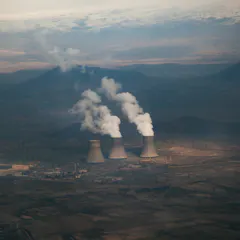
When it comes to the geological record, airbrushing out humans’ impact on the environment makes little sense.
Top contributors
-

Professor of Geochronology, Curtin University
-
Professor of Geology, Adelaide University
-
Professor of Palaeobiology, University of Leicester
-
ARC Future Fellow and Associate Professor in Igneous Petrology/Volcanology, The University of Queensland
-
Professor in Earth Sciences, Nanyang Technological University, Singapore, and Emeritus Professor of Mineral Physics, University of Cambridge
-
Professor of Earthquake Science, The University of Melbourne
-
Professor of Geophysics, University of Sydney
-
Associate Professor, Earth and Planetary Sciences, Curtin University
-
Professor of Planetary Geosciences, The Open University
-
Senior Curator of Geosciences, Museums Victoria Research Institute; Monash University
-
Professor in Earth & Climate Science, University of Southampton
-
Harold T. Stearns Professor of Earth Science, Wesleyan University
-
Adjunct professor, UNSW
-
Redmond Barry Distinguished Professor Emeritus, The University of Melbourne
-
Professor of Earth and Space Sciences, University of Washington