
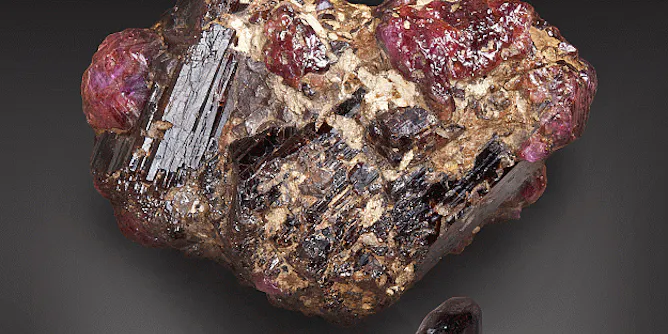
What makes a stone a gem? It boils down to a few key qualities: beauty and durability. But opal, the national gemstone of Australia, is an anomaly - it’s soft.
Articles on Geology
Displaying 301 - 320 of 453 articles
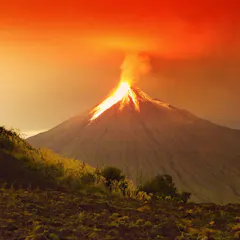
When magma rises towards the surface gas bubbles start to form. Whether or not they can escape as the magma is rising affects how explosive the eruption will be.

It’s been half a century since Jim Bowler discovered Mungo Lady, which changed the course of Australian history. But now he says the find has fallen off the national radar, leaving a legacy of shame.

The Big Bang created a cloud of dust and rocks that included a lot of rocks that were made of ice, like giant snowballs. That’s where some of the water came from.

Wine drinkers are taking notes from the land now too, but it may not be entirely useful.
Scientists have long thought most nitrogen in Earth’s ecosystems comes from the air, but new research shows it also is released as rocks weather. This could boost plant growth and help sequester carbon – but not fast enough to avert climate change, as some pundits have claimed.

The remote Pilbara region of Western Australian formed many billions of years ago when the Earth was much hotter and the crust softer than it is today.
Tides are the largest they have been for 250m years.
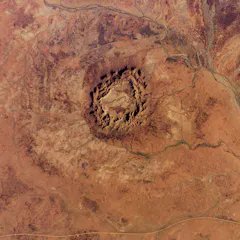
Large asteroids have hit Australia over many millions of years and the evidence is in the landscape, if you know where to look.
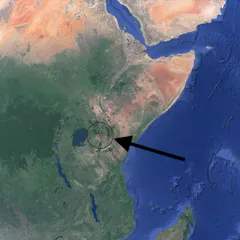
East Africa Rift is undergoing a process that will see the Horn of Africa split from the rest of the continent.

Through abstraction, the underlying essence of a mathematical concept can be extracted.
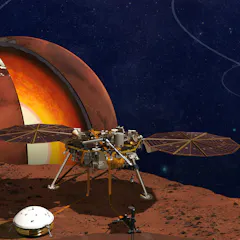
The InSight Lander mission to Mars is preparing for launch in May 2018. But there are seven (or eight) other planets to explore: why have we such a hang up on Mars?
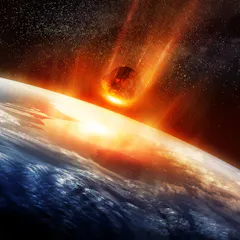
Research suggests a new threat to life on Earth from the meteorite’s crash: Via seismic waves, the impact triggered massive undersea eruptions, as big as any ever seen in our planet’s history.
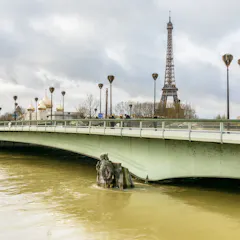
It was the Seine’s rise and fall, in response to heavy rain, that inspired our current understanding of river systems.
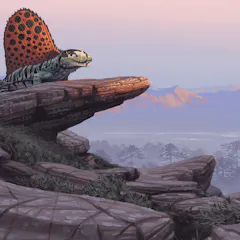
A drying climate caused a mass extinction among plants, but paved the way for the ancestors of modern reptiles, mammals, and birds.
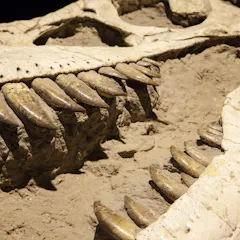
Scientists believe since 2010 we have entered the sixth period of mass extinction. CO2 emissions will change the lives of plants and animals in the next three to four decades.
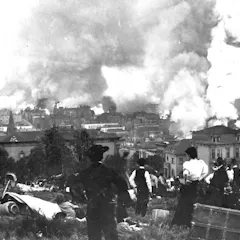
According to current forecasts, California has a 93 percent chance of an earthquake with magnitude 7 or greater occurring by 2045. Early warning systems, now in development, could limit casualties and damage.
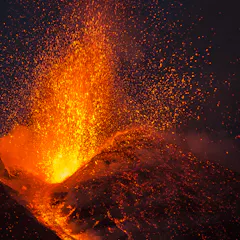
A new study has found a way to predict eruptions at Mount Etna within two weeks.

The world is made of tiny building blocks called ‘elements’. Scientists have worked out how fast some elements change into other elements. That gives us a very big clue about how old the Earth is.

A watershed scientist explains why post-wildfire landscapes are so susceptible to landslides – and why those risks are poised to rise.
Top contributors
-

Professor of Geochronology, Curtin University
-
Professor of Geology, Adelaide University
-
Professor of Palaeobiology, University of Leicester
-
ARC Future Fellow and Associate Professor in Igneous Petrology/Volcanology, The University of Queensland
-
Professor in Earth Sciences, Nanyang Technological University, Singapore, and Emeritus Professor of Mineral Physics, University of Cambridge
-
Professor of Earthquake Science, The University of Melbourne
-
Professor of Geophysics, University of Sydney
-
Associate Professor, Earth and Planetary Sciences, Curtin University
-
Professor of Planetary Geosciences, The Open University
-
Senior Curator of Geosciences, Museums Victoria Research Institute; Monash University
-
Professor in Earth & Climate Science, University of Southampton
-
Harold T. Stearns Professor of Earth Science, Wesleyan University
-
Adjunct professor, UNSW
-
Redmond Barry Distinguished Professor Emeritus, The University of Melbourne
-
Professor of Earth and Space Sciences, University of Washington