
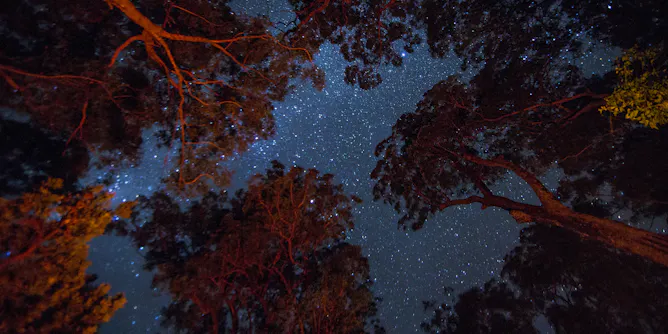
Aboriginal communities have observed the night sky for millennia. But they face a growing threat – light pollution.
Articles on First Nations
Displaying 41 - 60 of 434 articles

Lived experience leadership isn’t about earning a seat at someone else’s table. It’s about questioning who built the table in the first place.
The High Court has long said it can’t hear cases about Indigenous sovereignty, but new research shows that may not be the case.
Every state and territory must have these programs, but as was recently revealed in New South Wales, they’re often ineffective. There are better ways.

This exhibition is not driven by aesthetics alone. It is a coming together of rich individual identities voicing their history, knowledge and lived experiences.

The Nuclear Waste Management Organization has proposed building a nuclear waste repository at a site in northern Ontario. But nearby First Nations say they weren’t consulted.

When fires and floods hit, Aboriginal communities are often left to recover without much, if any, government support.
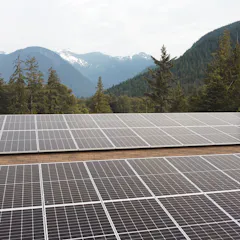
Indigenous-owned renewable energy projects are growing quickly in Canada. New research suggests they could enable widespread acceptance of energy transitions.

Australia has seen ambitious First Nations education policies before. Ambition alone does not guarantee change.

Joint research conducted by INRS and the Abitibiwinni First Nation shows how traces of DNA in the snow make it possible to track wildlife without disturbing it.
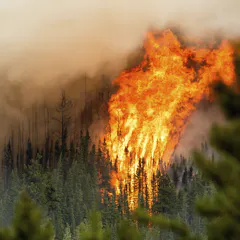
Wildfires disproportionately impact Indigenous communities. Over the last four decades, 42 per cent of wildfire evacuations across Canada have been of Indigenous communities.
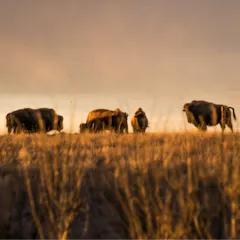
The official interpretation of Treaty 4 is historically contested. And if that interpretation is wrong, then Canada’s claim to “Crown land” and settler ownership rests on a deeply unstable foundation.
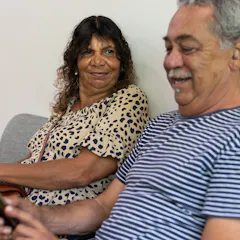
First Nations people were more likely to feel confident about their medication – and to take it – when they had advice tailored to them. And their health improved.
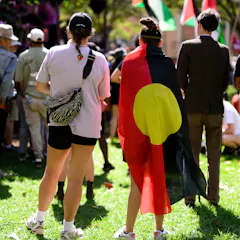
Latest data show First Nations women are much more likely to be killed than non-Indigenous women. It demands action.
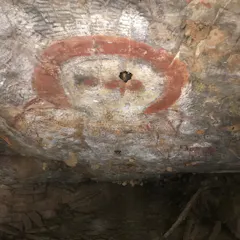
In oral cultures, knowledge must be collectively maintained. AI can help people engage in dialogue with their heritage.
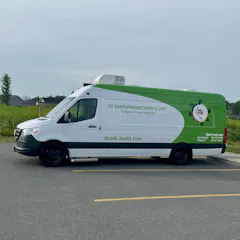
In a country with the capacity to ensure safe water for all, persistent water insecurity in Indigenous communities represents a preventable policy failure — one that’s reflected in health issues.

Australian First Nations and culturally diverse authors talk about the balancing acts expected of them – and the pressure not to be ‘scarily diverse’.
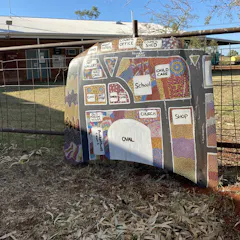
New national research shows unmet housing need among First Nations households is double the rate of other Australians. But there are solutions.
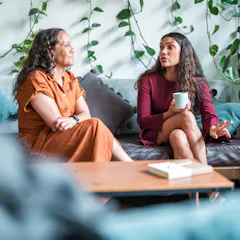
New research examines the barriers faced by Aboriginal and Torres Strait Islander women at work – and what they’re doing to challenge them.
The federal government is spending more on contracts for Indigenous business, while finally tackling ‘Black cladding’ fraud. But those reforms don’t go far enough.
Top contributors
-

Professorial Fellow, University of Canberra
-
Professor, Australian and Aboriginal History, Faculty of Arts, Design and Architecture, Convenor: Indigenous Land & Justice Research Group, UNSW
-
Professor of Law, University of Technology Sydney
-
Director of Monash Indigenous Studies Centre, Chief Investigator for the Australian Research Council Centre of Excellence for the Elimination of Violence against Women (CEVAW), School of Philosophical, Historical & International Studies, School of Social Sciences (SOSS), Monash University
-
Executive Co-Director, UNU Hub on Empowering Communities to Adapt to Environmental Change, United Nations University; University of Calgary
-
Associate professor, Faculty of Law, L’Université d’Ottawa/University of Ottawa
-
Adjunct Professor, Stout Research Centre, Victoria University of Wellington and Auckland University of Technology, Professor of Political Science, Charles Sturt University
-
Associate Dean of Business (Indigenous Leadership & Engagement); Director, UTS Centre for Indigenous People and Work, University of Technology Sydney
-
Senior Lecturer, School of Geography, Earth and Atmospheric Sciences, The University of Melbourne
-
York Research Chair in Environmental Law & Justice in the Green Economy, York University, Canada
-
Research Fellow in Disaster Resilience, Monash University
-
Senior research fellow, Curtin University
-
Adjunct Senior Research Fellow, Department of Archaeology and History, La Trobe University
-
Associate Professor of Public Policy, Crawford School of Public Policy, Australian National University
-
Assistant Professor, Indigenous Methodologies, Chanie Wenjack School of Indigenous Studies, Trent University