

The behaviour of TC Energy, the company formerly known as TransCanada, in Wet'suwet'en resulted in a nationwide crisis in Canada. It should not be repeated in Mexico.
Articles on First Nations
Displaying 381 - 400 of 434 articles
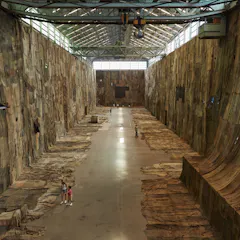
The 22nd Biennale of Sydney is testament to the capacity of art and exhibitions to move beyond reflection to lead dialogue, especially at times of crisis and cancellations.
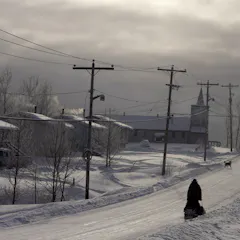
Ontario’s approach to assessing the environmental impacts of mining in the Ring of Fire region couldn’t address concerns about the cumulative consequences of development.

Impact benefit agreements between energy companies and First Nations are typically confidential. But documents suggest First Nations may be trading away their Aboriginal rights.
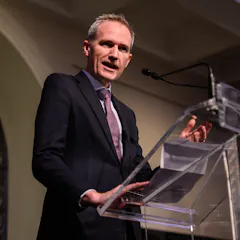
The ability to remove an Indigenous person from their traditional country shows how Australia is still asserting colonial power over the identity of its First Peoples.

Bringing together innovative and traditional works, the Linear exhibition gives us a new map for sharing land and knowledge.

Project Reconciliation is a direct response to one of the Truth and Reconciliation Commission’s calls that Indigenous communities ‘gain long-term sustainable benefits from economic development projects.’
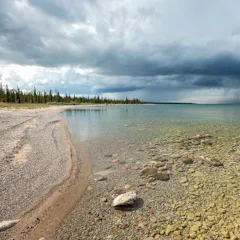
A holistic approach to conservation finds people have a place in the natural world and a responsibility to maintain it.
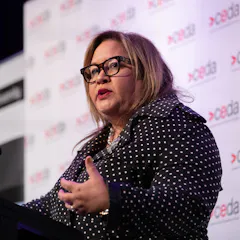
Megan Davis on a First Nations Voice in the Constitution
The Conversation, CC BY31.4 MB (download)
Megan Davis says the idea of including an Indigenous Voice in the Constitution is being rejected on an understanding that "simply isn't true" but believes Australia has the "capacity to correct this".
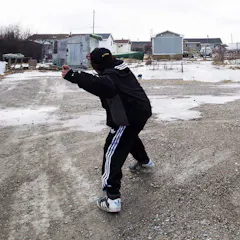
The MMIWG report didn’t address the poverty that has had such a devastating effect on First Nations. Encouraging active participation by the Indigenous in the Canadian economy is a win-win for everyone.
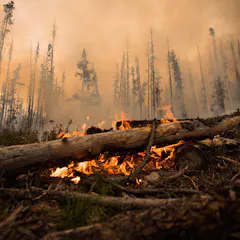
Laws and policies that marginalize Indigenous people and communities make these same people vulnerable to disaster.
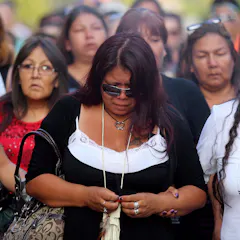
The tireless grassroots efforts of Indigenous activists unearth colonialism’s hidden secrets and the stories of the land and people to bring the murdered and missing women and girls home.
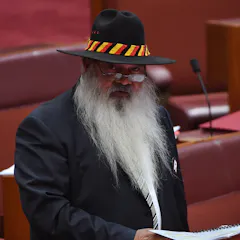
Few First Nations candidates have succeeded in getting elected to parliament, but it is clear that when they do, they can make a substantial difference.
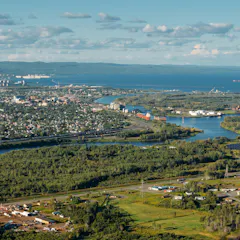
Thunder Bay has received national press for its historically inequitable relationship between Indigenous and non-Indigenous populations. Local journalism could help the city face those challenges.
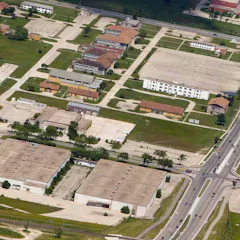
Kapyong Barracks in Winnipeg is set to be transferred to Treaty One First Nations to become an urban reserve. A 64-hectare parcel in an affluent area, the reserve will be a test of reconciliation.
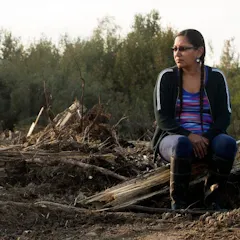
A co-founder of Idle No More was put on trial for ‘trespassing’ on her family’s ancestral lands. Canada has much to learn about institutionalizing respectful relationships with Indigenous peoples.
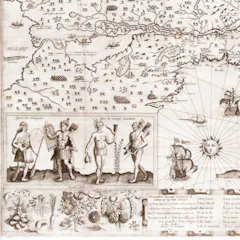
Antoinette de Saint-Étienne was a Canadian First Nations woman of the 17th century whose beautiful singing voice attracted the attention of a queen.
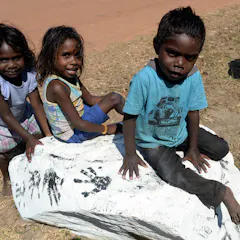
Instead of paying lip service to promoting Indigenous Australians’ rights as First Nations, the next federal government should be guided by the Uluru Statement from the Heart to make real progress.

Indigenous women had far more personal freedom than European women did before Europeans arrived.
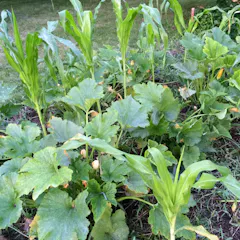
Indigenous food and medicine gardens, and traditional manikin (wild rice) harvesting offer hope – for the future health of humanity and the earth that sustains us.
Top contributors
-

Professorial Fellow, University of Canberra
-
Professor, Australian and Aboriginal History, Faculty of Arts, Design and Architecture, Convenor: Indigenous Land & Justice Research Group, UNSW
-
Professor of Law, University of Technology Sydney
-
Director of Monash Indigenous Studies Centre, Chief Investigator for the Australian Research Council Centre of Excellence for the Elimination of Violence against Women (CEVAW), School of Philosophical, Historical & International Studies, School of Social Sciences (SOSS), Monash University
-
Executive Co-Director, UNU Hub on Empowering Communities to Adapt to Environmental Change, United Nations University; University of Calgary
-
Associate professor, Faculty of Law, L’Université d’Ottawa/University of Ottawa
-
Adjunct Professor, Stout Research Centre, Victoria University of Wellington and Auckland University of Technology, Professor of Political Science, Charles Sturt University
-
Associate Dean of Business (Indigenous Leadership & Engagement); Director, UTS Centre for Indigenous People and Work, University of Technology Sydney
-
Senior Lecturer, School of Geography, Earth and Atmospheric Sciences, The University of Melbourne
-
York Research Chair in Environmental Law & Justice in the Green Economy, York University, Canada
-
Research Fellow in Disaster Resilience, Monash University
-
Senior research fellow, Curtin University
-
Adjunct Senior Research Fellow, Department of Archaeology and History, La Trobe University
-
Associate Professor of Public Policy, Crawford School of Public Policy, Australian National University
-
Assistant Professor, Indigenous Methodologies, Chanie Wenjack School of Indigenous Studies, Trent University