
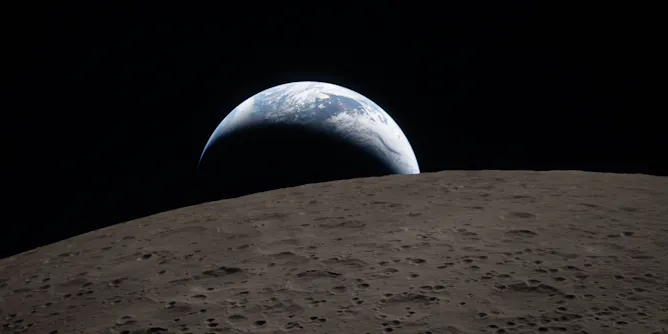
From geology training on Mushuau Innu First Nation territory in Labrador, to a new NASA Science Evaluation Room, Gordon Osinski takes us behind the scenes of Artemis II.
Articles on Earth
Displaying 21 - 40 of 242 articles
The wave of space launches is releasing chemicals that could have profound effects.
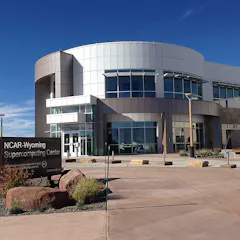
Behind the long-term climate projections that affect our lives sits one of the most remarkable scientific achievements of the modern era.
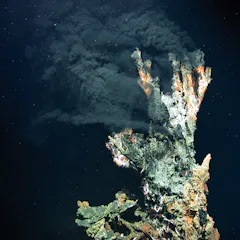
Researchers have discovered that chemical reactions in underwater hydrothermal vents could have produced the necessary ingredients for life on Earth.
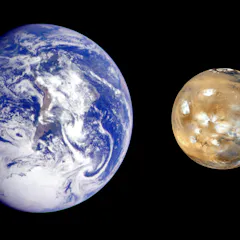
Mars may have been hospitable to life early in its history.
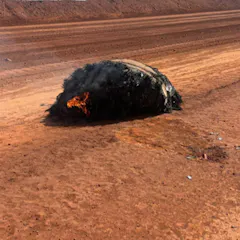
A piece of a suspected rocket found on fire in Western Australia highlights the growing problem of space junk – and how humanity is dealing with it.

The Earth’s own heat can be brought up from underground and used as a source of energy that emits almost no greenhouse gases and can operate 24/7 almost anywhere on the planet.

Would you guess that the Earth is spinning at 1,000 mph around its axis and at the same time hurtling through space on its orbit around the Sun at 67,000 mph? Here’s why you don’t feel all that motion.
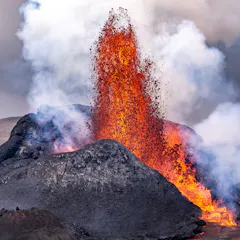
New research suggests that a mystery platinum signature found in Greenland’s ice may have come from a volcanic eruption in Iceland.
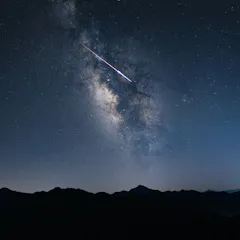
The findings suggest Earth’s geological story was partly written in the stars – specifically, in the spiral arms of our home galaxy.
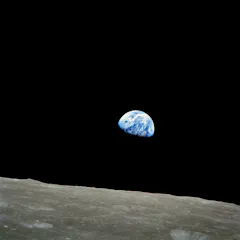
The Moon influences ocean tides – and ocean tides, in some ways, influence the Moon back.
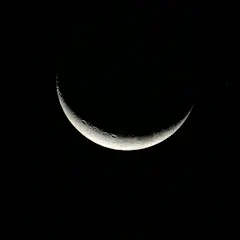
The Moon will indeed be black, kind of. But that’s not why you should look up this weekend.

An astrophysicist who spent time doing research at the South Pole gets to the bottom of how things feel at the ends of the Earth.

The answer confirms scientists’ suspicion that when our planet’s climate crosses certain ‘tipping points’, truly catastrophic ecological collapse can follow.
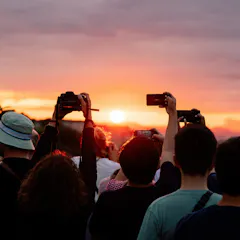
At certain times of year, sunsets seem to hit differently. It’s not just your imagination – it’s science.
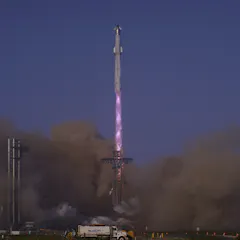
The Starship program has already experienced more failures than many other space missions in the past. Will it ever see success – and if so when?
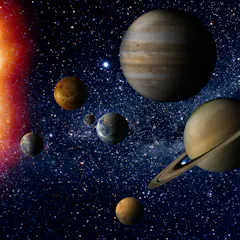
The biggest planets hogged a lot of the raw materials and were fully formed first.
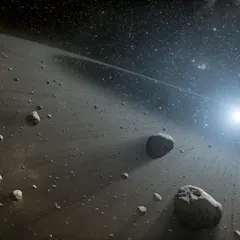
The Earth started as a mixture of gas and dust around the Sun and grew as it collided with asteroids and dust particles.
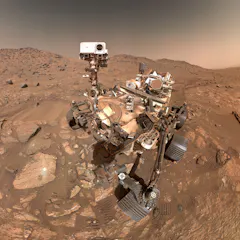
Scientists will have to check whether the samples contain living microbes before they can be safely studied.

Until now, it’s been very hard for scientists to establish a detailed timeline of the early evolution of bacteria.
Top contributors
-

Postdoctoral research associate, University of Oxford
-
Professor (Astrophysics), University of Southern Queensland
-
Senior Lecturer in Physics, Nottingham Trent University
-
Teaching Professor of Astronomy & Astrophysics, Penn State
-
Professor of History, University of Lancashire
-
Associate Dean of Innovation and Engagement, Swinburne University of Technology
-
Associate Professor of Earth and Planetary Sciences, University of Tennessee
-
Associate Professor in Archaeology and Space Studies, Flinders University
-
Cosmochimiste, chargée de recherche CNRS au Centre de Recherches Pétrographiques et Géochimiques (CRPG) de Nancy, CNRS, Université de Lorraine
-
PhD Candidate, University of Southern Queensland
-
Associate Professor, School of Physics, The University of Melbourne
-
Professor of Geophysics, University of Rochester
-
Professor of Astronomy, Vanderbilt University
-
Imperial College Research Fellow, Imperial College London
-
Postdoctoral Research Associate, Department of Geoscience, University of Wisconsin-Madison