

How do we distinguish between valuable information from legitimate health experts, and pseudoscientific nonsense from unscrupulous wellness influencers?
Articles on Disinformation
Displaying 121 - 140 of 348 articles
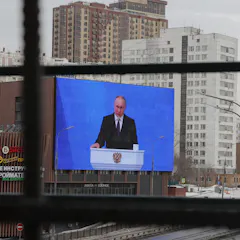
Russian disinformation expert Ilya Yablokov tells The Conversation Weekly podcast about the president’s shifting relationship with conspiracy theories.

Third-party fact checking appears to be in decline around the world - and Australia is not immune.

The effects of AI’s growth on global security could be difficult to predict.
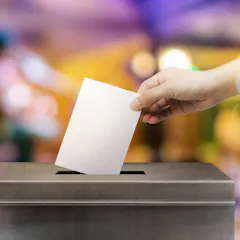
Low tech or hi-tech, the next year will determine how much action nations take on election interference.
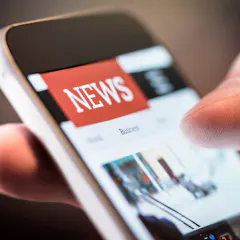
It’s increasingly hard to tell which content online is fake. As malicious actors use generative AI to fuel disinformation, governments must regulate now before it’s too late.

People who dive into misinformation are driven to satisfy an emotional need, according to our new research.
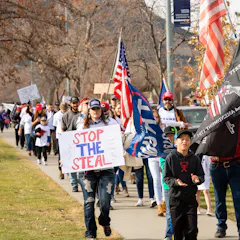
Scientists estimate that for every 100,000 people targeted with specific political ads, several thousand can be persuaded.
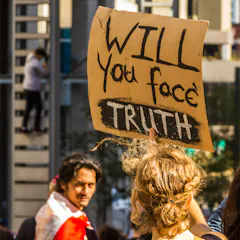
When we see false information circulating, we might move to debunk it. But prebunking lies and explaining manipulation techniques can work better.
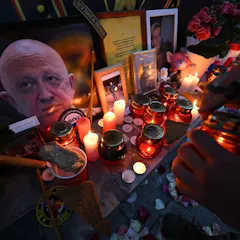
Will the Wagner Group under new leadership uphold the ruthless modus operandi that propelled it to the spotlight in Africa?

Disinformation experts, Lilik Mardjianto and Nuurrianti Jalli, tell The Conversation Weekly podcast about the deepfakes circulating ahead of the Indonesian election.
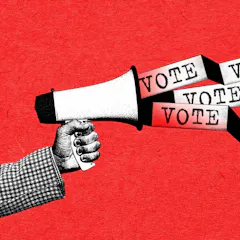
With an unprecedented number of votes happening around the world, the information environment will be chaotic, to say the least.
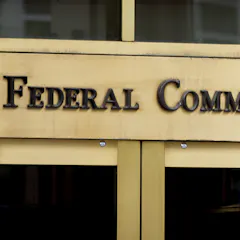
Deepfake technology is widely available, and a pivotal election year lies ahead. The FCC banned AI robocalls, but AI-enhanced disinformation campaigns remain a threat.

Viral bots are ‘tricking’ social media algorithms to get more coverage for disinformation.

Youth in a study went from being passive deepfake bystanders to developing a sense of responsibility and readiness to help prevent deepfakes’ spread.
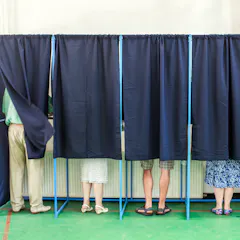
Most studies suggests that fake news is more likely to enhance existing beliefs and views rather than radically change voting intentions of those who are undecided.

Deepfake technology is widely available, and a pivotal election year lies ahead. The fake Biden robocall is likely to be just the latest of a series of AI-enhanced disinformation campaigns.
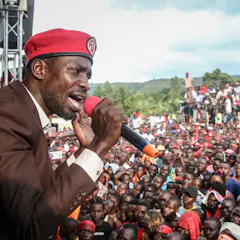
Bobi Wine’s run at the presidency in 2021 had appeared to present an unprecedented threat to Yoweri Museveni’s longstanding rule.

COVID was a ‘gendered pandemic’, with women carrying very different burdens to men. A three-year New Zealand research project aimed to overcome the urge to forget, and provide lessons for the future.

Victorian anti-vaccine literature shows that the fears and concerns remain largely the same today.
Top contributors
-

Professor and Chair, Department of Journalism, Stellenbosch University
-
Associate Research Professor of Social Psychology, Louisiana State University
-
Chair of Cognitive Psychology, University of Bristol
-
Lecturer in Journalism and Global Communication, University of Sheffield; Independent Social Research Foundation
-
Professor of Informatics and Computer Science, Indiana University
-
Professor of Human Centered Design & Engineering, University of Washington
-
Professor of AI and Behavioral Data Science, University of Technology Sydney
-
Associate Professor in Digital Media, Queensland University of Technology
-
Emeritus Professor of Education, Stanford University
-
Professor of Business Law and Ethics, Indiana University
-
Director, News & Media Research Centre, University of Canberra
-
Professor of Information Systems, Michigan State University
-
Professor of Social Psychology in Society, University of Cambridge
-
Visiting Fellow, ISEAS-Yusof Ishak Institute; Oklahoma State University
-
Professor of Political Communication; Director CAJ, The University of Melbourne