
Knowing how to talk about misinformation can help preserve relationships with friends and loved ones that can be frayed during high-stakes election campaigns.
Articles on Disinformation
Displaying 61 - 80 of 348 articles
Trump Media and Rumble joining X in legal fight against the Brazilian Supreme Court marks a new era of deregulation pushes.
As climate change accelerates and trust in authority declines, natural disasters trigger waves of easy – but false – explanations.

Behavioural science explains why and how misinformation works. Understanding some of that science can empower all of us to stop its spread.

Science doesn’t occur in a vacuum – politics, harassment and intimidation can hamstring progress.
Google’s search engine fields 6.3 million queries every second. But the results it dishes up are far from perfect.
Too many people still believe AI safety is a future problem that can be fixed with simple laws – but the truth is very different.
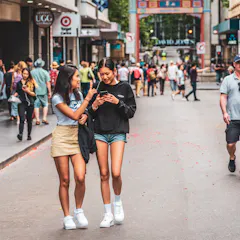
Migrants, especially those who speak English as a second language, are disproportionately targeted by mis- and disinformation. Research shows what might help.

The report contains 67 recommendations – none of which address misinformation and disinformation.
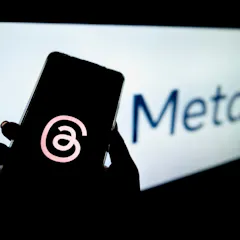
Between allowing more “free speech” and removing official fact-checking, Meta’s platforms risk becoming more hostile to public health organisations.
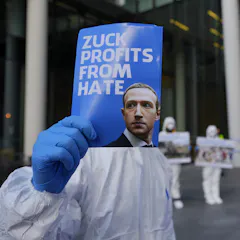
In the name of “freedom of expression”, Mark Zuckerberg has announced measures that will turn his digital platforms into even more fertile ground for contaminating public debate with disinformation and hate content

Numerous studies have shown that fact checking has helped reduce the spread of misinformation and disinformation online.
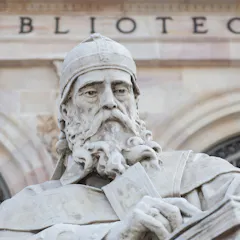
Isidore of Seville preserved knowledge in the ‘Dark Ages’, earning him the title of patron saint of the internet. His work laid the groundwork for today’s world of shared information.

Unmet psychological needs can drive people toward conspiracy belief, but this can start a self-reinforcing cycle which further erodes the need and creates more mistrust and disconnection.
There is still public hunger for reliable and trustworthy information. This should give news media outlets hope – and inspire them to invest in new ways to reach audiences.
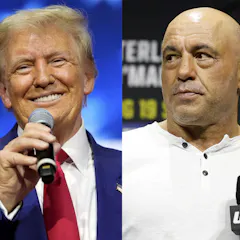
Improv theater is known for improvisation, audience participation and riffing on memes and stories circulating on social and traditional media – all hallmarks of right-wing media.

How would you tell if information in a post is true or false? Our study tested the ability of 2,115 adult Australians to verify information online.
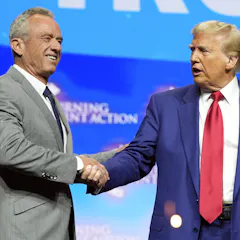
Given his controversial views, Robert F. Kennedy Jr.’s nomination as Health Secretary could create challenges for credible news reporting on health topics. However, media can learn from the pandemic.
As well as becoming an ‘everything app’ and a place where lies continue to flourish, X is likely to see an increase what’s known as ‘cyberbalkanisation’.
Despite what some critics argue, the bill does not give the government power to censor or prosecute people for what they say. But it does have some potential problems.
Top contributors
-

Professor and Chair, Department of Journalism, Stellenbosch University
-
Associate Research Professor of Social Psychology, Louisiana State University
-
Chair of Cognitive Psychology, University of Bristol
-
Lecturer in Journalism and Global Communication, University of Sheffield; Independent Social Research Foundation
-
Professor of Informatics and Computer Science, Indiana University
-
Professor of Human Centered Design & Engineering, University of Washington
-
Professor of AI and Behavioral Data Science, University of Technology Sydney
-
Associate Professor in Digital Media, Queensland University of Technology
-
Emeritus Professor of Education, Stanford University
-
Professor of Business Law and Ethics, Indiana University
-
Director, News & Media Research Centre, University of Canberra
-
Professor of Information Systems, Michigan State University
-
Professor of Social Psychology in Society, University of Cambridge
-
Visiting Fellow, ISEAS-Yusof Ishak Institute; Oklahoma State University
-
Professor of Political Communication; Director CAJ, The University of Melbourne