

Disinformation campaigns often use a set of rhetorical devices that you can learn to spot, like conspiracy narratives, good versus evil framing, and revealed secrets.
Articles on Disinformation
Displaying 141 - 160 of 348 articles

Social media platforms are abandoning news – which is bad news for traditional media organisations that have come to rely on them for consumers.

Deceptive content on social media is being monetised by digital platforms, advertisers, and influencers

When people are pervasively disinformed, the very foundations of democracy can end up on shaky ground.

When you view photos and videos in the flurry of election-related social media posts, first ask yourself: Do I really know what I’m looking at?

Even people with years of relevant training can’t always tell whether social content is evidence-based and trustworthy. We need a better approach for communicating research.
We found the number of “big lies” – also known as fake news – didn’t increase in 2023 compared to 2020. But we did spot more “small lies” this time. Here’s what to look out for in coming elections.
Whatever approach you take to managing your feeds, remain cautious and sceptical.

Although there was a lot of misinformation during the Voice to Parliament campaign, this is not the first time this has been used as a campaign tactic. Would a misinformation bill solve this

A human rights scholar explains how social media users can take charge of what content comes into their feed and reduce the risk of receiving misinformation.
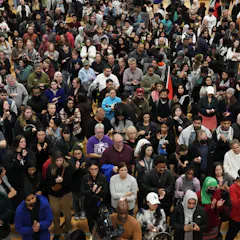
Deliberately circulated disinformation — big lies — are used to foment Islamophobia and anti-Palestinian racism, with deadly consequences.

The film Barbie is seen as an icon of American values , but is still proving popular in Russia.
ChatGPT and its ilk give propagandists and intelligence agents a powerful new tool for interfering in politics. The clock is ticking on learning to spot this disinformation before the 2024 election.
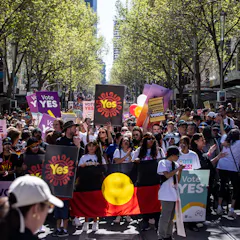
Yes23 is blanketing the nation in hundreds of ads, while Fair Australia is sticking with a singular message and targeting specific states that will ensure a ‘no’ victory.

When sincerity counts as honesty, accuracy no longer matters.
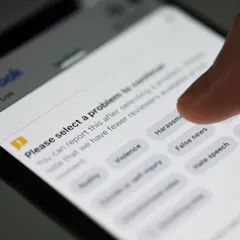
The bill, yet to be debated in parliament, is ripe for amendment.
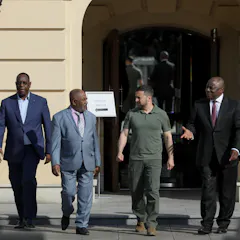
Research shows Russian disinformation is often repeated in the media in the Global South, influencing public opinion.
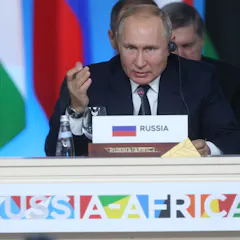
The Russia-Africa summit has obvious benefits for Moscow: it conveys a perception of normalcy and the tacit approval of African elites.

AI can manipulate a real event or invent one from thin air to create a ‘situation deepfake.’ These deepfakes threaten to influence upcoming elections, but you can still protect your vote.

How can fake news be managed without government overreach? Under the draft bill, platforms continue to be responsible for the content on their services – not governments.
Top contributors
-

Professor and Chair, Department of Journalism, Stellenbosch University
-
Associate Research Professor of Social Psychology, Louisiana State University
-
Chair of Cognitive Psychology, University of Bristol
-
Lecturer in Journalism and Global Communication, University of Sheffield; Independent Social Research Foundation
-
Professor of Informatics and Computer Science, Indiana University
-
Professor of Human Centered Design & Engineering, University of Washington
-
Professor of AI and Behavioral Data Science, University of Technology Sydney
-
Associate Professor in Digital Media, Queensland University of Technology
-
Emeritus Professor of Education, Stanford University
-
Professor of Business Law and Ethics, Indiana University
-
Director, News & Media Research Centre, University of Canberra
-
Professor of Information Systems, Michigan State University
-
Professor of Social Psychology in Society, University of Cambridge
-
Visiting Fellow, ISEAS-Yusof Ishak Institute; Oklahoma State University
-
Professor of Political Communication; Director CAJ, The University of Melbourne