

Asking a series of simple questions can help create space for dialogue and pull someone out of a misinformation bubble.
Articles on Disinformation
Displaying 101 - 120 of 348 articles

Users must learn to understand and navigate digital environments critically.

Providing a correction can affect how the audience feels about the journalists trying to set the record straight.

Misogyny has made it difficult for all women to gain entry into politics, let alone Black women, who face the additional obstacle of abject racism. Will Kamala Harris finally break those barriers?
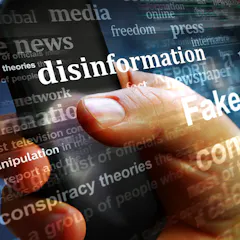
Government action on foreign disinformation has been limited by the scale, complexity and constant evolution of modern disinformation. Here’s how to do better.

When political discourse is devoid of facts and high on demonization, it’s no surprise that political violence is the result. There is a way out, but it’s slow and will take effort.

Political ad transparency – who’s paying for ads and whether candidates stand behind them – is well-regulated for TV and radio. Online, not so much.
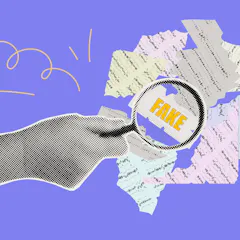
You’ve heard of debunking, but what about prebunking? Getting ahead of misinformation can pay off, but it’s not a silver bullet.
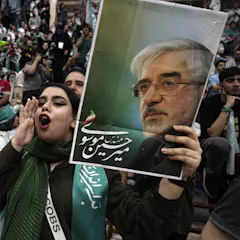
On June 28, Iranians will pick a new president. Relations with the West have been a key campaign issue.

Not for the first time the US government has harmed public health in developing countries with covert ops.

We’ve tried to take a clear-eyed view of the pros and cons to help governments decide how to move forward.

Technology could come to the rescue, protecting the integrity of elections.
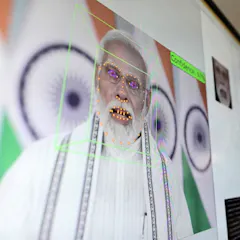
Campaigns used deepfakes to connect with voters rather than deception, and AI also helped them break through language barriers.

Deepfakes and disinformation are on the rise as the world faces the ‘biggest election year in history’. But AI doesn’t have to spell the end of democracy.

Social media platforms need to open up data to Africans and researchers in the global south.

Is most of the content on the internet fake? Here’s what the dead internet theory really means – and why we should be warier of how we’re manipulated for profit and political gain.
Conspiracy theories abound. What should you believe − and how can you tell?
Understanding how to spot a bot is essential, especially for anyone voting in an election.
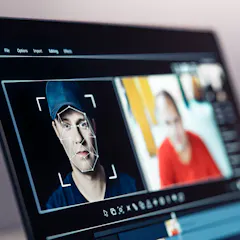
As technology has advanced, AI-generated deepfakes have become more convincing.
Using disinformation to sway elections is nothing new. Powerful new AI tools, however, threaten to give the deceptions unprecedented reach.
Top contributors
-

Professor and Chair, Department of Journalism, Stellenbosch University
-
Associate Research Professor of Social Psychology, Louisiana State University
-
Chair of Cognitive Psychology, University of Bristol
-
Lecturer in Journalism and Global Communication, University of Sheffield; Independent Social Research Foundation
-
Professor of Informatics and Computer Science, Indiana University
-
Professor of Human Centered Design & Engineering, University of Washington
-
Professor of AI and Behavioral Data Science, University of Technology Sydney
-
Associate Professor in Digital Media, Queensland University of Technology
-
Emeritus Professor of Education, Stanford University
-
Professor of Business Law and Ethics, Indiana University
-
Director, News & Media Research Centre, University of Canberra
-
Professor of Information Systems, Michigan State University
-
Professor of Social Psychology in Society, University of Cambridge
-
Visiting Fellow, ISEAS-Yusof Ishak Institute; Oklahoma State University
-
Professor of Political Communication; Director CAJ, The University of Melbourne