
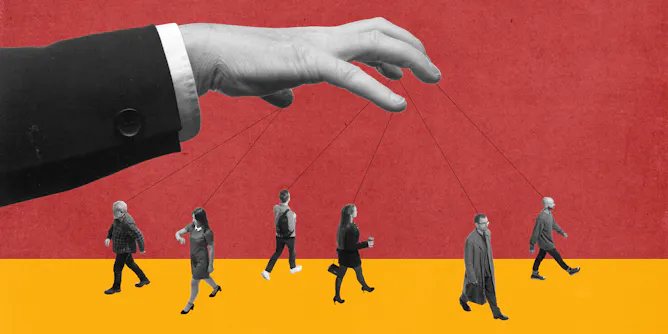
When a foreign power floods your media with false health alerts designed to create panic, isn’t that as threatening as a military blockade?
Articles on Disinformation
Displaying 41 - 60 of 348 articles

Mass psychogenic illness has happened throughout history, but social media makes it more likely to spread.

The latest Digital News Report shows Australians are still avoiding traditional media, but are highly sceptical of social media players.

The Trump administration canceled hundreds of grants it said amounted to federal censorship, implying that those conducting misinformation research are enemies of the First Amendment. This isn’t true.

Fake news is also old news – 350 years ago, it brought down the Dutch Republic in a frenzy of political violence distinctly similar to more contemporary events.
Autocrats today are polished, appear mainstream and use the media, not overt repression or violence, to gain public support and consolidate power. They govern through a ‘spin dictatorship.’

A new book draws on over 600 cases of users tricked by fake listings and fake reviews, scammed out of money or placed in physical danger.
Disinformation campaigns are using AI to tell false but compelling stories. AI tools are also helping counter the campaigns by detecting incongruities in usernames, cultural references and timelines.

On the internet, nobody knows you’re a chatbot.

We’re facing a crisis in public trust – in institutions and the information they feed us.

New research reveals a growing number of Australians are encountering political misinformation and disinformation in the election campaign and are worried about it.

Even if we feel we have some understanding of science, few of us have the time or the capacity to verify every claim made by every so called ‘expert’.
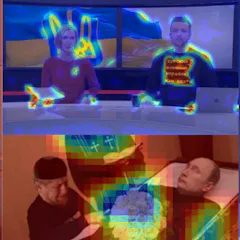
Visual content, including manipulated images, is a staple of propaganda and political messaging. AI analysis shows that a surge of these memes can precede the outbreak of wide-scale violence.
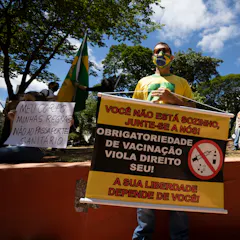
Brazilian disinformation experts Ergon Cugler and Igor Sacramento talk to The Conversation Weekly podcast.
Two experts describe how climate misinformation has infiltrated the election campaign – and how Australians can protect themselves as they head to the polls.

Thousands of Chinese Australians get their news on WeChat or RedNote, but there’s evidence disinformation is circulating unchecked.

Red-teaming is a simulation technique that is used by cybersecurity experts to anticipate and remedy flaws and weaknesses in digital systems.
As the tide of AI ‘slop’ rises, it’s more important than ever to hone your reality-checking skills.

In the Canada-U.S. trade war, Canadian officials are facing an American president who excels at creating false narratives. Canada must win the messaging war.

Fact-checking is seen as an effective strategy to combat misinformation and disinformation.
Top contributors
-

Professor and Chair, Department of Journalism, Stellenbosch University
-
Associate Research Professor of Social Psychology, Louisiana State University
-
Chair of Cognitive Psychology, University of Bristol
-
Lecturer in Journalism and Global Communication, University of Sheffield; Independent Social Research Foundation
-
Professor of Informatics and Computer Science, Indiana University
-
Professor of Human Centered Design & Engineering, University of Washington
-
Professor of AI and Behavioral Data Science, University of Technology Sydney
-
Associate Professor in Digital Media, Queensland University of Technology
-
Emeritus Professor of Education, Stanford University
-
Professor of Business Law and Ethics, Indiana University
-
Director, News & Media Research Centre, University of Canberra
-
Professor of Information Systems, Michigan State University
-
Professor of Social Psychology in Society, University of Cambridge
-
Visiting Fellow, ISEAS-Yusof Ishak Institute; Oklahoma State University
-
Professor of Political Communication; Director CAJ, The University of Melbourne