

New research suggests GCSE science builds thinking skills that matter far beyond the lab.
Articles on Disinformation
Displaying 21 - 40 of 348 articles

AI-generated racism does not spread because it is technologically convincing. It revives familiar narratives that audiences accept and circulate, even when they are exposed as false.

Priming people to watch out for political deepfakes helps them question the AI-generated videos.

As social divisions grow, museums provide forums for civic connection and discourse across political and cultural lines.

Ancient thinkers struggled to tell facts from falsehoods just like we do – and their strategies are still relevant today.

Climate misinformation is undermining emergency response during crises. Canadian governments need to develop co-ordinated efforts to tackle it.
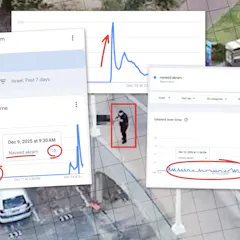
Google Trends results for attackers’ names from before an attack are increasingly (and incorrectly) being used as evidence of conspiracies.

Donations to The Conversation will be matched for the next two weeks.
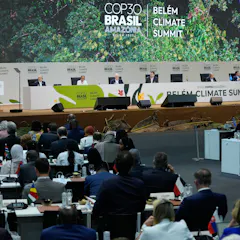
COP30 is the first conference where AI has been formally integrated as a central theme in the conference agenda.
Russia and China push content that depicts western states as chaotic, immoral and even just weird.

Conversations around misinformation that assume everyone cares about literal truth may be missing the point.

Just because you ‘heard it on a podcast’, it doesn’t mean the info is necessarily more trustworthy than a random social media post.
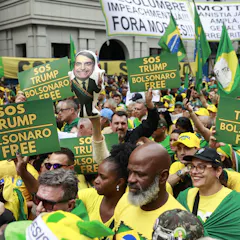
The loyalty of many Brazilians to Bolsonaro seems illogical until you look at where they find their news and information.
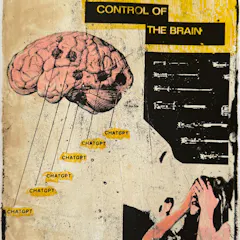
Research reveals why simple prompts can bypass AI safeguards.

Just 2½ hours of online instruction made students a lot better at identifying misinformation on YouTube and TikTok.

These arguments sound convincing but lead to false or misleading conclusions. Here’s how to spot them.

When all 118 submariners on board the Kursk were killed, Putin deployed his now-familiar misinformation tactics.

AI-generated images of wildfires have been circulating online, leading the British Columbia government to issue an online warning.

A complex blend of personal, social and environmental factors fuels vaccine skepticism.

A new book explores how media outlets are controlled by powerful forces, from governments to corporations, in Africa and Latin America.
Top contributors
-

Professor and Chair, Department of Journalism, Stellenbosch University
-
Associate Research Professor of Social Psychology, Louisiana State University
-
Chair of Cognitive Psychology, University of Bristol
-
Lecturer in Journalism and Global Communication, University of Sheffield; Independent Social Research Foundation
-
Professor of Informatics and Computer Science, Indiana University
-
Professor of Human Centered Design & Engineering, University of Washington
-
Professor of AI and Behavioral Data Science, University of Technology Sydney
-
Associate Professor in Digital Media, Queensland University of Technology
-
Emeritus Professor of Education, Stanford University
-
Professor of Business Law and Ethics, Indiana University
-
Director, News & Media Research Centre, University of Canberra
-
Professor of Information Systems, Michigan State University
-
Professor of Social Psychology in Society, University of Cambridge
-
Visiting Fellow, ISEAS-Yusof Ishak Institute; Oklahoma State University
-
Professor of Political Communication; Director CAJ, The University of Melbourne