

New research suggests how we could prevent genetically modified organisms from surviving - and potentially spreading - in the wild.
Articles on CRISPR
Displaying 121 - 131 of 131 articles
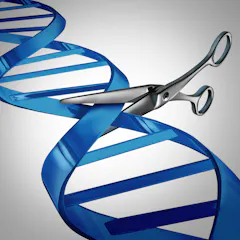
The International Summit on Human Gene Editing drew a distinction between editing an individual’s body cells and editing germline cells that would pass changes to future generations. Does that make sense?

As we consider the ethics of human gene editing, we need to understand what can and can’t be meaningfully edited.

Experts from around the world are in the US to discuss the scientific, ethical and governance issues linked to human gene editing. Here are five reasons they shouldn’t ban research in the field.
The debate about regulating gene editing technology is often couched in polar terms, but understanding degrees of regulation that might be a better approach.
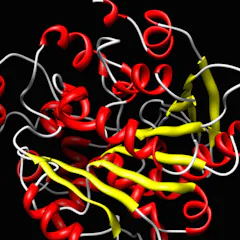
Should the gathering of experts from around the world that’s considering the scientific, ethical, and governance issues linked to research into gene editing ring alarm bells?

While gene editing offers the exciting potential for disease therapies, using it on human embryos opens up a can of worms.
New genetic technology could change the DNA of entire species to prevent them from spreading diseases.
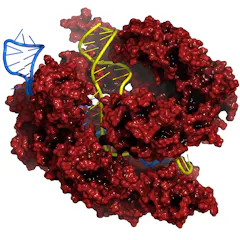
Until more is understood, it’s sensible to limit experimentation that would make changes to germ line cells that would be passed on to future generations.
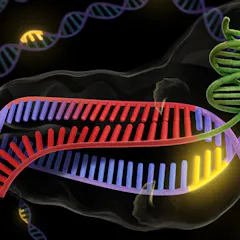
Leading researchers have called for a ban on using a precise gene-editing technology on humans. How can CRISPR advance science and why is it raising concerns?

A naturally-occurring system discovered in bacteria holds promise as a way to fight pathogens – very specifically and without the risk of antibiotic resistance.
Top contributors
-

Chair, The Conversation Media Group
-
Head of School (Computer Science) and Co-Director (Centre for Data Science), Queensland University of Technology
-
Distinguished Research Professor, Emerita, Dalhousie University
-
Geneticist and Group Leader, The John Curtin School of Medical Research, Australian National University
-
Assistant Professor in Biomedical Ethics, National University of Singapore
-
Emeritus Robert Reford Professor and Professor of Medicine, McGill University
-
Professor of Chemistry, Connecticut College
-
Doctoral Student in Biochemistry, University of Washington
-
Postdoctoral Associate in Science and Society, Duke University
-
Postdoctoral fellow, Harvard University
-
Vanier Scholar and Ph.D. Candidate in Microbiology and Immunology, Dalhousie University
-
Research fellow, The University of Queensland
-
Emeritus Professor of Developmental Biology, The University of Queensland
-
Associate Professor of Public Policy and Women's Studies, University of Michigan
-
Chen Su Lan Centennial Professor in Medical Ethics, National University of Singapore; Distinguished Visiting Professor in Law, University of Melbourne; Uehiro Chair in Practical Ethics, The University of Melbourne