

A least eight early self-experimenters died from their research.
Articles on CRISPR/Cas9
Displaying 1 - 20 of 70 articles

Many people know someone with a genetic disease, but few understand how gene mutations work.
At the Third International Summit on Human Genome Editing, experts gather to discuss the path forward for CRISPR and other gene-editing technologies
Following the controversial births of the first gene-edited babies, a major focus of the Third International Summit on Human Genome Editing was responsible use of CRISPR.

For the past 13 years I’ve focused on sequencing one plant pathogen’s genome. Here’s where that scientific journey has led.

As genetic engineering and DNA manipulation tools like CRISPR continue to advance, the distinction between what science ‘could’ and ‘should’ do becomes murkier.
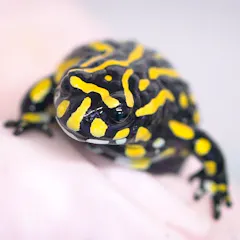
The rapid rate of species declines means we should trial potential solutions before it’s too late.

Three pioneering technologies have forever altered how researchers do their work and promise to revolutionize medicine, from correcting genetic disorders to treating degenerative brain diseases.

There are signs that UK will be bolder and less accountable in its genetic defence research than many other countries.
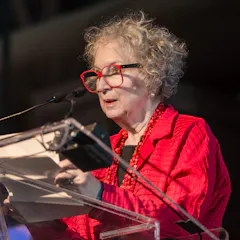
Canada has produced Nobel Prize winners in the arts and sciences. With several recent awards, Canadian talent still has the potential for future achievements.
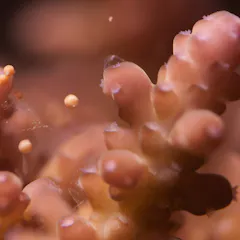
New research involving CRISPR technology has furthered our understanding of corals’ gene functions. Specifically, it has revealed a mechanism underpinning how corals withstand heat stress.
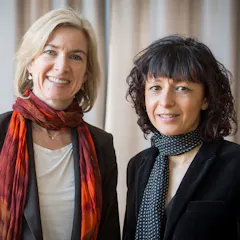
The tools to rewrite the genetic code to improve crops and livestock, or to treat genetic diseases, has revolutionized biology. A CRISPR engineer explains why this technology won the Nobel, and its potential.
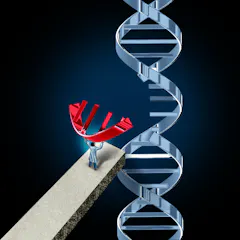
Most scientific discoveries these days aren’t easily ascribed to a single researcher. CRISPR is no different – and ongoing patent fights underscore how messy research can be.
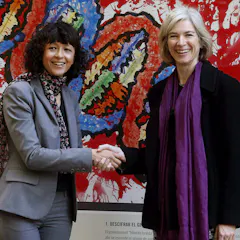
Emmanuelle Charpentier and Jennifer Doudna share the Nobel prize for chemistry for their CRISPR/Cas9 tool to rewrite the blueprint of life.
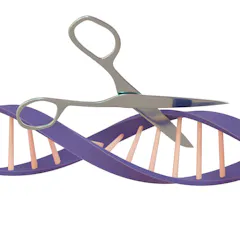
A person dies of opioid overdose once every 13 minutes in the US. A researcher proposes a way using existing technology to remove the opioid target in people to prevent overdoses.

Strategies to cure various types of blindness are looking more plausible after a series of recent breakthroughs using gene editing and gene therapy.

What criteria should be used to determine whether a food is natural? What if gene-editing techniques produce changes indistinguishable from those that evolve naturally? Is the food still natural?

Testing for coronavirus has been a fiasco in the US. But now companies are developing super fast tests, including ones that might eventually be as simple as at home pregnancy tests.

A number of things may have gone wrong when researchers edited Chinese twins Lulu and Nana’s genome. Either way, the failed experiment is a cautionary tale for us all.
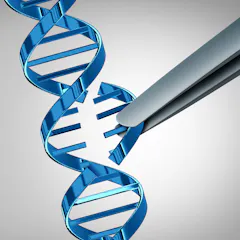
In a new study, a team of US scientists have used gene editing to change the genetic code of white blood cells and transform them into more efficient tumor fighting cells. How did they do it?
Top contributors
-

Geneticist and Group Leader, The John Curtin School of Medical Research, Australian National University
-
Head of School (Computer Science) and Co-Director (Centre for Data Science), Queensland University of Technology
-
Assistant Professor in Biomedical Ethics, National University of Singapore
-
Distinguished Research Professor, Emerita, Dalhousie University
-
Chair, The Conversation Media Group
-
Shah Rising Star Assistant Professor of Chemical Engineering, Herbert Wertheim College of Engineering, UF Health Cancer Center, University of Florida
-
Chen Su Lan Centennial Professor in Medical Ethics, National University of Singapore; Distinguished Visiting Professor in Law, University of Melbourne; Uehiro Chair in Practical Ethics, The University of Melbourne
-
Postdoctoral Associate in Science and Society, Duke University
-
Professor of Chemistry, Connecticut College
-
Vanier Scholar and Ph.D. Candidate in Microbiology and Immunology, Dalhousie University
-
Doctoral Student in Biochemistry, University of Washington
-
Distinguished Research Professor, Dalhousie University
-
Emeritus Robert Reford Professor and Professor of Medicine, McGill University
-
Professor in Medicine, Ethics and Society, University of Warwick
-
Associate Professor of Public Policy and Women's Studies, University of Michigan