

Swearing can raise our pain threshold.
Articles on Cognition
Displaying 101 - 120 of 216 articles

Horizontal number lines are often the default option – but our brains may process numbers more quickly in a vertical arrangement.

Cognition may evolve in response to increasing complexity.

Some scientists believe the ‘free energy principle’ can explain the behaviour of all living things – but others say it paints the world with too broad a brush to be useful.
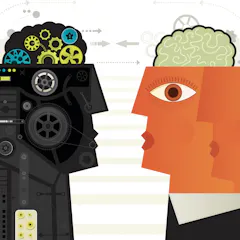
To build a true artificial mind, first map out how thinking works. Enter the Common Model of Cognition.

Ex-pats continually reconstruct mental simulations of scenes, smells, sounds and sights from those places – sometimes causing stressful feelings and anxiety.

Human brains seem to be wired differently to those of chimps or macaques.

A big study accounting for genes and socioeconomic background suggests that video games actually cause children’s intelligence to grow.
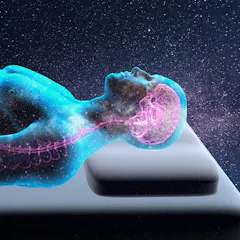
Both too much and too little sleep may interfere with our cognition.

Research highlights the importance of daily meditation, exercise and sleep for improving executive functioning, a component of attention that helps people focus.

Cannabis use is linked to poorer memory, attention and mental health.

Researchers used a test designed for babies to show that rhesus monkeys can sense their own heartbeats. The finding opens up important paths of research into consciousness and mental health issues.
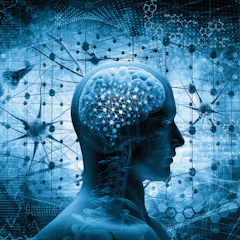
Emotions play a key role in many types of spontaneous thoughts. Even microemotions — which are often fleeting and unconscious — can affect thoughts and influence attention.

What use are we in helping to solve difficult global challenges if we’re so depressed and cognitively depleted that we can’t think of the best actions to take?

During the pandemic, carers reported their loved ones with dementia became more disoriented, restless and withdrawn. And carers themselves experienced poorer mental health.

Smart devices and sensors can now gauge mood and attention, effectively engaging in mind-reading. This intimate data collection raises questions about who has access and control of it.

The symptoms of menopause, which can include sleep disturbance, depression, anxiety and ‘brain fog’ can span perimenopause and last for up to ten years.
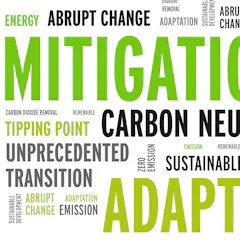
The language around climate change can feel overwhelming. A psychology and public policy expert breaks it down in plain English.

Each new technology raises concerns about how they will negatively affect our ability to think, retain and process information. But these technologies don’t detract from our cognitive abilities.

To stay healthy, it’s important to understand how wildfire smoke can harm your body and how to protect yourself.
Top contributors
-

Professor of Clinical Neuropsychology, University of Cambridge
-
Postdoctoral Research Associate, Cognitive Neuroscience, University of Cambridge
-
Professor of Science and Technology for Brain-Inspired Intelligence/ Computer Science, Fudan University
-
Research Fellow, School of Biological Sciences, Monash University
-
Associate Professor, Department of Physiology, Monash University
-
Senior Lecturer in the School of Psychology, University of Lincoln
-
Researcher and analyst, Monash University
-
Senior Lecturer, Department of Psychological Sciences, Birkbeck, University of London
-
Senior Lecturer in Psychology, Nottingham Trent University
-
Hon Professor of Neuropsychology, Cardiff University
-
Young Principal Investigator of Neuroscience, Fudan University
-
Professeur de Sciences Comportementales, membre du groupe de recherche CNRS-GREGHEC, HEC Paris Business School
-
Postdoctoral research fellow of Neuroscience, Fudan University
-
Associate professor, University of Johannesburg
-
Senior lecturer, Griffith University