

Perseverance helps people achieve goals and is linked with well-being. But combined with chronic societal stressors, it can lead to cognitive overload that puts a strain on brain health.
Articles on Cognition
Displaying 41 - 60 of 216 articles

Moving your body can have a big impact on your brain – and it doesn’t have to be a workout at the gym.

If our brain health isn’t optimal, it’s hard to achieve physical fitness challenges.
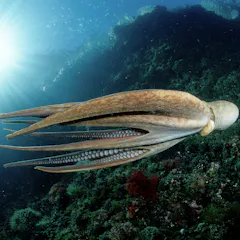
Animal welfare laws don’t protect invertebrates, but there’s evidence that some, such as octopuses, are as intelligent as many mammals – even if their cognition takes very different forms.

Understanding how new neurons affect brain function throughout adulthood can offer new approaches to treating epilepsy and dementia.

What does it mean if young men sense that their masculinity is under threat? Or if they sense a bleak and hopeless future?

Our new research found behaving superstitiously could benefit us psychologically, even if we know it has no real effect on the outcomes of our actions.

The creation of delusions may involve a fair bit of rational thinking.

Some athletes seem to have an ability to predict what’s going to happen in their sports but anticipation is an attribute anyone can develop.

Communication mishaps can happen, but many may be a sign of impaired social cognition.
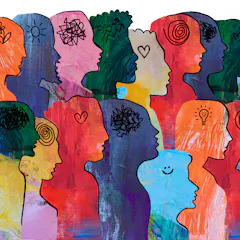
Our ability to adapt to changing circumstances plays an important part in our health decisions. New research suggests health education campaigns need to take this into account.
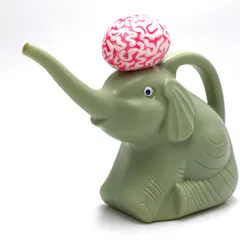
Brains evolve with body size according to a simple rule. Exceptions to that rule include our own species with enormous brains.
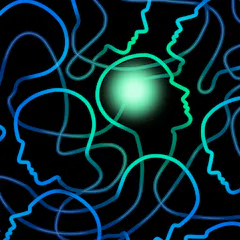
This phenomenon can help us understand polarisation in society.

We locate beautiful items quicker than less appealing ones.

Good liars can easily bypass classic lie detection stereotypes.

A mouse-model study shows how the smell of menthol can reduce inflammation in the part of the brain associated with memory.

A ‘complex’ job and an active social life can protect you from dementia – if you don’t less stress undo it all.
Hint: the most common type actually works.

The NT government has invited views on access to voluntary assisted dying. But whether it should include access for those with dementia is not so clear cut.

The two human species had many similarities but their communication would have been different.
Top contributors
-

Professor of Clinical Neuropsychology, University of Cambridge
-
Postdoctoral Research Associate, Cognitive Neuroscience, University of Cambridge
-
Professor of Science and Technology for Brain-Inspired Intelligence/ Computer Science, Fudan University
-
Research Fellow, School of Biological Sciences, Monash University
-
Associate Professor, Department of Physiology, Monash University
-
Senior Lecturer in the School of Psychology, University of Lincoln
-
Researcher and analyst, Monash University
-
Senior Lecturer, Department of Psychological Sciences, Birkbeck, University of London
-
Senior Lecturer in Psychology, Nottingham Trent University
-
Hon Professor of Neuropsychology, Cardiff University
-
Young Principal Investigator of Neuroscience, Fudan University
-
Professeur de Sciences Comportementales, membre du groupe de recherche CNRS-GREGHEC, HEC Paris Business School
-
Postdoctoral research fellow of Neuroscience, Fudan University
-
Associate professor, University of Johannesburg
-
Senior lecturer, Griffith University