

Our everyday lives are full of decision dilemmas. To understand why we make particular choices, scientists investigate how our brain deals with uncertainty.
Articles on Cognition
Displaying 161 - 180 of 216 articles

Higher education for seniors shows promise – for combatting social isolation, increasing well-being and delaying the onset, or slowing the progression, of dementia.
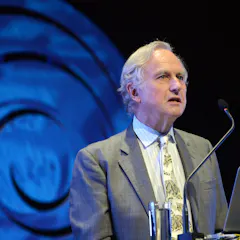
‘I don’t believe in God, I believe in science,’ atheists often argue. But that doesn’t mean their thinking is evidence-based.

Compulsory sport and physical education at school will improve children’s memory, attention and ability to concentrate, not just boost fitness. The evidence is in.

The relentless news cycle has many people feeling overwhelmed and stressed, wondering how to calm their lives and stay healthy. Here are some tips from neuoscience that may help.

Childhood adversity is linked to social and mental health problems later in life. New research suggests brains that aren’t as good at recognizing rewards and responding to change may be to blame.

Aviation safety has much to gain from neuroscience: studying how our brains become “deaf” to alarms allows us to adapt the pilot’s flight instruments.

Time often seems to fly by when you’re a parent. A social psychologist explains why it actually – and fortunately – does not.
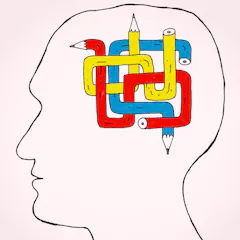
Our minds are wired to anticipate what’s coming next – and fill in the gaps when we don’t have all the information.

As well as increasing physical fitness and mental health, martial arts can boost brain cognition too.

Our study found that office workers performed just the same, whether the air conditioning was set at 22°C or 25°C. But making that tweak can cut energy use by 18%.

Although we can’t change our age or genetic profile, there are fortunately several lifestyle changes we can make that will reduce our dementia risk.

Psychological phenomena have long been thought of as universal. But it turns out scientists may have been blinded by their own culture.

Using simple strategies, parents and teachers can help stimulate linguistic and other cognitive development in children.

To counter the unbalanced effects of the digital age, reading literature is the key.

Spontaneous mirror writing by both left- and right-handed children has long remained a mystery. Recent studies of brain processing and writing have led to an unexpected explanation.
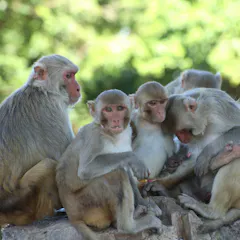
Puerto Rico’s Cayo Santiago Research Station has been a world-famous site for primate studies since 1938. Now scientists are working to save its staff and rhesus monkey colony after Hurricane Maria.

The affective domain - motivation, interest and values and their inter-relationships - forms an integral component in facilitating learners’ construction of physics knowledge.

Memories of our carefree youth help form our identity today. But memories are selective. So, were we really as wild as we think we were?

Brain games, learning languages, rowing? Beware of snake oil salesman claiming we know it all.
Top contributors
-

Professor of Clinical Neuropsychology, University of Cambridge
-
Postdoctoral Research Associate, Cognitive Neuroscience, University of Cambridge
-
Professor of Science and Technology for Brain-Inspired Intelligence/ Computer Science, Fudan University
-
Research Fellow, School of Biological Sciences, Monash University
-
Associate Professor, Department of Physiology, Monash University
-
Senior Lecturer in the School of Psychology, University of Lincoln
-
Researcher and analyst, Monash University
-
Senior Lecturer, Department of Psychological Sciences, Birkbeck, University of London
-
Senior Lecturer in Psychology, Nottingham Trent University
-
Hon Professor of Neuropsychology, Cardiff University
-
Young Principal Investigator of Neuroscience, Fudan University
-
Professeur de Sciences Comportementales, membre du groupe de recherche CNRS-GREGHEC, HEC Paris Business School
-
Postdoctoral research fellow of Neuroscience, Fudan University
-
Associate professor, University of Johannesburg
-
Senior lecturer, Griffith University