

That feeling of ‘I-know-it-but-can’t-quite-remember-it’ has been studied for decades, but there’s a new twist: It’s more common in groups.
Articles on Cognition
Displaying 121 - 140 of 216 articles

Learning that our brains process information differently when we’re standing up or lying down has implications for how we study and assess brain function.

Are you good at changing perspectives? If so, it may benefit you in more ways than you imagine.

Analysis of 46 studies indicates that there’s still a lot of uncertainty about the long-term impacts of digital device use on cognition.

It appears that the South African Cape south coast’s dunes and beaches formed a vast canvas of sand on which our ancestors could leave their mark.
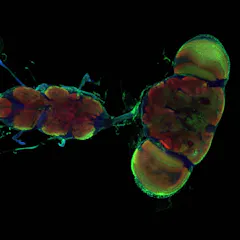
Adaptable neurons are tied to learning and memory but also to neurological disorders. By studying fruit flies, researchers found a mechanism that controls neuroplasticity.

High levels of cognitive performance and effective teamwork are crucial to long-duration space missions.

Anti-inflammatory drugs may be able to reverse cognitive decline in the future.
The brain is surprisingly changeable.

During Mental Health Week, let’s look at why some people, such as those experiencing depression or substance dependency, struggle to make decisions like everyone else.

Hindu philosophy believes the soul to be immortal. Death is considered to be the end of only physical incarnation, as the soul continues its journey of multiple births until its final liberation.

Journalists use real people’s stories to ‘humanize’ the news. But these tales – whether harrowing or heartwarming – can be misleading about the pandemic’s greatest threats.
A bioengineer explains how a clearer picture of brain structure and function may fine-tune the ways brain surgery attempts to correct structure and medication tries to correct function.

Whether in situations relating to scientific consensus, economic history or current political events, denialism has its roots in what psychologists call ‘motivated reasoning.’

If you want to boost your energy and mood and feel more alert, get moving instead of getting coffee.

Involving family and friends in decisions or rethinking the meaning of “getting back to normal” helps protect against cognitive bias and its harmful consequences.

The artefact comes from deposits dated to more than 60,000 years ago. It closely resembles thousands of bone arrowheads used by the indigenous San hunter-gatherers from the 18th to the 20th centuries.

Is it safe to nip out for milk? Should I download the COVIDSafe app? Is it OK to wear my pyjamas in a Zoom meeting? All these extra decisions are taking their toll.

A quirk of psychology that affects the way people learn from others may have helped unlock the complicated technologies and rituals that human culture hinges on.

Dance therapy is effective in treating depression, improving memory and neuroplasticity in older adults and improving executive function in those with Parkinson’s disease.
Top contributors
-

Professor of Clinical Neuropsychology, University of Cambridge
-
Postdoctoral Research Associate, Cognitive Neuroscience, University of Cambridge
-
Professor of Science and Technology for Brain-Inspired Intelligence/ Computer Science, Fudan University
-
Research Fellow, School of Biological Sciences, Monash University
-
Associate Professor, Department of Physiology, Monash University
-
Senior Lecturer in the School of Psychology, University of Lincoln
-
Researcher and analyst, Monash University
-
Senior Lecturer, Department of Psychological Sciences, Birkbeck, University of London
-
Senior Lecturer in Psychology, Nottingham Trent University
-
Hon Professor of Neuropsychology, Cardiff University
-
Young Principal Investigator of Neuroscience, Fudan University
-
Professeur de Sciences Comportementales, membre du groupe de recherche CNRS-GREGHEC, HEC Paris Business School
-
Postdoctoral research fellow of Neuroscience, Fudan University
-
Associate professor, University of Johannesburg
-
Senior lecturer, Griffith University