

Do you ever find you suddenly need to turn off the radio so you can concentrate on what you’re doing? It’s because you only have a finite amount of attention, for particular types of tasks at least.
Articles on Cognition
Displaying 141 - 160 of 216 articles

The ‘contexual-binding theory’ suggests memories are easier to retrieve when your brain is in a similar context to when the memory was first formed. Food for thought if you’re cramming for an exam.

Despite its huge complexity, your brain directs its neural traffic in relatively straightforward ways when approaching cognitively demanding tasks such as puzzles.

We know that pigs or dogs will never understand prime numbers. Some philosophers think that concepts like consciousness are similarly inaccessible to humans.

Honeybees are good at maths, but it was thought they could only count to four. That is, unless you present them with a task in which they are punished with a bitter-tasting drink for getting it wrong.

The constant pressure of gravity affects our thoughts and perception, but it’s so constant we haven’t noticed – until now.

Developing fluency in handwriting matters for literacy outcomes, and handwriting is an elegant testimony to the unique power of the human voice.

Chimpanzees, like humans, possess working memory abilities. They’re able to perform similar to seven-year-old children.

Do you often forget where you put the keys or what you were looking for in the fridge? It’s not necessarily a sign of cognitive decline – it might just come down to being tired, stressed or worried.

Knowing how the brain prepares for sequences of movements can help us better understand disorders such as stuttering and dyspraxia.

There are reasons to be skeptical, of both the quality of the evidence presented so far and the questionable assumptions that underlie claims of improved cognitive function after brain training.
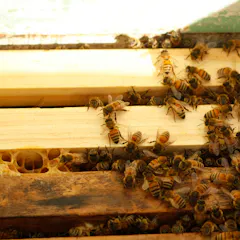
We’re left wondering whether we as humans are so very special after all – that perhaps the ability to learn mathematics could be universal.

We pick healthy foods to look after our bodies, but research shows certain healthy choices can also benefit our brains.

Researchers get their first glimpse into what happens in the brain when we consciously relinquish control over our actions and go with the flow.

Workplaces the world over tune their thermostats to 22C, because this supposedly optimises mental performance. But the factors that underpin a productive office are much more complicated.

Even when everything’s going great in your relationship, you likely harbor some ambivalence toward your partner deep down. Psychology research suggests it’s not just OK, but normal.
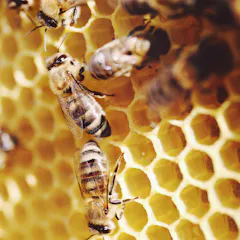
Bee brains contain less than one million neurons. Despite this, new research shows the honeybee can use symbols to perform basic maths, including addition and subtraction.

Research suggests people intuitively draw a distinction between what is known and what is believed. Recognizing the difference can help in ideological disagreements.

Decades of psychological research suggests humans are rather irrational. But a new approach, borrowing an idea from artificial intelligence, challenges this notion.
If consciousness is a by-product of our brains’ nonconscious processes, where does that leave us?
Top contributors
-

Professor of Clinical Neuropsychology, University of Cambridge
-
Postdoctoral Research Associate, Cognitive Neuroscience, University of Cambridge
-
Professor of Science and Technology for Brain-Inspired Intelligence/ Computer Science, Fudan University
-
Research Fellow, School of Biological Sciences, Monash University
-
Associate Professor, Department of Physiology, Monash University
-
Senior Lecturer in the School of Psychology, University of Lincoln
-
Researcher and analyst, Monash University
-
Senior Lecturer, Department of Psychological Sciences, Birkbeck, University of London
-
Senior Lecturer in Psychology, Nottingham Trent University
-
Hon Professor of Neuropsychology, Cardiff University
-
Young Principal Investigator of Neuroscience, Fudan University
-
Professeur de Sciences Comportementales, membre du groupe de recherche CNRS-GREGHEC, HEC Paris Business School
-
Postdoctoral research fellow of Neuroscience, Fudan University
-
Associate professor, University of Johannesburg
-
Senior lecturer, Griffith University