

Psychologists observed young children in real time figuring out how not to tell the truth.
Articles on Cognition
Displaying 181 - 200 of 216 articles

Autism manifests in different ways. The signs are often less visible in women than in men, leading many to be underdiagnosed.

A new study suggested that menstruating does not impact a woman’s mental performance. But the relationship between hormones and the brain isn’t that simple.

The science is still hazy - but our abilities are clearly affected during the recovery period.

Feel like something will be easy to remember? Your prediction may be influenced by how clearly the information was presented in the first place.
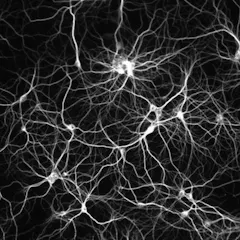
Born in the 1950s, the concept of an artificial neural network has progressed considerably. Today, known as “deep learning”, its uses have expanded to many areas, including finance.

From the Amazon to Nicaragua, there are humans who never learn numbers. What can these anumeric cultures teach us about ourselves?

There are very few approaches that examine all aspects of the complexity of urban design and development. Ergonomics, human factors and sociotechnical systems methods offer a way forward.

The early use of poison is one more indicator of an advanced repertoire of behavioural and technological traits that have characterised our species from the earliest times.

Rats were less able to find food after only three days on a diet high in sugar and saturated fat. So could a bad diet also be affect the human brain?

Are we in a race against climate change? Or is it a war? How does thinking of the past or the future affect your support for the science? Researchers are learning how metaphors and context matter.

In men and older women, a complicated thinking test appeared to overwhelm the part of the brain also responsible for moving one of their arms. They could only do one or the other.

Humans have limited ability to understand complexity, but there are serious dangers if we oversimplify things too much.
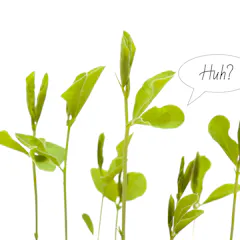
A new study appears to show plants can learn from experience and choose a response. This raises some intriguing questions about the possibility of plant cognition.

Children feel sympathy for others from an early age. Two development psychologists explain how children can learn, based on feelings of sympathy, how to act more thoughtfully.

Artificial intelligence gives us machines that can beat humans at games such as chess and go. How long before we see AI surpass human intelligence?
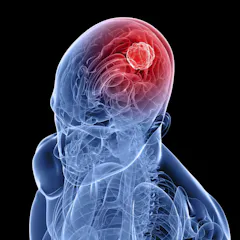
Glioblastoma is an aggressive form of brain cancer that has a very poor prognosis. Despite the current best therapies half its sufferers survive for 15 months and less than 5% are alive after 5 years.

Running causes new brain cells to grow. But why does this happen? What is the evolutionary advantage?
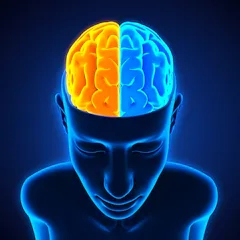
The brain function of HIV-positive women who experienced childhood trauma is more compromised than that of women who are only HIV positive.

Pretty much all of our perception is an illusion, whether we’re walking down the street or attempting to decode the latest card trick.
Top contributors
-

Professor of Clinical Neuropsychology, University of Cambridge
-
Postdoctoral Research Associate, Cognitive Neuroscience, University of Cambridge
-
Professor of Science and Technology for Brain-Inspired Intelligence/ Computer Science, Fudan University
-
Research Fellow, School of Biological Sciences, Monash University
-
Associate Professor, Department of Physiology, Monash University
-
Senior Lecturer in the School of Psychology, University of Lincoln
-
Researcher and analyst, Monash University
-
Senior Lecturer, Department of Psychological Sciences, Birkbeck, University of London
-
Senior Lecturer in Psychology, Nottingham Trent University
-
Hon Professor of Neuropsychology, Cardiff University
-
Young Principal Investigator of Neuroscience, Fudan University
-
Professeur de Sciences Comportementales, membre du groupe de recherche CNRS-GREGHEC, HEC Paris Business School
-
Postdoctoral research fellow of Neuroscience, Fudan University
-
Associate professor, University of Johannesburg
-
Senior lecturer, Griffith University