

Philosophers have been debating whether we need conditioning to link information from different senses for centuries.
Articles on Cognition
Displaying 61 - 80 of 216 articles

Young people are losing their advantage when it comes to IQ.

In psychology it’s known as the gender-equality paradox.

Brain-computer interfaces may present threats to cognitive liberty. But with or without them, we often overestimate how independent our own minds are, an ethicist writes.

Vegetarian and low-carb diets aren’t ideal for our brains.

A highly unusual new case is giving scientists insights about what causes illusions of facial distortion

Around 4% of the population are unable to see things in their mind’s eye. Except when they are dreaming.

The pros and pitfalls of this type of thinking

The majority of children who do not take or pass IQ-style entrance exams to private- or grammar schools, will have many qualities not measured on an IQ test. They may also just be late developers.

Both men have faced criticism about what can appear to be obvious signs of aging, including questions about their memory and cognitive abilities.

Existing AI systems learn patterns from very large piles of data – but they have no insight.

Something to bear in mind if you find yourself swiping through profiles on a dating app later today.

Being smart won’t protect you from falling down conspiracy rabbit holes.

It has long been thought one couldn’t bend one’s intuition. Recent research reveals it is in fact possible to reduce bias through training.

The complexity of the financial market is far beyond the information processing capabilities of human cognition.

Doing two things at the same time isn’t always as productive, healthy or safe as focusing on one thing at a time.

Common misperceptions about AI chatbots are that they know something about the world, can make decisions, are a replacement for search engines and operate independent of humans.
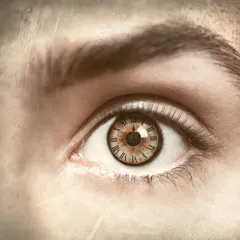
Time’s elasticity is part of how we process it.
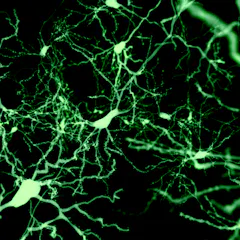
It is unknown exactly how SSRIs and psychedelics treat depression, but their ability to boost flexibility may be more important than previously thought.

Humans are social beings so it’s no wonder that feeling isolated can affect the way we think
Top contributors
-

Professor of Clinical Neuropsychology, University of Cambridge
-
Postdoctoral Research Associate, Cognitive Neuroscience, University of Cambridge
-
Professor of Science and Technology for Brain-Inspired Intelligence/ Computer Science, Fudan University
-
Research Fellow, School of Biological Sciences, Monash University
-
Associate Professor, Department of Physiology, Monash University
-
Senior Lecturer in the School of Psychology, University of Lincoln
-
Researcher and analyst, Monash University
-
Senior Lecturer, Department of Psychological Sciences, Birkbeck, University of London
-
Senior Lecturer in Psychology, Nottingham Trent University
-
Hon Professor of Neuropsychology, Cardiff University
-
Young Principal Investigator of Neuroscience, Fudan University
-
Professeur de Sciences Comportementales, membre du groupe de recherche CNRS-GREGHEC, HEC Paris Business School
-
Postdoctoral research fellow of Neuroscience, Fudan University
-
Associate professor, University of Johannesburg
-
Senior lecturer, Griffith University