

Many people may call it self-care to crash on the couch with your smartphone, but screen-based activities increase the load on your brain instead of resting it.
Articles on Cognition
Displaying 21 - 40 of 216 articles

Why we procrastinate has less to do with willpower than with how flexibly our brains handle stress and discomfort - and the good news is, flexibility is trainable.

Doing the mental work of connecting the dots across multiple web queries appears to help people understand the material better compared to an AI summary.

A new collection of research papers examines how humans conceptualize numbers and the numeral systems we’ve build around them.

Students – and all manner of professionals – are tempted to outsource their thinking to AI, which threatens to undermine learning and credibility. A philosophy professor offers a solution.

Taking up a hobby like art, dance or music classes could have significant hidden benefits.

A meta-analysis of AI chatbots’ impact on student learning finds benefits when used properly, but risks of diminishing student motivation and confidence.

Recent studies show that it’s possible to maintain good cognitive health as we age with certain leisure activities and pursuits that stimulate the brain.

The SHIELD (Sleep, Head Injury prevention, Exercise, Learning, and Diet) mnemonic offers a clear and effective strategy for lowering dementia risk.
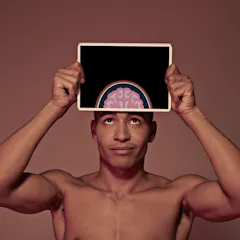
Chatbots can facilitate ‘cognitive offloading,’ or taking shortcuts when learning. But emerging research on AI and cognitive science shows that learning is like a workout.

In court, scrutiny is normally focused on the alleged victim’s ability to recall details from the event.

Uniquely colored flowers with big blooms might make for an aesthetically pleasing garden, but they can be unhelpful to pollinators. Careful consideration can help you plan a colorful and eco-friendly garden.

Social media influencers tout creatine supplements for athletic performance and to boost brain health. Here’s what the evidence says.

Even before generative AI went mainstream, fewer people were reading books.

Whether AI can ‘think’ is a different question than whether it is ‘intelligent.’

Chimpanzees’ turn-taking shows skills that may have supported the evolution of human conversation.

How researchers measure the logical reasoning of monkeys, pigeons, rats, fish and wasps shapes how they understand mental processes in animals − and in people.

Older adults are generally good at judging their capacity for handling their finances, but
cognitive impairment degrades that skill. Proactive planning can help protect them from fraud.

During the Industrial Revolution, craftsmanship retreated to the margins. As AI becomes widely adopted, will the same happen to original thinking?

Scientists have created a universal colour experience using lasers.
Top contributors
-

Professor of Clinical Neuropsychology, University of Cambridge
-
Postdoctoral Research Associate, Cognitive Neuroscience, University of Cambridge
-
Professor of Science and Technology for Brain-Inspired Intelligence/ Computer Science, Fudan University
-
Research Fellow, School of Biological Sciences, Monash University
-
Associate Professor, Department of Physiology, Monash University
-
Senior Lecturer in the School of Psychology, University of Lincoln
-
Researcher and analyst, Monash University
-
Senior Lecturer, Department of Psychological Sciences, Birkbeck, University of London
-
Senior Lecturer in Psychology, Nottingham Trent University
-
Hon Professor of Neuropsychology, Cardiff University
-
Young Principal Investigator of Neuroscience, Fudan University
-
Professeur de Sciences Comportementales, membre du groupe de recherche CNRS-GREGHEC, HEC Paris Business School
-
Postdoctoral research fellow of Neuroscience, Fudan University
-
Associate professor, University of Johannesburg
-
Senior lecturer, Griffith University