

Almost 4,000 Australians are diagnosed with head and neck cancer each year. Oral cancer is one type.
Articles on Cancer treatment
Displaying 61 - 80 of 137 articles
‘Point-of-care manufacture’ of advanced therapies is already being used in hospitals in the UK, Spain, Switzerland and the US.
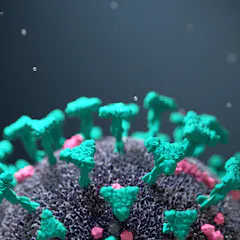
Our ability to use mathematical modelling is accelerating breakthrough discoveries in health care and biotechnology.
Globally, most cancer patients die not because they don’t have access to newer drugs, but because they don’t have access to even basic treatments. Cancer groundshot aims to improve treatment access.
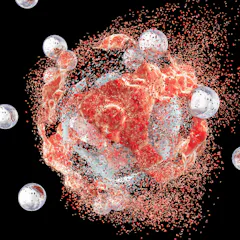
The COVID-19 mRNA vaccines put nanomedicine in the spotlight as a potential way to treat diseases like cancer and HIV. While the field isn’t there yet, better design could help fulfill its promise.
Drug repurposing can redeem failed treatments and squeeze out new uses from others. But many pharmaceutical companies are hesitant to retool existing drugs without a high return on investment.

We’ve found an unusual way of stabilising the cancer-suppressing protein p53.
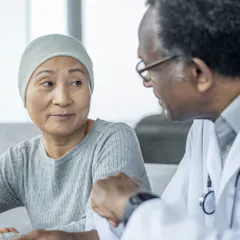
New studies highlight the difficulties cancer patients have when discussing their illness with family and medical teams.
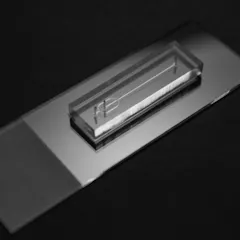
Artificial cells on tiny microfluidic chips can provide early insight into how new cancer drugs behave in cells, and why certain kinds of cancer are more resistant to chemotherapy treatment.
Promising results in mice show this rare form of cancer could be treated using the same drugs already used against one type of leukaemia.
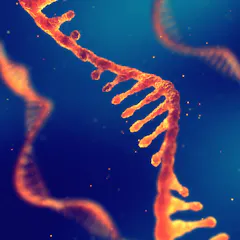
Long non-coding RNAs were long thought to serve no purpose. Now, researchers think differently.
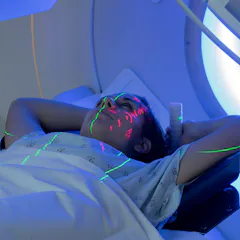
Tattoos might be the norm, but Surface Guided RadioTherapy for breast cancer is both more accurate, and doesn’t require a permanent mark.
Neutrons are useful in research and medicine. A proposed neutron production facility could help further Canadian research and provide a source of neutrons for medical purposes.

We show that minute amounts of cancer DNA can be detected in blood more sensitively than ever before.
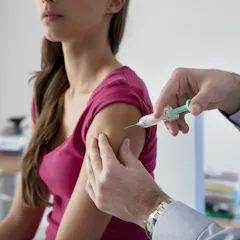
Following the success of the cervical cancer vaccine, new work on links between viruses and cancers raises promising possibilities.
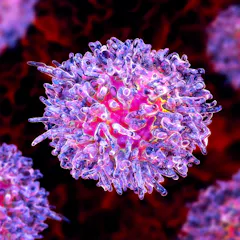
Our team found that chemotherapy can be made more successful by treating nearby ‘normal’ cells with protein-blocking drugs in lymphoma and leukemia.
Late detection of breast cancer means treatment is often drastic and frightening for patients.
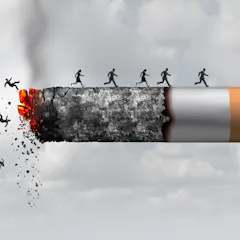
Low-dose CT scans can detect lung cancer in smokers and former smokers at an early and sometimes treatable stage. Why are so few smokers and former smokers getting them?
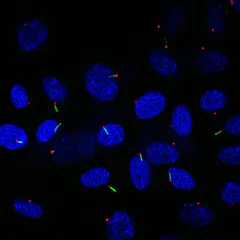
Cilia appear on nearly every cell in the body and their presence (or lack of) can drastically change our health.
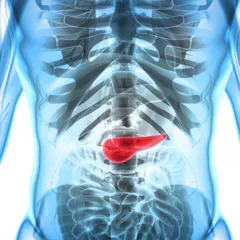
Pancreatic cancer currently has one of the least optimistic prognosis, with just 5% of patients surviving five years after diagnosis. A recent study opens a door to hope.
Top contributors
-

Professor of Pharmaceutical Chemistry, Macquarie University
-
Professor of Biomedical Sciences, Anglia Ruskin University
-
Senior Research Officer, Blood Cells and Blood Cancer Division, WEHI (Walter and Eliza Hall Institute of Medical Research)
-
Senior Research Officer, Blood Cells and Blood Cancer, WEHI (Walter and Eliza Hall Institute of Medical Research)
-
Adjunct Professsor, School of Psychology, Faculty of Health and Medical Sciences, Adelaide University
-
Academic Specialist & Senior Lecturer in Cancer Sciences & Digital Health | Superstar of STEM | Science Communicator, The University of Melbourne
-
Profesor en inmunología y biología del cáncer, Universidad San Jorge
-
Professor, Deakin University
-
Professor of Medical Oncology, University of Colorado Anschutz
-
Professor of Marketing; Senior Fellow, Institute for Healthcare Improvement, Texas A&M University
-
NHMRC Senior Research Fellow, Centre for Cancer Biology, Adelaide University
-
Professor of Exercise Medicine, Edith Cowan University
-
Associate Dean for Regulatory Affairs and Professor of Pediatrics and Communicable Diseases, University of Michigan
-
Professor of Surgery, Division of Public Health Sciences, Washington University in St. Louis
-
Research Fellow, Cardiff University