

Too many Australians affected by cancer are being financially ruined or receiving sub-optimal (or no) care, due to cost or distance – and it’s everyone’s problem.
Articles on Immunotherapy
Displaying 1 - 20 of 62 articles

CAR-T therapy engineers a patient’s own immune cells to fight cancer. Making these cels more resilient can make treatments more effective.

This new type of immunotherapy shows promise for treating different cancers including prostate cancer, leukaemia and lung cancer.

The researchers found that mRNA-based COVID-19 vaccines could potentially help patients whose tumors don’t respond well to traditional immunotherapy.

Ultrasound is perhaps best known as an imaging technique to monitor pregnancy or disease. When these sound waves are highly concentrated, however, they can be used to treat a host of diseases.
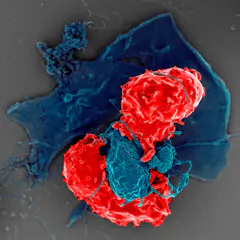
Regulatory T cells help your immune system distinguish between ‘self’ and ‘nonself’ – and can open doors to better treatments for cancer, autoimmune disease and transplant rejection.

Birch pollen is one of the most common hay fever triggers.

Finding a cure for HIV is hard, because it locks into an individual’s DNA.
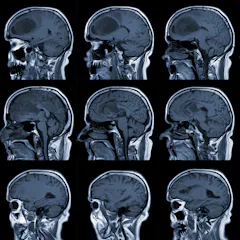
Glioblastoma is one of the deadliest forms of cancer, with limited treatment options and low survival rates.

No, you’re not imagining it. Some people really do develop hay fever as an adult. Here are three key reasons why.

Could mRNA vaccines be the next big thing for melanoma?
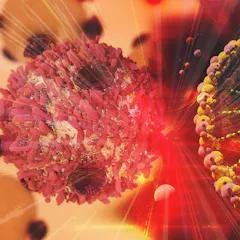
Until now, chemo and radiation therapy have been main cancer treatments but they can also damage healthy tissues. Immunotherapy uses the body’s immune system to fight cancer with minimal harm

Melanoma is the deadliest form of skin cancer.

Cancer vaccines have gained much interest among scientists but face a number of hurdles. A new mRNA vaccine for glioma offers a step forward in training the immune system to fight cancer.

Honey has long been used as a natural remedy for many ailments.
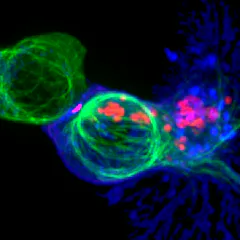
T cells recognize and kill cancer cells but quickly lose their effectiveness. This fast dysfunction may help explain why immunotherapy doesn’t lead to long-term remission for many patients.

This study further highlights the potential of mRNA vaccines in cancer treatment.

Sublingual immunotherapy reduces hay fever symptoms by changing the immune system’s response to allergens.
From cancer immunotherapy and antibiotics to GMO crops and pandemic surveillance, gain of function is a cornerstone of basic research.
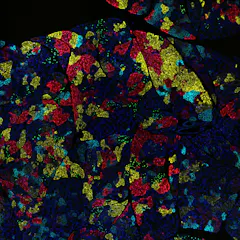
There is no one-size-fits-all approach to treating cancer. Understanding how cancer cells evolve could help researchers develop more effective drugs.
Top contributors
-

Professor of Biomedical Sciences, Anglia Ruskin University
-
Honorary Associate Professor
-
Associate Pro Vice-Chancellor: Innovation and Knowledge Exchange, University of Nottingham
-
Postdoctoral research scientist, Columbia University
-
Oncologist and Senior Lecturer, University of Newcastle
-
Professor of Sociology, Ball State University
-
Professor of Neurosurgery, University of Florida
-
Professor of Experimental Medicine, University of Southampton
-
Director of Drug Discovery at MRC Technology and Honorary Professor, Queen Mary University of London
-
Senior Research Fellow, University of Technology Sydney
-
CRUK Senior Lecturer Head and Neck Surgery, University of Southampton
-
Associate Professor in Cancer Immunology, University of Southampton
-
Assistant Professor, Georgia State University
-
University of Florida
-
Professor of Pharmaceutical Chemistry, Macquarie University