

If you are at higher risk of breast cancer, screening looks set to change. Here’s what we know so far.
Articles on Breast cancer
Displaying 1 - 20 of 239 articles

Menopausal hormone therapy no longer has the highest-level warning label about the risk of breast cancer, opening a gray area on who would benefit most from treatment.

Too many Australians affected by cancer are being financially ruined or receiving sub-optimal (or no) care, due to cost or distance – and it’s everyone’s problem.

Researchers are investigating whether blood tests and heart scans can detect hidden heart damage during breast cancer chemotherapy.

This drug is used to treat endometriosis and some breast cancers, but will soon be stripped from Australian shelves.
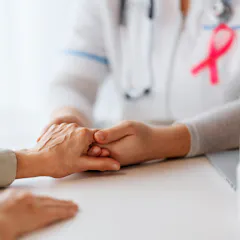
A new DNA test could spare millions of breast cancer patients from chemotherapy. We answer your questions about what it means and who it helps.
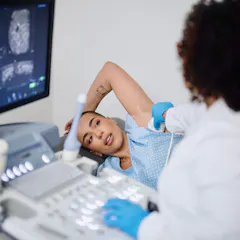
Ultrasound is often used in breast cancer screening, but it can often provide inconclusive results. Combining it with near-infrared light can help patients avoid the anxiety and cost of a biopsy.
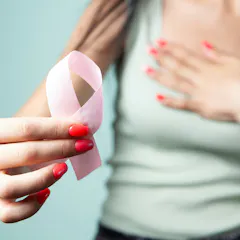
A new study examined whether AI could help us predict breast cancer risk. Two experts unpack its key findings.
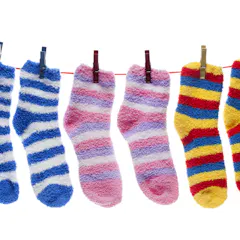
Gifts that make a true connection acknowledge the ugly parts of illness and provide relief from daily burdens.

More women are learning about their breast density when they receive their mammogram results. But what happens next?

Women can go into menopause after cancer treatment or surgery. The timing and severity of symptoms can differ from natural menopause.
Two genomic variants contribute to the risk of breast cancer in black South African women.

Mastectomy is proven to prevent cancer, so why is access uneven?

This recent study highlights just how great of an affect viral infections can have on our health in both the short-term and long-term.
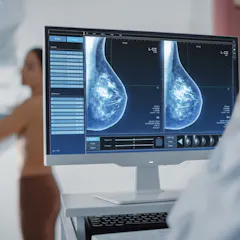
As breast cancer screening evolves, understanding personal risk factors like density is critical for improving early detection.

The landmark study, which enrolled more than 160,000 participants and has informed public health guidelines for women over 50, is still making tremendous contributions to women’s health.

Tina Knowles’ breast cancer diagnosis highlights a critical issue: many early-stage cancers are only caught through routine screenings.
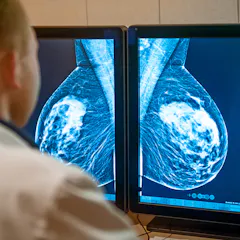
While AI holds promise for improving breast cancer screening, we should proceed cautiously.

A study has linked linoleic acid — a fat found in many everyday oils — with aggressive breast cancer, reigniting the debate about how our diets affect our health.
A fundamental shake-up of how we screen women for breast cancer could save more lives from the disease. Here are some options of how this could look.
Top contributors
-

Professor of Biomedical Sciences, Anglia Ruskin University
-
NHMRC Emerging Leader Research Fellow, School of Public Health, University of Sydney
-
Professor of Breast Cancer Research, Institute of Health and Biomedical Innovation and School of Biomedical Sciences,, Queensland University of Technology
-
Professor, School of Medicine, University of Connecticut
-
Adjunct Professsor, School of Psychology, Faculty of Health and Medical Sciences, Adelaide University
-
James Stewart Chair Of Surgery, The University of Melbourne
-
Professor of Public Health, University of Sydney
-
Professor & Deputy Director, Women's Health Program, School of Public Health and Preventive Medicine, Monash University
-
Specialist Consultant / Head: Breast and Endocrine Surgery Unit, Stellenbosch University
-
Adjunct Professor, School of Psychology, Curtin University and College of Health and Medicine, Australian National University
-
Senior Research Assistant, Stellenbosch University
-
Ph.D., Sociology/Social Justice, University of Windsor
-
Professor of Clinical and Diagnostic Sciences, Associate Dean of Research and Innovation in the School of Health Professions, University of Alabama at Birmingham
-
Professor of Clinical Epidemiology, Sydney School of Public Health, University of Sydney
-
Associate Professor, Deakin University