

Workers in Australia didn’t resign from their jobs in the wake of COVID, but they did burn out. A new survey found some solutions.
Articles on Burnout
Displaying 61 - 80 of 130 articles

Decreased patience and heightened emotions have created a cycle of frustration, with rude customers having abrupt interactions with stressed out service workers.

Burnout prevention needs to start with the organisation, not the employee.

Remembering why we choose to celebrate with friends and family can help us overcome any stress we may now be experiencing.

Though some people experience higher levels of stress than others, they may be less likely to burnout because they are more frequently connected with what is significant in their lives.
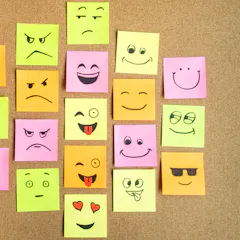
It’s important that employers and employees understand sympathy, empathy and compassion, and consider these emotions’ roles in both job performance and employee relations.

For a long time, arts organisations retained staff attracted to the ‘romance of being creative’. That’s no longer enough.

Frustration about unsettled bargaining that predates the pandemic could get channelled into pronounced resistance from educational workers during the coming months.

Two new studies highlight the importance of social connection in the workplace and illustrate why working from home may not be the optimal workplace arrangement.

How to be more productive and efficient when working on multiple projects.

A range of films spanning different eras confronts viewers with the same question: ‘What if all that hard work isn’t really worth it?’

Burnout and ‘compassion fatigue’ can compromise patient safety and signal health worker exhaustion. And they are a ticking time bomb for health care.

The future of our health system depends on recruiting and retaining passionate and highly skilled health-care workers. It’s essential to build work environments where they feel supported and safe.
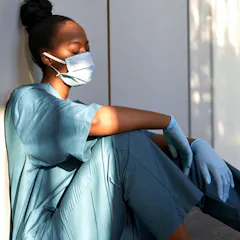
Burnout is a serious problem that deserves all of our attention. An academic who studies the issue offers some practical tips to deal with the problems associated with burnout.

Tackling mental health problems early can help prevent them from getting worse.

Physician burnout is a severe problem in the medical field, made much worse by the COVID-19 pandemic. But an online coaching program that could be scaled up had dramatic results for participants.

Health organisations must play their part in preventing burnout and moral injury in workers. Most factors leading to it – such as lack of resources and staff – are outside the control of individuals.

With teachers reporting record-high levels of burnout, and more burnout than any other profession in the US, scholars examine what’s going on and what it may mean for education.

Academics described their universities as exploitative, oppressive, toxic and fiscally driven. They felt themselves being dehumanised and demoralised by management. Most reported feelings of burnout.
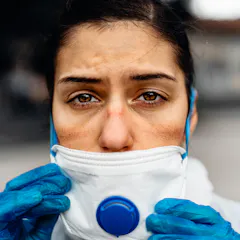
Burnout among health-care workers has implications for the whole workforce, and patients too.
Top contributors
-

Director, Field Experience (Community-Based), Werklund School of Education, University of Calgary
-
Scientia Professor of Psychiatry, UNSW
-
Professor of Management, Deakin University
-
Clinical Psychologist, Te Herenga Waka — Victoria University of Wellington
-
RBC Professor in Responsible Organizations and Full Professor, Concordia University
-
Lecturer in Health, The Open University
-
Associate Professor, Family Medicine, Queen's University, Ontario
-
Associate professor of edcuational leadershiop and policy analysis, University of Missouri-Columbia
-
Professor of Education and 21st Century Endowed Chair in Teacher Quality, University of Arkansas
-
Assistant Professor of Education, Temple University
-
Associate Director of the Office for Education Policy, University of Arkansas
-
Postdoctoral Fellow, Saint Louis University
-
Associate Professor of Special Education, Boston University
-
Professor in Occupational & Organisational Psychology, Northumbria University, Newcastle
-
Business psychologist, Lancaster University