
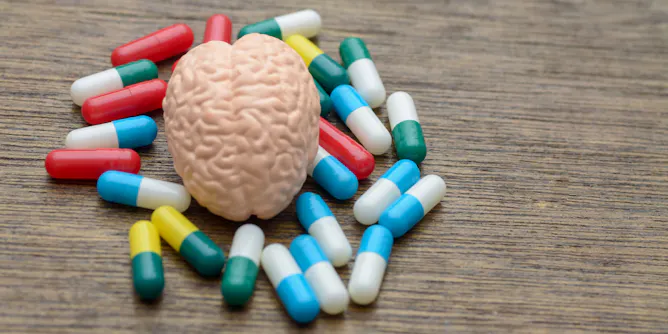
Researchers need more than memory tests to assess whether supplements affect the brain.
Articles on Brain health
Displaying 21 - 40 of 108 articles

Recent headlines have raised concerns about allergy tablets. The evidence is more nuanced than it first appears.

Do you knit or solve puzzles for fun? Research suggests hobbies such as these could help keep your brain healthy, particularly in older age.
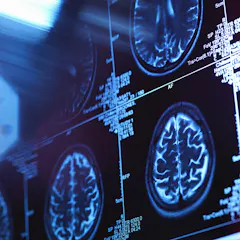
Studying middle-aged populations is important to understanding what Alzheimer’s disease looks like in the earliest stages, to make preventive measures more effective.

As G7 societies age and birth rates decline, we must invest in collaborative open science research, to optimize brain health for every citizen.

Bilingualism may interact with verbal memory and sex steroids to influence dementia risk in unexpected ways.

The NRL must be lauded for its move but its decision not to publicly announce the seemingly laudable changes is intriguing.
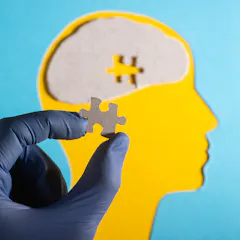
It’s estimated there are more than 100 types of dementia.

New research shows even wrong memories leave a fuzzy trace that supports recognition and improves decision-making.

Scientists have been quietly building a case that what you eat in midlife shapes your brain decades later. Here’s what the evidence actually shows.

Hearing loss and dementia often occur together, but the link is complex.

Your mind goes blank in the supermarket. What was it you meant to buy? Here’s what’s going on in your brain and when you need to see your GP.

Forgetting why you walked into a room isn’t a sign of cognitive decline. It’s your brain doing exactly what it evolved to do.

There are many types of dementia – and our recent case study highlights a newly described subtype.

Investigating sex-specific factors could lead to more targeted therapies and better understanding of diseases, such as Alzheimer’s.

A major US study links air pollution to Alzheimer’s risk in older adults. With fine particles far exceeding safe limits globally, the findings carry urgent implications.

Explosions can damage brain cells and blood vessels even when scans look normal, leaving lasting symptoms that are often missed.

We also investigated whether taking HRT post-menopause had any impact on these health outcomes.

Lifelong plasticity is a core principle of neuroscience, yet it operates within real limits shaped by effort, stress and ageing.
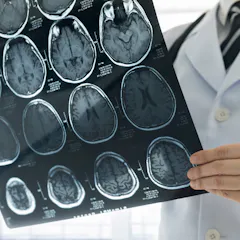
Footage of Kim Kardashian’s brain scan shows low-activity patches common in ageing. These differ entirely from the true holes caused by stroke or infection.
Top contributors
-

Professor of Biological Psychology, Loughborough University
-
Professor, Adjunct Research Fellow, School of Health Science, Swinburne University of Technology
-
Research Fellow, UQ School of Human Movement and Nutrition Sciences, The University of Queensland
-
Professor of Anatomy, Lancaster University
-
Research Fellow in Neuroimmunology, UCL
-
Affiliate Professor, Department of Family Medicine, McGill University
-
Assistant Professor, Faculty of Law, Bond University
-
Senior Nurse Lecturer, London South Bank University
-
Physical activity researcher, Deakin University | Lecturer in science communication, The University of Melbourne
-
Professor and Tier 1 Canada Research Chair in Developmental Neurogenetics, University of British Columbia
-
Professor of Public Health; Director, Centre for Public Health Research, Te Kunenga ki Pūrehuroa – Massey University
-
Lecturer in Cognitive Neuroscience, City St George's, University of London
-
Contract Lecturer in Digital Media, Toronto Metropolitan University
-
Professor of Behavioral Neuroscience, University of Richmond
-
Senior Lecturer in Healthy Ageing, The University of Queensland