

Ageing isn’t all downhill – science shows we gain more than wrinkles.
Articles on Ageing
Displaying 1 - 20 of 523 articles

Most older New Zealanders live in private homes. As the population ages, making streets, transport and public spaces work for them will become crucial.

New evidence shows more people might benefit from this cholesterol-lowering medication than we previously thought. But that doesn’t mean everyone should take one.

Spaceflight can reproduce some changes associated with later life within weeks, offering clues about muscle loss, frailty and recovery.
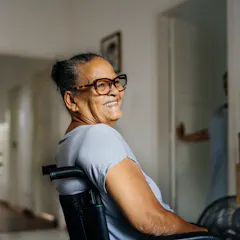
It might be tempting to focus on your ‘good days’. But here’s what to keep in mind when an assessor asks about your health and everyday life.
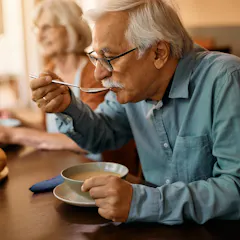
A study of nearly 3,000 older swedes found long gaps between meals may speed up chronic disease – especially for those over 78.

As robots enter social care, Ann Droid raises a bigger question: can machines ease loneliness without replacing human connection?

Some age-related decline is locked in. Strength, balance and fall risk are not – and the evidence shows what works.

A new review links eating less protein to longer lifespans and improved metabolism. But lots of this evidence comes from animals, not humans.

Accessing care often means long wait lists, complex forms and significant out-of-pocket costs. So start planning early, before a crisis hits.

Tracking thousands of people from birth to their 80s shows that long-term financial stress may quietly reshape the ageing brain.

Kidney disease is often associated with dialysis or transplants, but it also affects memory and concentration, and increases stroke risk.

This little-known brain disorder is currently one of the biggest challenges facing medicine where age-related diseases are concerned.

Wellness clinics are supplying peptides and anti-ageing injections that aren’t approved, meaning they haven’t been checked for safety or effectiveness.

Mindfulness can improve health and well-being, but it may not work for everyone. Buddhist teachings suggest that how it is practiced – and who guides it – matters.

Created in 2011, walking football offers a way for older people to participate in sport.

Our study found that people with at least three metabolic syndrome risk factors had brains that looked one year older than their actual age on average.

Australians can expect to live around 87% of their lives in full health.

Researchers need more than memory tests to assess whether supplements affect the brain.

For the first time, people aged 50–59 years make up the highest proportion of unintentional drug overdose deaths. But these aren’t just from illicit drugs.
Top contributors
-

Professor of Biogerontology, University of Brighton
-
PhD student, University of Buckingham
-
Emeritus Professor, University of New England
-
NHMRC Senior Lecturer, School of Medical Sciences, UNSW
-
Professor: Health and Population Division, School of Public Health, University of the Witwatersrand
-
Reader in Ageing Physiology, University of Westminster
-
Associate Professor, Epidemiology, Deakin University
-
Associate Professor of Psychology, Adelaide University
-
Honorary associate professor of economy and society, Macquarie University
-
Associate Professor in Criminology, The University of Melbourne
-
Chair of Molecular Biogerontology, University of Birmingham
-
Senior Research Associate, International Centre for Future Health Systems, UNSW, UNSW
-
Reader in Molecular Genetics of Ageing, University of Essex
-
Senior Research Fellow, University of Edinburgh
-
Adjunct Associate Professor, Australian Research Centre for Sex, Health & Society, La Trobe University