

People ate on average 142 calories more after swimming than they did on their rest day.
Articles on Bicycling
Displaying 121 - 140 of 393 articles
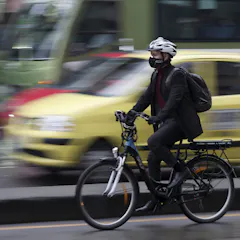
Bike shops have seen record sales during the pandemic as people try to avoid crowded transportation. But governments must do more to keep new cyclists in the saddle.
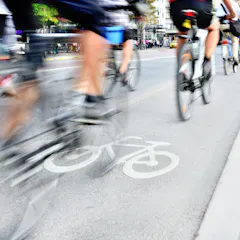
Our new tool identifies where new cycling infrastructure can be installed.
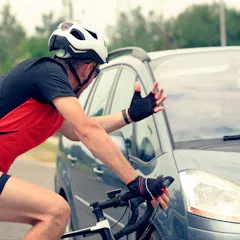
Drivers and cyclists develop distinct identities of themselves and others in ways that mirror the formation of ethnic identities. And on-road segregation runs the risk of reinforcing this process.
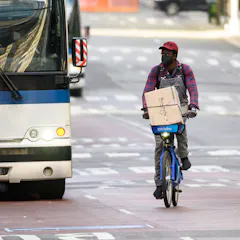
Low-income and minority groups are often reliant on cheaper modes of transport, but many find cycling to work problematic.
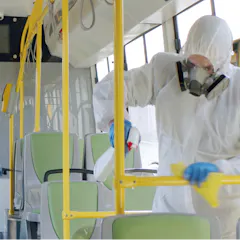
Some new habits we’ve seen emerging during the pandemic could help us solve tricky problems like traffic congestion, which have challenged our cities for a long time.
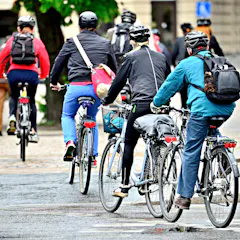
As people return to work after the lockdown, there’s more reason than ever to promote active commuting.
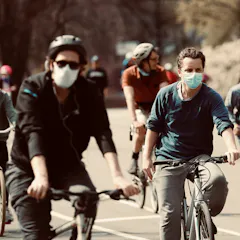
New research reveals which sectors of the global economy fuelled the emissions decline during COVID-19. We have a narrow window of time to make the change permanent.

Why we should free children from the deadening tyranny of being driven everywhere.

A high-tech twist on an old idea – running on springs – could give human-powered movement its biggest boost in more than a century.
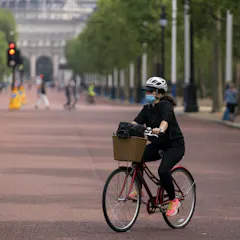
As lockdowns ease off, there is a danger that the old city traffic jams will soon be back with a vengeance.
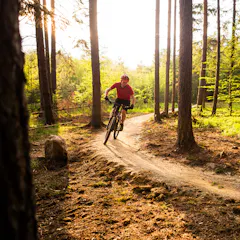
Our research suggests there is much to learn from mountain bikers on the fragile connections between humans and nature.

Temporary and tactical urbanism offers simple, low-cost solutions to make streets and other public spaces both safe and sociable during this time of physical distancing.
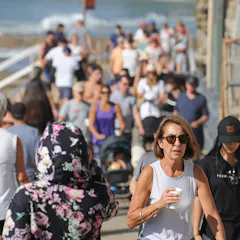
We’ve all seen the increases in people walking and cycling on shared paths so crowded it’s almost impossible to maintain physical distancing. This must be fixed, and quickly.

We are all finding out about neighbourhood liveability as we stay home for the coronavirus lockdown. What we learn about local strengths and weaknesses can help us improve our communities in future.
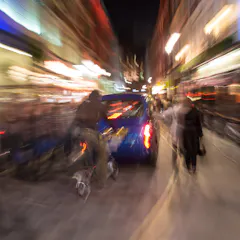
Our research calculates how dangerous different vehicles are to other people.
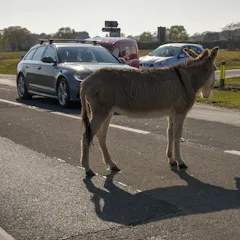
Transport Secretary Grant Shapps has called for fewer cars and better public transport.
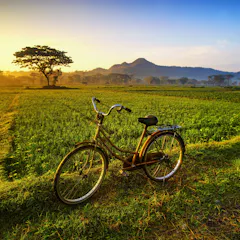
Rapid motorisation has made the Indonesian city of Solo prioritise policies to support motorised vehicles, paying little attention to cycling and marginalising poor women.
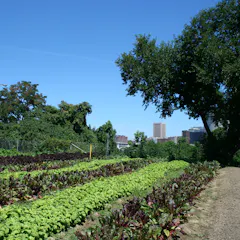
Four out of 5 Americans live in cities, so urban planning can make a big difference in our lifestyles – especially if it promotes healthy diets and physical activity.
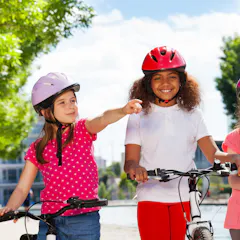
Radical thinking in Greater Manchester’s cycling and walking plan could direct cities away from car-focused infrastructure.
Top contributors
-

Adjunct Associate Professor of Public Health, Victoria University
-
Chris Rissel is a Friend of The Conversation.
Senior Research Fellow, College of Medicine and Public Health, Flinders University
-
Associate Professor in Urban Planning, The University of Queensland
-
Assistant Professor, Victoria University
-
Senior Lecturer, Faculty of Health Sciences and Sport, University of Stirling
-
Professor of Human Geography, The University of Queensland
-
Associate professor, Edith Cowan University
-
Senior Researcher, Institute of Transport Studies, Monash University
-
Senior Lecturer in Urban Planning, University of Auckland, Waipapa Taumata Rau
-
Adjunct Research Fellow, School of Human Sciences, The University of Western Australia
-
Professor, Faculty of Health Sciences, Simon Fraser University
-
Associate Professor and Head of Sustainable Mobility and Safety Research, Monash University
-
Professor of Transport, University of Westminster
-
Professor of AfroEurasian Sport, EM Lyon Business School
-
Postdoctoral research fellow, University of Sydney