
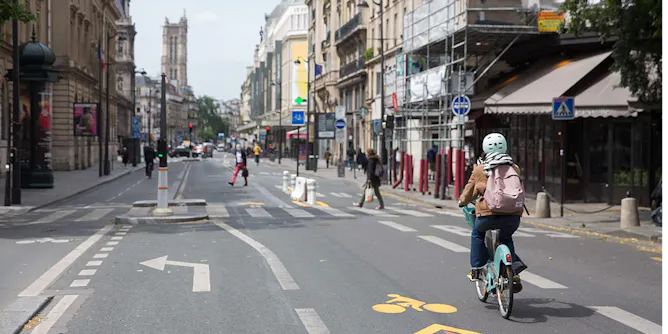
The need for social distancing sparked a cycling boom, cutting air pollution and boosting city dwellers’ mental and physical health. But when the pandemic ends, will it be back to life as usual?
Articles on Bicycling
Displaying 101 - 120 of 393 articles

And the winner is … e-bikes? A new entrant is set to overtake Brisbane’s CityCycle scheme in the race for the shared mobility market.
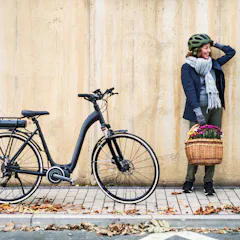
Electric bikes provided a safe commuting option for people who weren’t able to ride traditional bicycles.
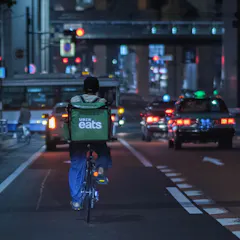
Delivery riders are paying the ultimate price for the fact that our cities, their infrastructure and the rules governing them make cycling much more dangerous than it should be.

An increase in cyclists due to the COVID-19 pandemic means that cities need to look at what it means to develop and maintain inclusive bicycle infrastructure.
Exercise plays an important part in preserving memory throughout our lifetime.
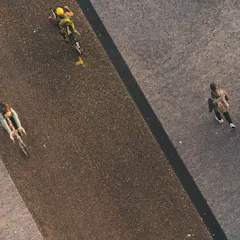
Active travel has become attractive to a degree not seen for decades. Policy needs to follow.
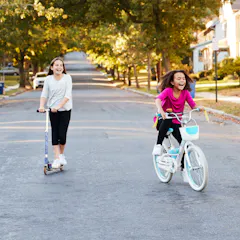
School streets close roads to motor traffic when children arrive at and leave school.

Australian bicycles are largely influenced by sport, not utility. We should embrace cargo bikes for their usefulness, over speed.
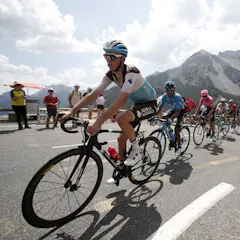
Cycling remains a leading example of athletes sacrificing their bodies for sporting glory.
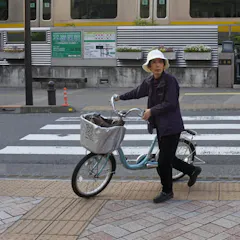
If we’re to get more people walking and cycling in our cities, then we need to make it easier for people, and we can learn from others overseas.
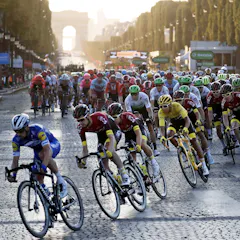
My research has shown evidence of racism and particularly anti-blackness in elite and professional cycling.
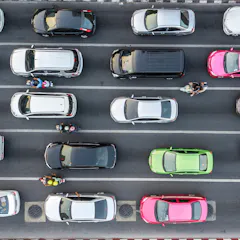
Government action is needed to cut car dependency.

New bike lanes are a good idea for health and air quality, but the convenience of car travel for most journeys will remain.

Lowering urban density to protect against the coronavirus would be a misguided response. Density is not a key driver of infection, and keeps people active and healthy.
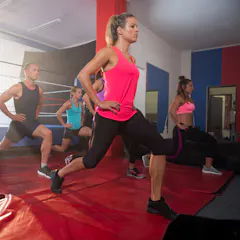
During an AMRAP workout, participants will aim to complete as many rounds of a single exercise as possible within a set time.
Yes it is possible to overexercise – four experts on what you need to know.
Investing more in cycling and walking would boost both physical and economic health, with a typical return of $5 for every $1 spent on cycling infrastructure.
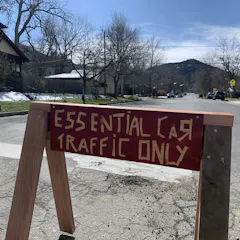
City streets were built to accommodate cars, but the COVID-19 pandemic has scrambled our transport needs. Many cities are moving to make streets more people-friendly and less car-centric.
Car use and cycling have soared to above pre-pandemic levels in our biggest cities (Melbourne is an obvious exception). Walking is not far behind, but public transport is being shunned.
Top contributors
-

Adjunct Associate Professor of Public Health, Victoria University
-
Chris Rissel is a Friend of The Conversation.
Senior Research Fellow, College of Medicine and Public Health, Flinders University
-
Associate Professor in Urban Planning, The University of Queensland
-
Assistant Professor, Victoria University
-
Senior Lecturer, Faculty of Health Sciences and Sport, University of Stirling
-
Professor of Human Geography, The University of Queensland
-
Associate professor, Edith Cowan University
-
Senior Researcher, Institute of Transport Studies, Monash University
-
Senior Lecturer in Urban Planning, University of Auckland, Waipapa Taumata Rau
-
Adjunct Research Fellow, School of Human Sciences, The University of Western Australia
-
Professor, Faculty of Health Sciences, Simon Fraser University
-
Associate Professor and Head of Sustainable Mobility and Safety Research, Monash University
-
Professor of Transport, University of Westminster
-
Professor of AfroEurasian Sport, EM Lyon Business School
-
Postdoctoral research fellow, University of Sydney