
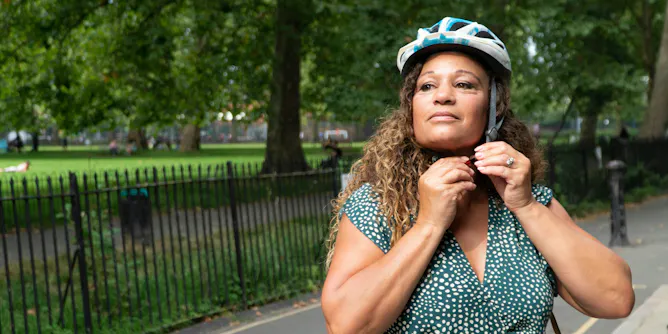
Plan your route, keep your bike by the door, and don’t worry about Lycra – small habits can get you back on the bike.
Articles on Bicycle infrastructure
Displaying 1 - 20 of 118 articles
These pilot schemes suggest e-bikes can be popular even in non-riding communities. But easy access, infrastructure and local organisation are all vital.
New research suggests house buyers “price in” access to cycle routes.
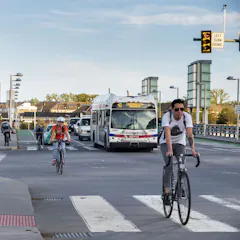
Philadelphia implemented new policies this year to better protect pedestrians and cyclists, but the city has a long way to go to reach its Vision Zero commitment of zero traffic deaths by 2030.
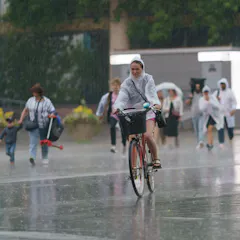
Male cyclists greatly outnumber female cyclists in Australia. New research points to ways to close the gap.
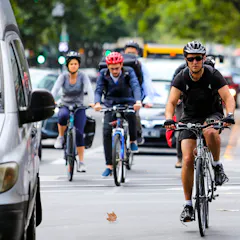
We want healthy, liveable cities and to cut emissions to net zero. Getting more people to use bicycles instead of cars will go a long way towards achieving these goals.
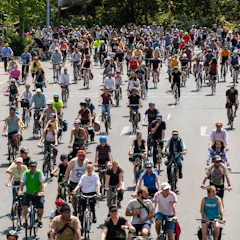
Every kilometre cycled in France saves around one euro in healthcare costs, according to a recent analysis of decennial mobility survey.
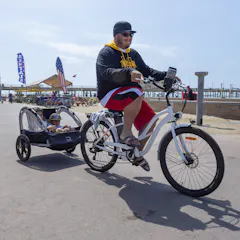
Many incentive programs promote e-bike use, but they aren’t necessarily targeting the right people for the right reasons.
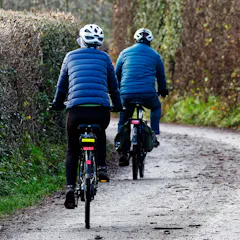
Research shows that rain and hilly terrain doesn’t put people off e-bikes.
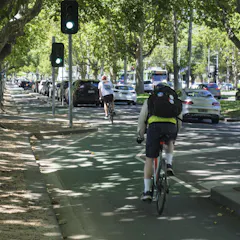
Early in the pandemic, when there was much less traffic on the roads, people took to their bikes. But since then, fewer people are cycling, with rates now lower than in 2011.

Canada should invest in sustainable transportation infrastructure to accelerate the green transition.
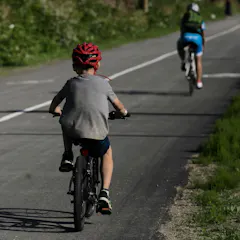
Cycling in Canada has been experiencing a great boom in recent years. Yet, there was no consistent and complete way to measure cycling infrastructure, until now.
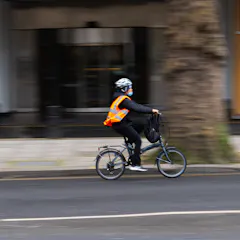
Bike riders wear helmets and high-vis vests to reduce their vulnerability on the road. Problem is a new study finds this dehumanises cyclists, putting them more at risk of aggression from drivers.
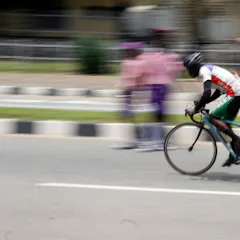
Lagos is famous for its congested traffic. Cycling could help change this image.
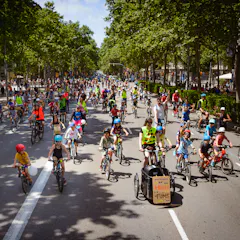
Urban development and social norms concerning childhood have led European cities to a situation where public spaces are no more spaces for children and young people.

Men outnumber women by two-to-one on bikes in Australia. It’s time more women were involved in planning new bike paths and protected lanes to feel safer on the road.

Children and teens around the world are not moving enough for healthy growth and development. Aotearoa scores only slightly better than the global average, despite a high uptake of school sports.
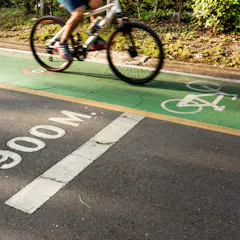
We found people from the UK and Australia usually misunderstand the impact cycle lanes have on speed limits – wrongly believing addition of a cycle lane means cars would inevitably need to go slower.

A new study finds congestion charging and creating car-free streets and separated bike lanes have been most effective at reducing car use in European cities.

Is it affordable? Is it safe? Here are some key things to consider if you’re considering buying one of these vehicles or using them in a share scheme.
Top contributors
-

Professor of Human Geography, The University of Queensland
-
Associate Professor in Urban Planning, The University of Queensland
-
Chris Rissel is a Friend of The Conversation.
Senior Research Fellow, College of Medicine and Public Health, Flinders University
-
Professor Communications and Media, University of Canberra
-
Associate Professor and Head of Sustainable Mobility and Safety Research, Monash University
-
Senior Lecturer, School of Health & Social Development, Deakin University
-
John Rennie Short is a Friend of The Conversation.
Professor Emeritus of Public Policy, University of Maryland, Baltimore County
-
Reader in Smart Transport, University of Huddersfield
-
Research Fellow, School of Information Technology and Electrical Engineering, The University of Queensland
-
Adjunct Associate Professor of Public Health, Victoria University
-
Senior Lecturer, School of Architecture & Design, University of Tasmania
-
Professor of Cultural Studies, University of Wollongong
-
Professor of Geography, University of Wollongong
-
Professor, Faculty of Health Sciences, Simon Fraser University
-
Professor. Design Strategist Making Makers, Australian Institute of Business