
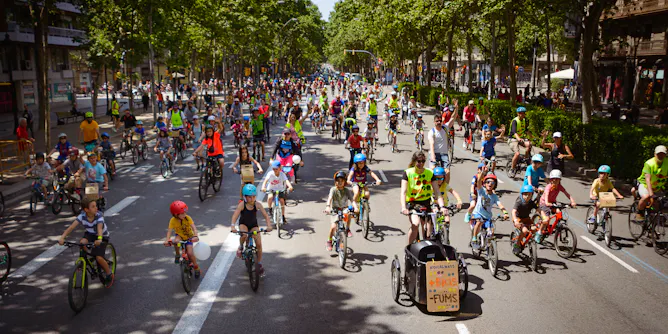
Urban development and social norms concerning childhood have led European cities to a situation where public spaces are no more spaces for children and young people.
Articles on Bicycling
Displaying 61 - 80 of 393 articles

Men outnumber women by two-to-one on bikes in Australia. It’s time more women were involved in planning new bike paths and protected lanes to feel safer on the road.

A big reason the idea is gaining momentum globally is that the benefits for the health of individuals, communities and the environment are clear and almost immediate.

Some people juice beetroot, some eat it, others mix up a drink from the powdered form. Here’s how it might affect your athletic performance.
What I’ve learned on the journey to happiness.

Factors such as having supportive family and friends, safer communities, positive school environments and adequate resources, are often associated with more physical activity.
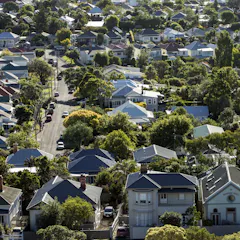
A comparison of 42 urban areas in New Zealand with 500 towns and cities in the US shows how much better local urban design has to be if we’re serious about reducing reliance on cars.

On paper, swapping gas-guzzling trucks for bikes may sound like an appealing option for greening e-commerce. However, there are sizeable obstacles to implementing this in cities.
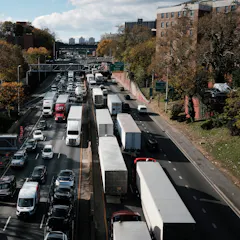
Noise pollution is a serious problem, and cars make a lot of it. But roads are also a factor.
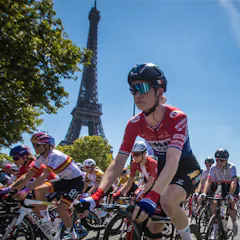
This year’s Tour was marked by near-40°C temperatures, roads cooled with water, and heatstroke.
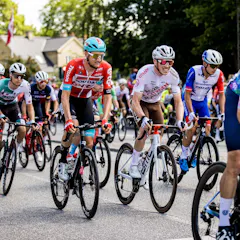
The answer could lie in evolution.
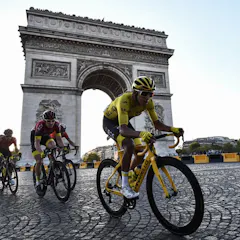
Technology is often blamed for “locking down” major bike races and making them predictable. Yet data analysis shows that Tours in the “classic era” weren’t always thrill rides.
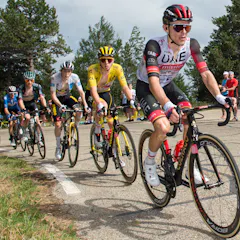
Three scientists explain the biology and physics of what goes into one of the world’s most grueling races, the Tour de France.
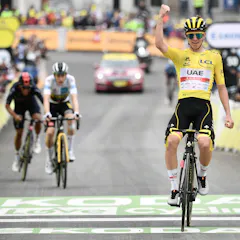
Riders in the 2022 Tour de France will ride more than 2,100 miles (3,400 km) over the 21 flat and mountainous stages of the race. And they will burn an incredible amount of energy while doing so.
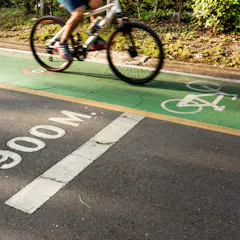
We found people from the UK and Australia usually misunderstand the impact cycle lanes have on speed limits – wrongly believing addition of a cycle lane means cars would inevitably need to go slower.
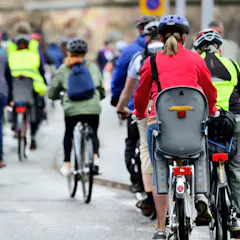
The bicycle’s capacity to respond to pressing social issues has inspired both intrigue and optimism, especially in the context of COVID-19.
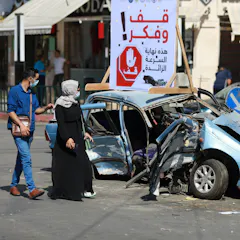
Traffic crashes kill and injure millions worldwide every year and are a major drain on economic development. Improving road safety would produce huge payoffs, especially in lower-income countries.
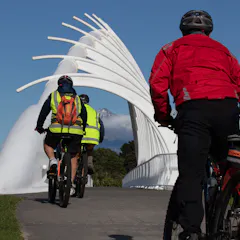
Transport planners estimate money spent on high-quality cycling infrastructure yields benefits between ten and 25 times the costs.
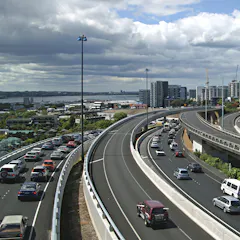
Tackling climate change is a budget priority, but will we see the major investment in cycling infrastructure and public transport that is one obvious solution?

A new study finds congestion charging and creating car-free streets and separated bike lanes have been most effective at reducing car use in European cities.
Top contributors
-

Adjunct Associate Professor of Public Health, Victoria University
-
Chris Rissel is a Friend of The Conversation.
Senior Research Fellow, College of Medicine and Public Health, Flinders University
-
Associate Professor in Urban Planning, The University of Queensland
-
Assistant Professor, Victoria University
-
Senior Lecturer, Faculty of Health Sciences and Sport, University of Stirling
-
Professor of Human Geography, The University of Queensland
-
Associate professor, Edith Cowan University
-
Senior Researcher, Institute of Transport Studies, Monash University
-
Senior Lecturer in Urban Planning, University of Auckland, Waipapa Taumata Rau
-
Adjunct Research Fellow, School of Human Sciences, The University of Western Australia
-
Professor, Faculty of Health Sciences, Simon Fraser University
-
Associate Professor and Head of Sustainable Mobility and Safety Research, Monash University
-
Professor of Transport, University of Westminster
-
Professor of AfroEurasian Sport, EM Lyon Business School
-
Postdoctoral research fellow, University of Sydney