
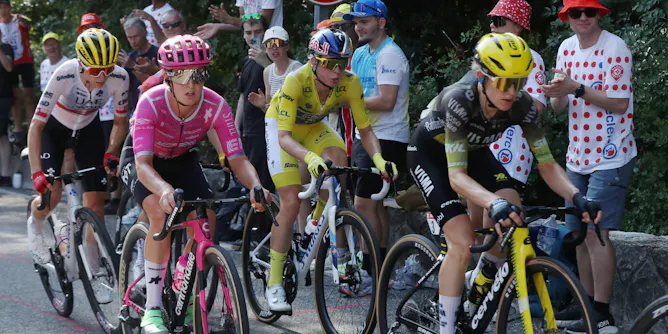
These stories sound bizarre, but they highlight the battle for marginal gain in competition.
Articles on Tour de France
Displaying 1 - 20 of 81 articles
The ex-champion cyclist turned commentator explains why heat is a growing risk to the annual summer event, and points to some Australian women to watch this weekend.
There’s no single explanation for Tadej Pogačar’s dominance. His greatness lies in possessing all of cycling’s major weapons at once.
The Tour de France is not simply a battle of who can pedal fastest. It’s also a race made up of politics and priorities.

In extreme heat, the tour can provide extra shade, hydration during racing and even alter or cancel a stage. But is this enough?
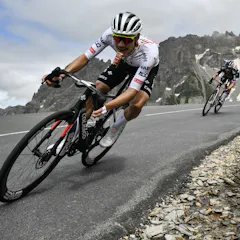
Despite faster, fitter athletes and advancements in technology, cycling’s governing body wants to slow things down.
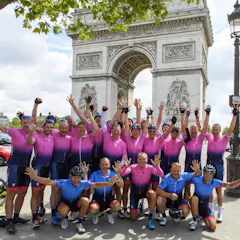
What happens when amateurs take on the Tour de France route? Fatigue, triumph and lessons in endurance.
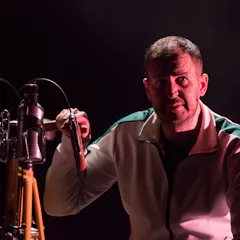
Symphonie of the Bicycle is a tribute to the value of laughter and comedy, and the power of theatre in these ruthless times.
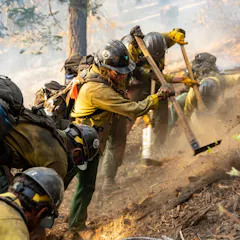
Twenty-five years of research show what it takes to fuel wildland firefighters through an average day, and the toll the long seasonal work takes on their bodies.
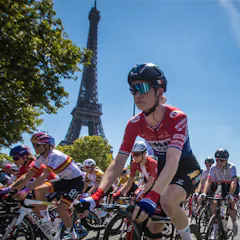
This year’s Tour was marked by near-40°C temperatures, roads cooled with water, and heatstroke.
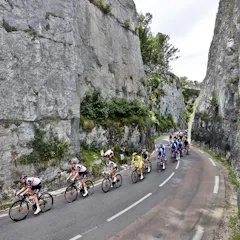
The world’s biggest cycling race is a great way to teach people about geology – and test our own ideas.
The answer could lie in evolution.
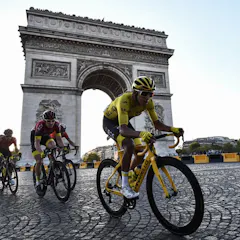
Technology is often blamed for “locking down” major bike races and making them predictable. Yet data analysis shows that Tours in the “classic era” weren’t always thrill rides.
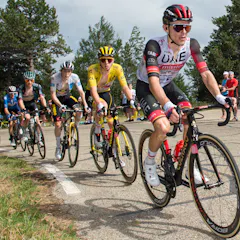
Three scientists explain the biology and physics of what goes into one of the world’s most grueling races, the Tour de France.
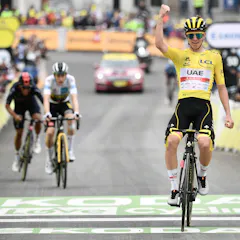
Riders in the 2022 Tour de France will ride more than 2,100 miles (3,400 km) over the 21 flat and mountainous stages of the race. And they will burn an incredible amount of energy while doing so.

A fan’s sign caused a massive pile up at the Tour de France. But should the event’s organisers take legal action?
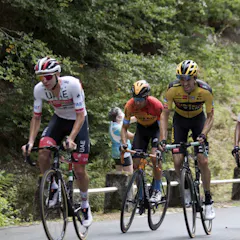
Riders in the 2021 Tour de France will ride more than 2,100 miles (3,400 km) over the 21 flat and mountainous stages of the race. And they will burn an incredible amount of energy while doing so.
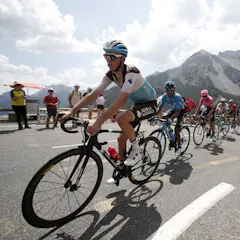
Cycling remains a leading example of athletes sacrificing their bodies for sporting glory.
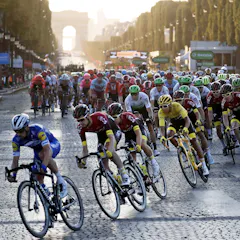
My research has shown evidence of racism and particularly anti-blackness in elite and professional cycling.
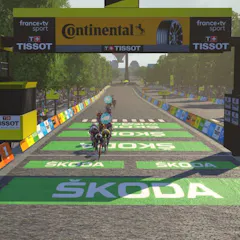
The success of the virtual road race shows how quickly esports are moving into the mainstream.
Top contributors
-

Adjunct Associate Professor of Public Health, Victoria University
-
Associate professor, Edith Cowan University
-
Assistant Professor, Victoria University
-
Postdoctoral research fellow, University of Sydney
-
Professor of AfroEurasian Sport, EM Lyon Business School
-
Professor of Engineering Practice, Purdue University
-
Senior Lecturer, Faculty of Health Sciences and Sport, University of Stirling
-
Associate Professor of Sports Technology, Bournemouth University
-
Professor of History, Western Kentucky University
-
Lecturer, College of Sport & Exercise Science, Victoria University
-
Senior lecturer in Sport, Exercise and Nutrition Sciences, University of Lancashire
-
Postdoctoral Research - Institute of Sport, Exercise and Active Living (ISEAL), Victoria University
-
Lecturer in Law, Deakin University
-
Senior Lecturer Sport Science, School of Biological Sciences, University of Essex
-
NHMRC Investigator Fellow, Lead of the Clinical Epidemiology and Artificial Intelligence Lab, Flinders University