

Philadelphia has more fatal traffic accidents than other big US cities, and they’re concentrated in poor neighborhoods.
Articles on Bicycle lanes
Displaying 1 - 20 of 95 articles

Denmark built the bike lanes – but people are still getting in cars.
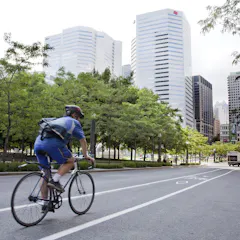
Researchers found that neighbourhoods with more children, older adults and racialized people were usually further away from bike infrastructure.
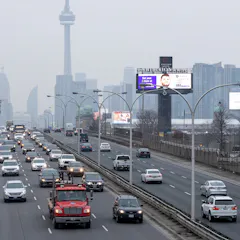
Resilient urban mobility can be created by giving people options that ensure they can still move around when a shock affects one form of transportation.
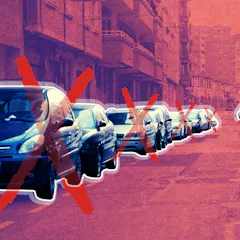
Australia largely has enough off-street parking to do away with unsightly kerbside parking – and free up space for bikes, pedestrians and scooters.
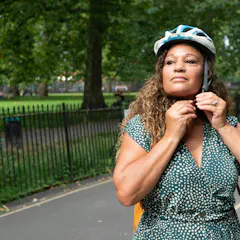
Plan your route, keep your bike by the door, and don’t worry about Lycra – small habits can get you back on the bike.

Research suggests that more consultation about cycle lanes would bring more support for them.
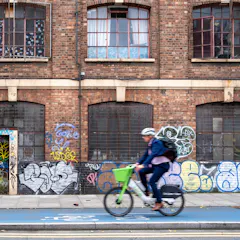
Findings show that the most political people have the strongest views on green transport infrastructure, potentially skewing the debate.
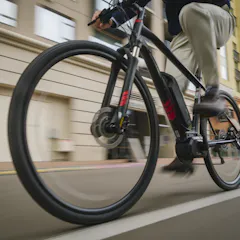
These pilot schemes suggest e-bikes can be popular even in non-riding communities. But easy access, infrastructure and local organisation are all vital.

Efforts to remove bike lanes in Toronto could result in more injuries and make transportation more challenging for people.
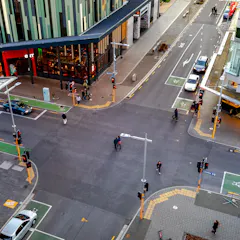
Encouraging walking, cycling and public transport use requires a cohesive, collaborative approach by all involved. The latest University of Canterbury travel survey shows how effective it can be.
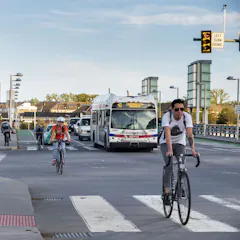
Philadelphia implemented new policies this year to better protect pedestrians and cyclists, but the city has a long way to go to reach its Vision Zero commitment of zero traffic deaths by 2030.

Despite loud calls for tough policing of e-scooters and even outright bans, the problems can be better managed with technology and public education.

According to a reliable poll, New Zealanders are about evenly split on investing more in cycleways, contrary to Transport Minister Simeon Brown’s recent claims.
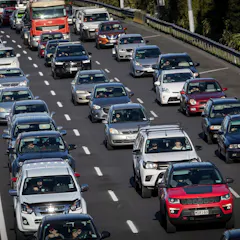
The billions allocated for roads in the National Land Transport Programme will not see any actually built in the next three years.
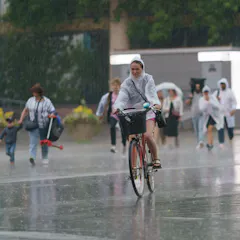
Male cyclists greatly outnumber female cyclists in Australia. New research points to ways to close the gap.
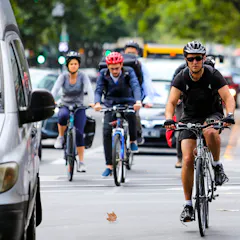
We want healthy, liveable cities and to cut emissions to net zero. Getting more people to use bicycles instead of cars will go a long way towards achieving these goals.

Cycling in Canada has been experiencing a great boom in recent years. Yet, there was no consistent and complete way to measure cycling infrastructure, until now.
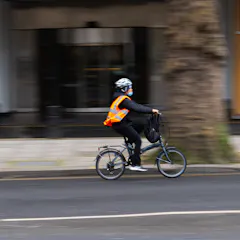
Bike riders wear helmets and high-vis vests to reduce their vulnerability on the road. Problem is a new study finds this dehumanises cyclists, putting them more at risk of aggression from drivers.
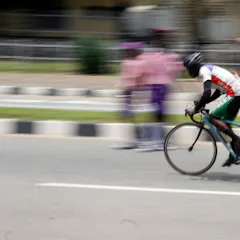
Lagos is famous for its congested traffic. Cycling could help change this image.
Top contributors
-

Associate Professor in Urban Planning, The University of Queensland
-
Professor of Human Geography, The University of Queensland
-
Professor of Transport Engineering, University of the West of England
-
Senior Lecturer in Urban Planning, University of Auckland, Waipapa Taumata Rau
-
Professor of Human Geography, University of Canterbury
-
Chris Rissel is a Friend of The Conversation.
Senior Research Fellow, College of Medicine and Public Health, Flinders University
-
Research Lead, UQ Micromobility Research Cluster, The University of Queensland
-
Professor, Faculty of Health Sciences, Simon Fraser University
-
Professor Communications and Media, University of Canberra
-
Professor of Transport, University of Westminster
-
Reader in Smart Transport, University of Huddersfield
-
Lecturer (Assistant Professor), The University of Western Australia
-
Lecturer in Urban Agriculture, Boston University
-
Associate Professor and Head of Sustainable Mobility and Safety Research, Monash University
-
Professor of Urban and Environmental Policy and Planning, Tufts University