
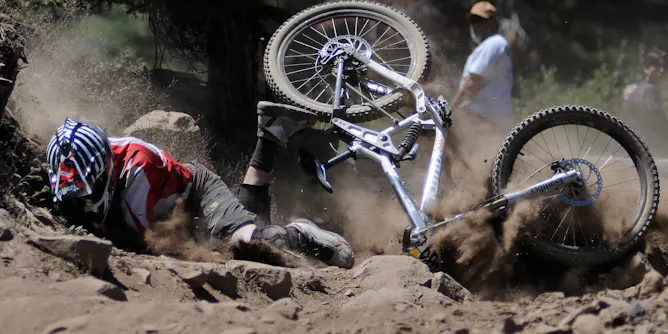
The warm summer months encourage more of us to get outside and exercise, whether by shooting hoops or riding a bike. But there’s a downside: higher risk of injury.
Articles on Bicycling
Displaying 181 - 200 of 393 articles
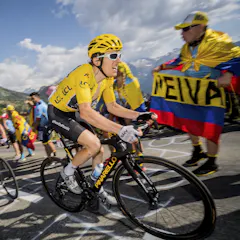
More needs to be done to manage concussions in road cycling.
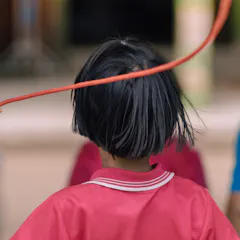
Compulsory sport and physical education at school will improve children’s memory, attention and ability to concentrate, not just boost fitness. The evidence is in.
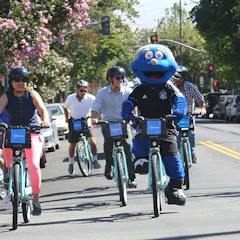
Urban planners often hope bike-share schemes might reduce reliance on cars and help with congestion. But very few of those who use share bikes have switched from driving.
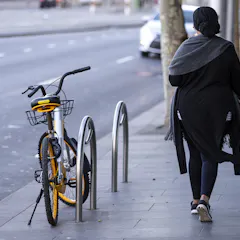
Dockless or stationless bike sharing is risky business, relying a bit too much on common decency. Bike sharing schemes can work, but they may need to forego user convenience for bike safety.

Collisions at intersections between motor vehicles, cyclists and pedestrians cause many deaths and injuries. Design that considers how each group approaches intersections improves everyone’s safety.
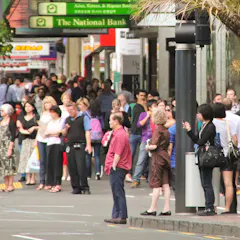
Everyone doesn’t simply wait their turn at traffic lights. Signals are set up to enable a ‘green wave’ for cars and adjust to heavy traffic, making walkers wait longer no matter how many there are.

We spend on average about an hour a day travelling. Given this is unlikely to change, how can we make this time more productive and enjoyable?
We need a radical solution to clean up doping in elite sport.
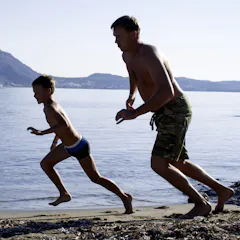
Children’s muscles recover rapidly from high-intensity exercise, and kids can produce repeated exercise efforts when most of us adults continue to feel exhausted.
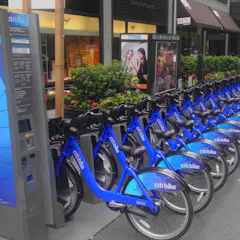
Dozens of US cities have launched bike-share programs in the past decade. There have been bumps – critics want wider access, and cities want bikes stored out of the way – but bike sharing is on a roll.

The continual breaking of World Records is the result of complex interactions between genetics, talent, equipment, training and nutrition.
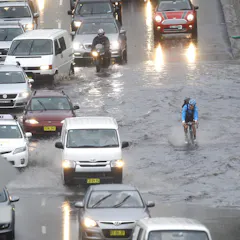
The relationship between weather and our travel choices is complicated. We can’t change the weather, but, with many other factors in play, good policy and design can reduce its impacts.
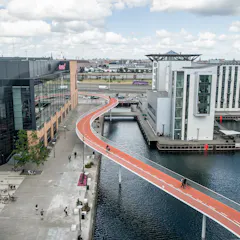
New analysis reveals just how little is spent on cycling and walking projects around Australia. No state’s spending on cycling is more than 1.5% of its road funding.
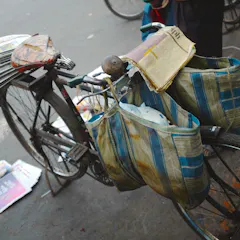
Cycling is a low-cost and non-polluting way to make deliveries in congested cities. Slow cyclists should be recognised as good for the economy and environment, not treated like second-class citizens.

Even in cities with good public transportation, some areas can be ‘transit deserts,’ where demand exceeds supply. Living in these zones makes it hard to access good jobs, health care and other services.
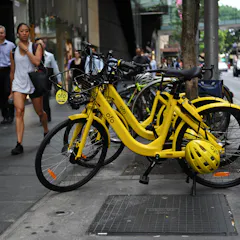
Mental short-cuts guide our everyday decision-making. Unfortunately, five biases can lead us to deny responsibility for our poor decisions and are creating problems for share-bike schemes.

Drinking coffee before exercising could make you run faster and lift heavier - if you’ve the right genes.

There are three key cultural reasons why a share-bike business model that could be successful in Singapore is much less likely to be so in Australia.
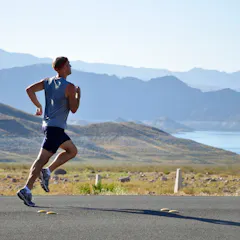
Turns out taking antioxidant supplements after exercise doesn’t do much to help reduce muscle soreness after all.
Top contributors
-

Adjunct Associate Professor of Public Health, Victoria University
-
Chris Rissel is a Friend of The Conversation.
Senior Research Fellow, College of Medicine and Public Health, Flinders University
-
Associate Professor in Urban Planning, The University of Queensland
-
Assistant Professor, Victoria University
-
Senior Lecturer, Faculty of Health Sciences and Sport, University of Stirling
-
Professor of Human Geography, The University of Queensland
-
Associate professor, Edith Cowan University
-
Senior Researcher, Institute of Transport Studies, Monash University
-
Senior Lecturer in Urban Planning, University of Auckland, Waipapa Taumata Rau
-
Adjunct Research Fellow, School of Human Sciences, The University of Western Australia
-
Professor, Faculty of Health Sciences, Simon Fraser University
-
Associate Professor and Head of Sustainable Mobility and Safety Research, Monash University
-
Professor of Transport, University of Westminster
-
Professor of AfroEurasian Sport, EM Lyon Business School
-
Postdoctoral research fellow, University of Sydney