
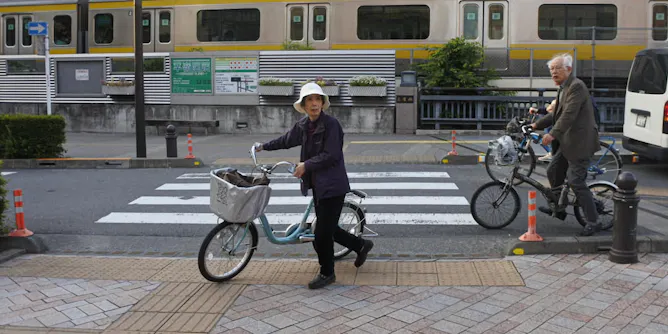
If we’re to get more people walking and cycling in our cities, then we need to make it easier for people, and we can learn from others overseas.
Articles on Bicycle infrastructure
Displaying 41 - 60 of 118 articles
Investing more in cycling and walking would boost both physical and economic health, with a typical return of $5 for every $1 spent on cycling infrastructure.
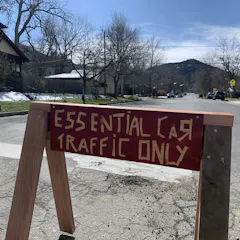
City streets were built to accommodate cars, but the COVID-19 pandemic has scrambled our transport needs. Many cities are moving to make streets more people-friendly and less car-centric.
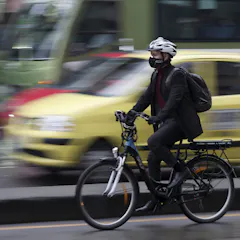
Bike shops have seen record sales during the pandemic as people try to avoid crowded transportation. But governments must do more to keep new cyclists in the saddle.
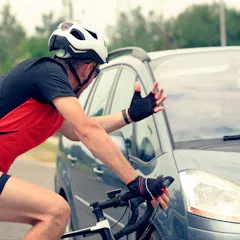
Drivers and cyclists develop distinct identities of themselves and others in ways that mirror the formation of ethnic identities. And on-road segregation runs the risk of reinforcing this process.
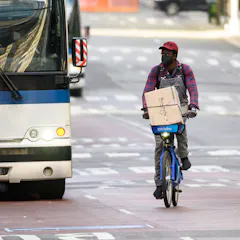
Low-income and minority groups are often reliant on cheaper modes of transport, but many find cycling to work problematic.
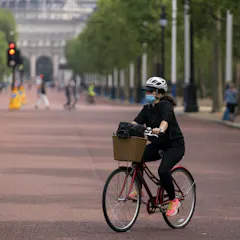
As lockdowns ease off, there is a danger that the old city traffic jams will soon be back with a vengeance.

Rapid motorisation has made the Indonesian city of Solo prioritise policies to support motorised vehicles, paying little attention to cycling and marginalising poor women.
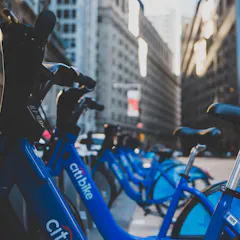
Bike sharing was once proposed as a solution to narrow the cycling gender gap — but it may be further widening this gap.
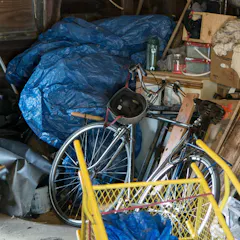
Where bikes are kept is a strong pointer to the place of cycling in the owner’s life. Effective active transport policy starts with understanding what stops people using their bikes instead of cars.

A breakdown in the road or rail systems often causes commuter chaos in Australia. Some overseas cities are more resilient because they have other options – and our bicycle network could give us that.
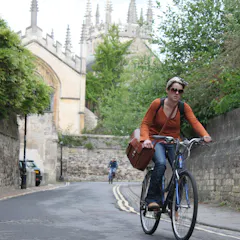
A substantial building programme is needed to rearrange our cities to benefit all types of journeys – not just commutes.

Workers with long commutes are more likely to become sick. They also receive less net income (after deducting travel costs) and less leisure time.
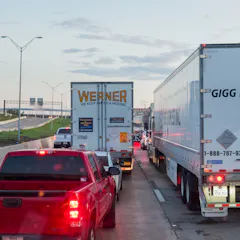
Despite efforts to encourage a shift to sustainable transportation, traffic congestion is often the focus of debates over mobility. Motorists endlessly demand more roads, but is this really a solution?
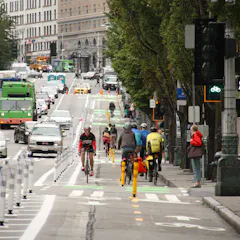
This collective fundraising technique helps defuse anti-cyclist sentiment before it dooms protected bike lanes and other new infrastructure.
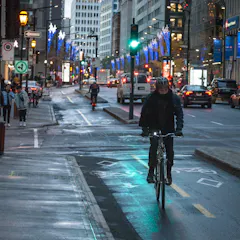
Volunteers can contribute data to maps that help cyclists choose their routes and let planners know how city cycling can be improved.
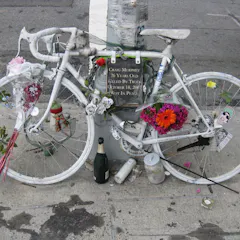
US cities were designed and engineered around cars. Now some are working to increase walking and biking, but the shift isn’t easy.
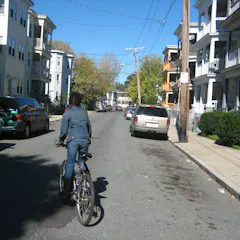
Minorities are driving the bicycling boom, but bike infrastructure investments often neglect their needs. A new study explores what riders in low-income and minority neighborhoods want.
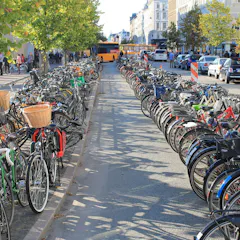
If cities had backed their active transport goals with investment in adequate cycling infrastructure we might not be having the arguments about dockless bikes ‘littering’ public space.
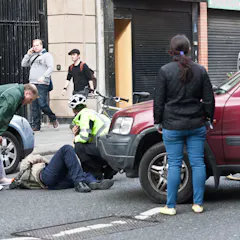
Australia has had an 80% increase in cyclist deaths in 2017-18. With drivers at fault in most collisions, their attitude and behaviour should be the main targets for change.
Top contributors
-

Professor of Human Geography, The University of Queensland
-
Associate Professor in Urban Planning, The University of Queensland
-
Chris Rissel is a Friend of The Conversation.
Senior Research Fellow, College of Medicine and Public Health, Flinders University
-
Professor Communications and Media, University of Canberra
-
Associate Professor and Head of Sustainable Mobility and Safety Research, Monash University
-
Senior Lecturer, School of Health & Social Development, Deakin University
-
John Rennie Short is a Friend of The Conversation.
Professor Emeritus of Public Policy, University of Maryland, Baltimore County
-
Reader in Smart Transport, University of Huddersfield
-
Research Fellow, School of Information Technology and Electrical Engineering, The University of Queensland
-
Adjunct Associate Professor of Public Health, Victoria University
-
Senior Lecturer, School of Architecture & Design, University of Tasmania
-
Professor of Cultural Studies, University of Wollongong
-
Professor of Geography, University of Wollongong
-
Professor, Faculty of Health Sciences, Simon Fraser University
-
Professor. Design Strategist Making Makers, Australian Institute of Business