

Plan your route, keep your bike by the door, and don’t worry about Lycra – small habits can get you back on the bike.
Articles on Bicycling to work
Displaying all articles

Winter cycling is increasing in some places in Scandinavia.
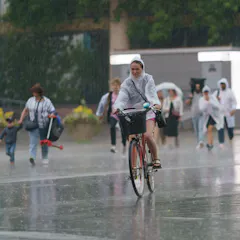
Male cyclists greatly outnumber female cyclists in Australia. New research points to ways to close the gap.
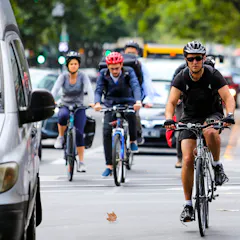
We want healthy, liveable cities and to cut emissions to net zero. Getting more people to use bicycles instead of cars will go a long way towards achieving these goals.
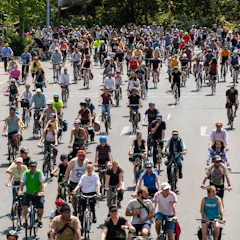
Every kilometre cycled in France saves around one euro in healthcare costs, according to a recent analysis of decennial mobility survey.
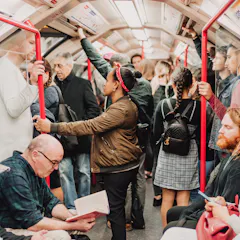
Our long-term research project found commutes over 3km were associated with a greater likelihood of being overweight.
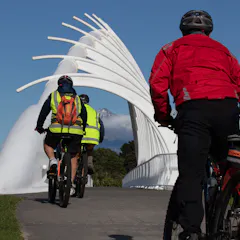
Transport planners estimate money spent on high-quality cycling infrastructure yields benefits between ten and 25 times the costs.

A new study finds congestion charging and creating car-free streets and separated bike lanes have been most effective at reducing car use in European cities.
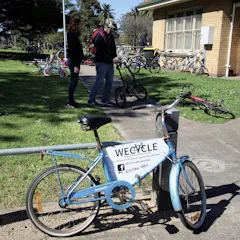
Building a culture of cycling is essential, especially where bike use is low. A global movement of community bike workshops, also known as bike kitchens, can help.

The need for social distancing sparked a cycling boom, cutting air pollution and boosting city dwellers’ mental and physical health. But when the pandemic ends, will it be back to life as usual?

Australian bicycles are largely influenced by sport, not utility. We should embrace cargo bikes for their usefulness, over speed.
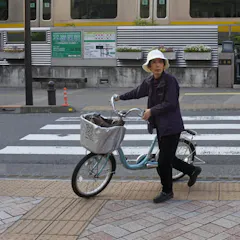
If we’re to get more people walking and cycling in our cities, then we need to make it easier for people, and we can learn from others overseas.
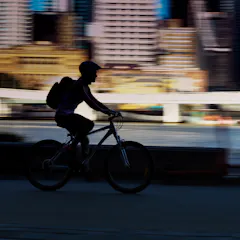
Investing more in cycling and walking would boost both physical and economic health, with a typical return of $5 for every $1 spent on cycling infrastructure.
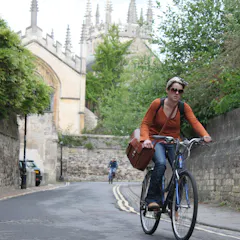
A substantial building programme is needed to rearrange our cities to benefit all types of journeys – not just commutes.

Workers with long commutes are more likely to become sick. They also receive less net income (after deducting travel costs) and less leisure time.
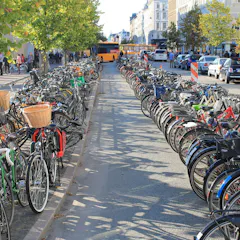
If cities had backed their active transport goals with investment in adequate cycling infrastructure we might not be having the arguments about dockless bikes ‘littering’ public space.
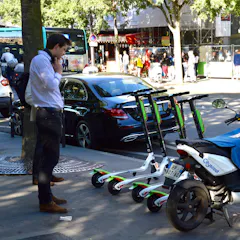
Shared electric scooters appeal as a way to cover that awkward distance between public transport stops and your destination. But first e-scooter operators must solve the littering and dumping problem.
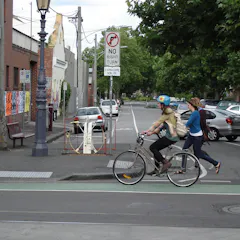
A comparison of Australian cities reveals cyclists and walkers are still very much a minority of commuters, despite the economic, health and environmental costs. Action on three fronts is needed.

Pedal to the office and your risk of an early death drop by over 40%.

Bike lanes in South Africa were meant to encourage commuter cycling and ease congestion but in Johannesburg the initiative garnered more outrage than support.
Top contributors
-

Associate Professor in Urban Planning, The University of Queensland
-
Professor of Human Geography, The University of Queensland
-
Professor Communications and Media, University of Canberra
-
Honorary Professor of Planning, The University of Queensland
-
Directeur de recherche, économie, Centre national de la recherche scientifique (CNRS)
-
Associate Professor, School of Economics, University of Sydney
-
Professor of Sustainability Science, Lund University
-
The University of Queensland
-
Lecturer (Assistant Professor), The University of Western Australia
-
Professeur junior en Santé et Changements Globaux, École normale supérieure (ENS) – PSL; Université Paris Dauphine – PSL
-
Audrey de Nazelle is a Friend of The Conversation.
Senior lecturer, Imperial College London
-
Directrice du Département des Langues, Cultures et Communication, Montpellier Business School
-
Professor of Geography, University of Wollongong
-
PhD Candidate, Faculty of the Arts, Social Sciences and Humanities, University of Wollongong
-
PhD in Architecture and Built Environment, Northumbria University, Newcastle