
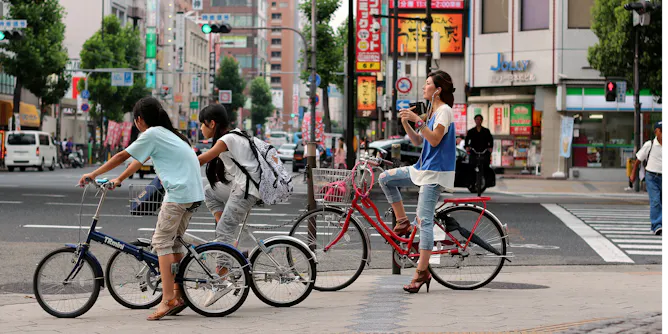
Women in cities tend to get more walking done, which is beneficial to both their health and the climate. Making streets safer for cycling would give them greater access to cities too.
Articles on Bicycle infrastructure
Displaying 21 - 40 of 118 articles

We surveyed over 4,000 Victorians and found more than three-quarters are interested in riding a bike, but only in infrastructure that separates people from cars – such as protected bike lanes.
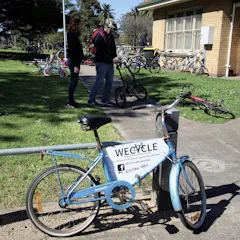
Building a culture of cycling is essential, especially where bike use is low. A global movement of community bike workshops, also known as bike kitchens, can help.
London was rated 2021’s most congested city.

What will the US$1.2 trillion infrastructure bill pay for? Here are some of the things it will help build, fix or remove.

Cyclists in Melbourne are less likely than those in Dublin or Seville to ride in the rain. Understanding why is crucial.
Climate change is a hot-button issue in the upcoming federal election, and each party has a different plan to address the issue.

It’s time to stop demonising cyclists and cycling activists as elitists — the accusation fails at the first test.

New research indicates that people in urban areas, on average, have the smallest carbon footprints, and those living in the suburbs the highest.
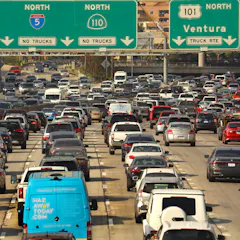
The pandemic offered a tantalizing look at city life with fewer cars in the picture. But with traffic rebounding, there’s limited time to lock in policies that make streets more people-friendly.
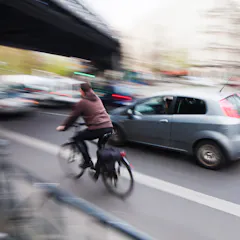
Passing distance laws do change driver behaviour. But new research suggests not all the changes are positive.
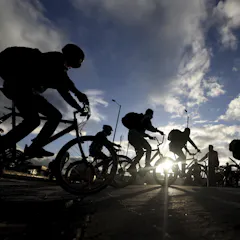
The pandemic could be a boon to car use, but it would be a mistake for governments to let that happen. There’s a golden opportunity to push towards a zero-carbon transportation system.

Electric scooter rides soared from zero to 88 million a year between 2017 and 2019. But launching e-scooters in cities without safe infrastructure or clear rules of the road can be deadly.

Bike-share programs don’t just cater for residents. When tourists use them too, that greatly increases the value the whole community gets from these bikes.

The need for social distancing sparked a cycling boom, cutting air pollution and boosting city dwellers’ mental and physical health. But when the pandemic ends, will it be back to life as usual?

And the winner is … e-bikes? A new entrant is set to overtake Brisbane’s CityCycle scheme in the race for the shared mobility market.
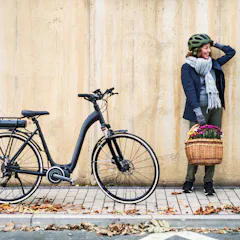
Electric bikes provided a safe commuting option for people who weren’t able to ride traditional bicycles.
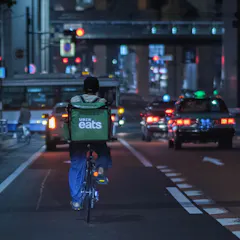
Delivery riders are paying the ultimate price for the fact that our cities, their infrastructure and the rules governing them make cycling much more dangerous than it should be.

An increase in cyclists due to the COVID-19 pandemic means that cities need to look at what it means to develop and maintain inclusive bicycle infrastructure.

Australian bicycles are largely influenced by sport, not utility. We should embrace cargo bikes for their usefulness, over speed.
Top contributors
-

Professor of Human Geography, The University of Queensland
-
Associate Professor in Urban Planning, The University of Queensland
-
Chris Rissel is a Friend of The Conversation.
Senior Research Fellow, College of Medicine and Public Health, Flinders University
-
Professor Communications and Media, University of Canberra
-
Associate Professor and Head of Sustainable Mobility and Safety Research, Monash University
-
Senior Lecturer, School of Health & Social Development, Deakin University
-
John Rennie Short is a Friend of The Conversation.
Professor Emeritus of Public Policy, University of Maryland, Baltimore County
-
Reader in Smart Transport, University of Huddersfield
-
Research Fellow, School of Information Technology and Electrical Engineering, The University of Queensland
-
Adjunct Associate Professor of Public Health, Victoria University
-
Senior Lecturer, School of Architecture & Design, University of Tasmania
-
Professor of Cultural Studies, University of Wollongong
-
Professor of Geography, University of Wollongong
-
Professor, Faculty of Health Sciences, Simon Fraser University
-
Professor. Design Strategist Making Makers, Australian Institute of Business