

Many US cities are investing in bike infrastructure and shade trees. Properly located, these additions can make streets cooler, cleaner and safer for all users – even those who drive.
Articles on Bicycle infrastructure
Displaying 61 - 80 of 118 articles
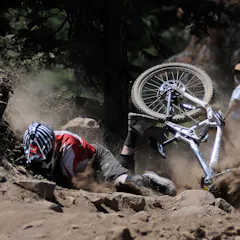
The warm summer months encourage more of us to get outside and exercise, whether by shooting hoops or riding a bike. But there’s a downside: higher risk of injury.
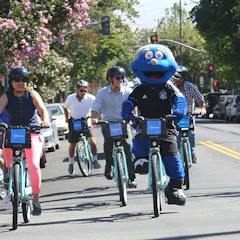
Urban planners often hope bike-share schemes might reduce reliance on cars and help with congestion. But very few of those who use share bikes have switched from driving.
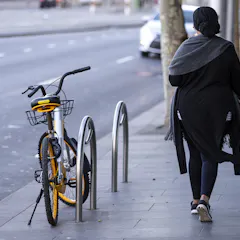
Dockless or stationless bike sharing is risky business, relying a bit too much on common decency. Bike sharing schemes can work, but they may need to forego user convenience for bike safety.

Character, resilience, convenience and sustainability are what make cities great places to live and learn.
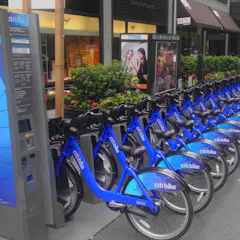
Dozens of US cities have launched bike-share programs in the past decade. There have been bumps – critics want wider access, and cities want bikes stored out of the way – but bike sharing is on a roll.
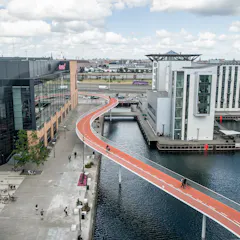
New analysis reveals just how little is spent on cycling and walking projects around Australia. No state’s spending on cycling is more than 1.5% of its road funding.
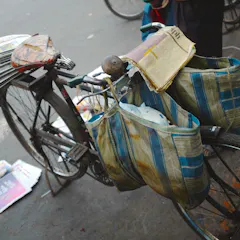
Cycling is a low-cost and non-polluting way to make deliveries in congested cities. Slow cyclists should be recognised as good for the economy and environment, not treated like second-class citizens.
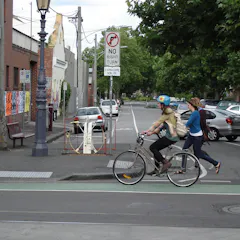
A comparison of Australian cities reveals cyclists and walkers are still very much a minority of commuters, despite the economic, health and environmental costs. Action on three fronts is needed.
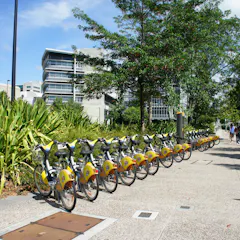
Many short-term bike-hiring programs have been launched amid much fanfare, only for their popularity to decline soon after. Several key factors need to be in place for a program to work.
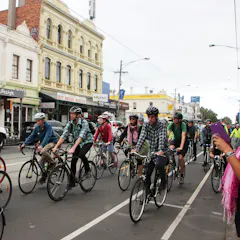
If the strategies we put in place to make cycling safer were taken up in earnest the result would often be chaos.
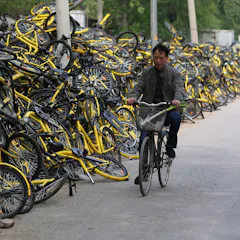
Dramatic images of “bike graveyards” shouldn’t be taken at face value – there’s hope for bike-sharing schemes yet.

Valerie Plante is the first woman to become mayor of Montreal, and she represents a fairly radical but highly creative force in Quebec politics.

More cyclists are suffering from serious injuries than ever before. Here’s what we can do to provide a safer environment.
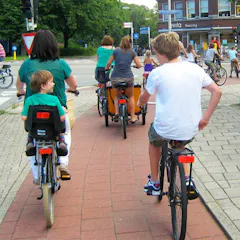
The evidence suggests a small investment in cycling infrastructure, combined with less punitive policing, would enable more Australians to escape daily traffic congestion.
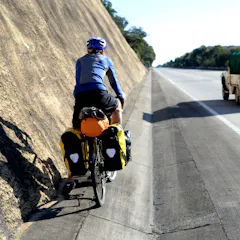
To celebrate the 200th anniversary of the bicycle, we look at new research that confirms cars cause the majority of bike collisions. It’s time to follow much of Europe and shift liability to drivers.
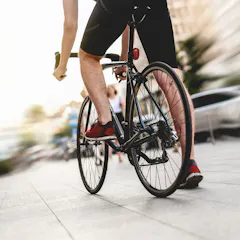
Stop honking your horn … and give them a hug instead.

Pedal to the office and your risk of an early death drop by over 40%.
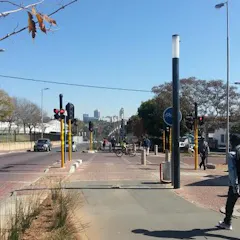
Bike lanes in South Africa were meant to encourage commuter cycling and ease congestion but in Johannesburg the initiative garnered more outrage than support.
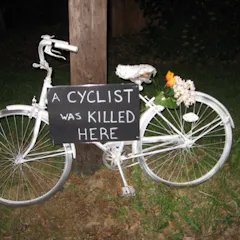
Two weeks ago today, Arzu Baglar died while cycling in Melbourne’s inner west. She was hit by a truck turning the corner of Somerville road and Whitehall street in Yarraville. Arzu was just 36, and a married…
Top contributors
-

Professor of Human Geography, The University of Queensland
-
Associate Professor in Urban Planning, The University of Queensland
-
Chris Rissel is a Friend of The Conversation.
Senior Research Fellow, College of Medicine and Public Health, Flinders University
-
Professor Communications and Media, University of Canberra
-
Associate Professor and Head of Sustainable Mobility and Safety Research, Monash University
-
Senior Lecturer, School of Health & Social Development, Deakin University
-
John Rennie Short is a Friend of The Conversation.
Professor Emeritus of Public Policy, University of Maryland, Baltimore County
-
Reader in Smart Transport, University of Huddersfield
-
Research Fellow, School of Information Technology and Electrical Engineering, The University of Queensland
-
Adjunct Associate Professor of Public Health, Victoria University
-
Senior Lecturer, School of Architecture & Design, University of Tasmania
-
Professor of Cultural Studies, University of Wollongong
-
Professor of Geography, University of Wollongong
-
Professor, Faculty of Health Sciences, Simon Fraser University
-
Professor. Design Strategist Making Makers, Australian Institute of Business