
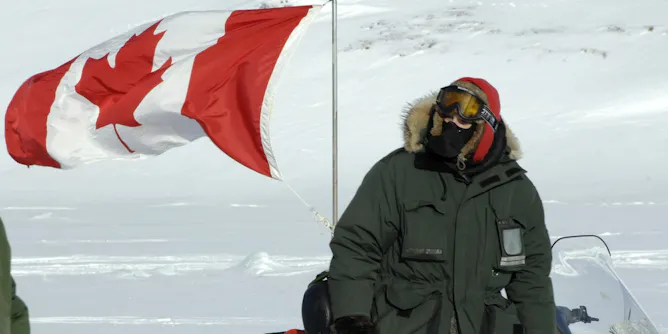
As Arctic competition grows, Canada’s security depends not just on defence, but on migration and retaining people to build resilience in the North.
Articles on Arctic
Displaying 21 - 40 of 286 articles
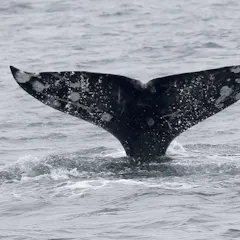
In the past, the gray whale population recovered fairly quickly. But data on baby whales show that isn’t happening, and a new study finds an alarmingly high mortality rate.
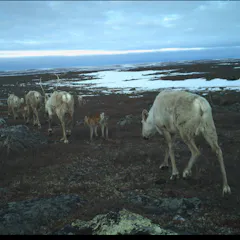
As delegates gather in Brazil for COP15, the fate of Arctic caribou migrations should serve as both a warning and a test.
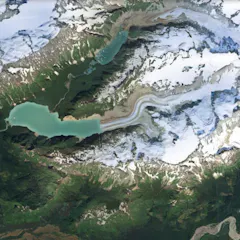
Scientists mapped the evolution of 140 glacial lakes in Alaska and found a way to tell how much larger and destructive they can get as their glaciers melt.

For decades, ECCC research scientists have been integral to the work of the Arctic Monitoring and Assessment Programme.

Human activity from ships, snowmobiles, machinery and aircraft is contributing to making Arctic waters louder.
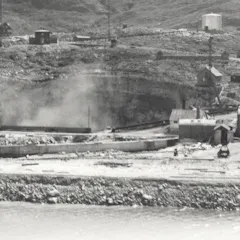
Strategic resources have been central to the American-led global system for decades, as a historian explains. But US actions toward Greenland today are different.
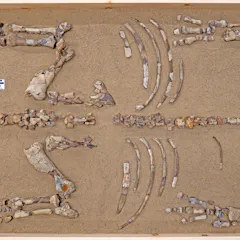
Remains of an ancient Arctic rhino indicate that land mammals traversed the North Atlantic via land bridges, and did so much more recently than previously thought.
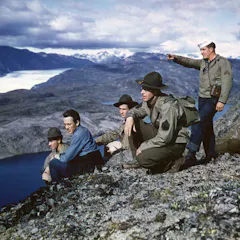
Donald Trump’s claim rests on a selective reading of wartime history.

Greenland’s inhabitants call it Kalaallit Nunaat, or land of the Kalaallit. It is an Indigenous nation whose relatively few people now mostly govern themselves.
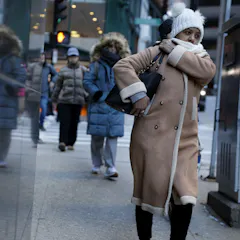
The atmosphere is a complicated place. Warm temperatures in one spot can contribute to brutally cold storms somewhere else.
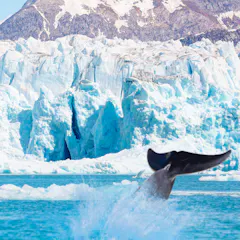
Its ice sheet could theoretically melt and raise the sea by 7 metres.
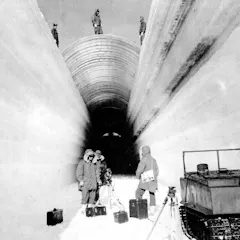
Listen to Paul Bierman, an expert on Greenland’s ice, talk to The Conversation Weekly podcast about the history of the island’s ice sheet.
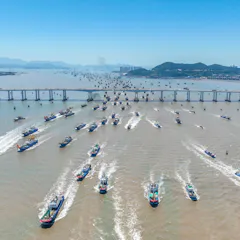
The expansion of Arctic shipping, scramble for seafloor mining and overfishing are all straining international relationships. But the powers of diplomacy go beyond ocean treaties.
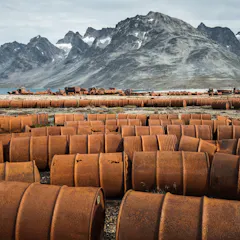
History also shows that many of the fanciful engineering ideas for Greenland failed because they misjudged the island’s harsh climate and dynamic ice sheet.
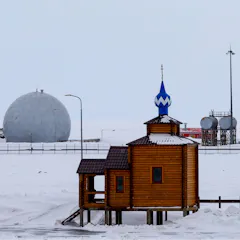
US wound down its presence in Greenland at the end of the cold war. Now it wants to beef it up again.
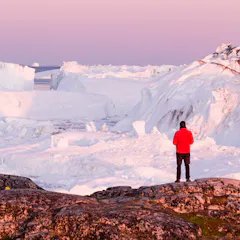
With no Antarctica-style treaty to protect Greenland, a US takeover could mean scientists lose access.
Competition between the US, Russia and China is shutting out regional statkeholders and ignoring the interests of Indigenous people.

Permafrost supports homes and communities across Northern Canada. However, as the climate warms, melting permafrost poses significant challenges for infrastructure.
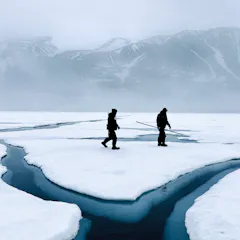
The 20th anniversary of the annual report tracks how sea ice, snow cover and many other vital signs of the Arctic have changed, and the impact that’s having on people and wildlife.
Top contributors
-

Senior Research Fellow, Center for War Studies, University of Southern Denmark
-
Professor of Natural Resources and Environmental Science, University of Vermont
-
Alaska Climate Specialist, University of Alaska Fairbanks
-
Deputy Lead Scientist, National Snow and Ice Data Center (NSIDC), Cooperative Institute for Research in Environmental Sciences (CIRES), University of Colorado Boulder
-
Senior Scientist, National Snow and Ice Data Center (NSIDC), Cooperative Institute for Research in Environmental Sciences (CIRES), University of Colorado Boulder
-
Professor of Glaciology and Earth Observation, University of Bristol
-
Lecturer in International Studies, University of Washington
-
Associate Director, Climate System Research Center and Associate Professor of Climatology, UMass Amherst
-
Senior Lecturer in Physical Geography, Loughborough University
-
Professor and Director of the Centre for Defence and Security Studies, University of Manitoba
-
Chief Scientist, Australian Antarctic Division and Professor of Climate Science, Australian National University
-
Professeur associé/Adjunct professor, École nationale d'administration publique, École nationale d'administration publique (ENAP)
-
Distinguished Professor of Marine Science, King Abdullah University of Science and Technology
-
Research Professor of Geography and Director, National Snow and Ice Data Center, University of Colorado Boulder
-
Postdoctoral Fellow, Department of Biological Sciences, Simon Fraser University