

The 20-year timeline of Canada’s new defence policy, and the fact that several proposed investments will “be explored,” raises serious questions about its commitment to pull its weight in NATO.
Articles on Arctic
Displaying 81 - 100 of 286 articles
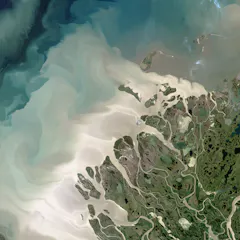
A new study shows how thawing permafrost and intensifying storms will change how water moves into and through Arctic rivers.
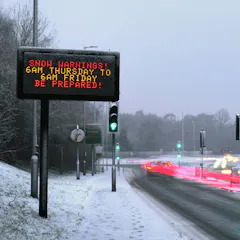
Cold snaps can affect everyday services and infrastructure, putting lives at risk.
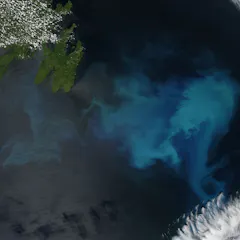
Recent research sheds light on the ocean’s annual ‘biological clock’ and highlights the key dynamics that make it susceptible to climate change.

Climate and environmental insecurity is set to grow in severity as the world warms. The upcoming launch of a new NATO climate change and security centre in Montréal aims to address these concerns.
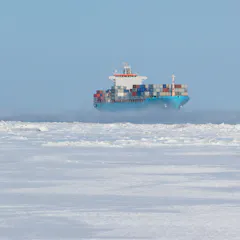
Houthi attacks on ships in the Red Sea have disrupted trade between Asia and Europe – could ships cross the Arctic instead?
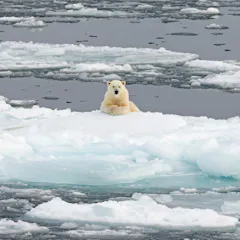
Avian influenza has killed a polar bear and may have infected other bears.

Canada, and particularly the Canadian Arctic, is warming at a considerably higher rate than the global average. The consequences for Canada could be devastating.

Researchers have made a fascinating observation: a polar bear used a diving hunting technique, never before reported, to capture large moulting snow geese.
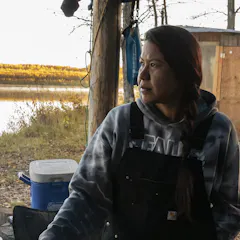
The early heat melted snow and warmed rivers, heating up the land and downstream ocean areas. The effects harmed salmon fisheries, melted sea ice and fueled widespread fires.

Food insecurity is an issue felt particularly acutely by Inuit across Northern Canada. Culturally appropriate food systems may be the solution.
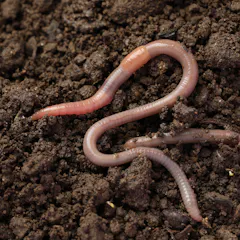
Thawing permafrost in the far north is an inviting prospect for invertebrate burrowers.
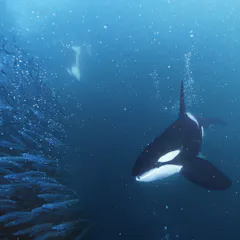
The accumulation of synthetic pollutants found in the blubber of killer whales is impacting the marine mammals’ health. Urgent action is needed to tackle the issue.
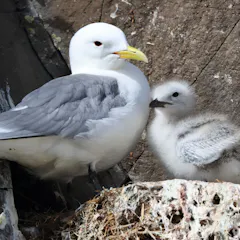
Like humans, seabirds seem less likely to part ways when they have relationships built on similar personalities.
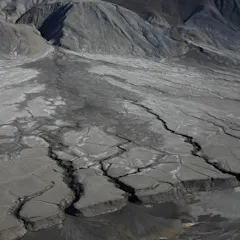
While a seemingly remote and unfamiliar landscape, the Arctic shares many surprising similarities with contemporary Canadian cityscapes.
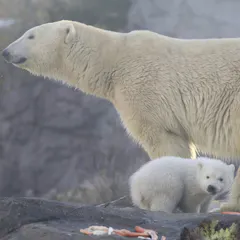
Comparison of modern and archaeological polar bears indicates that four millennia of food web stability has been disrupted by modern climate change.
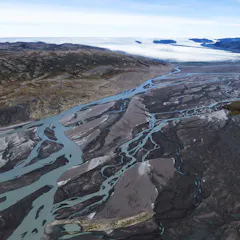
The soil was extracted during the Cold War from beneath one of the U.S military’s most unusual bases, then forgotten for decades.
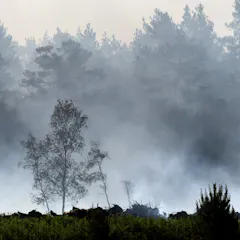
Large stretches of the Arctic are carbon-rich peat bogs. As the region warms and dries, lightning strikes can spark underground fires that can burn for years.
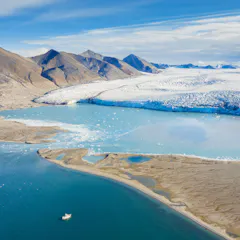
To fully understand the extent of climate-related dangers the Arctic – and our planet – is facing, we must focus on organisms too small to be seen with the naked eye.
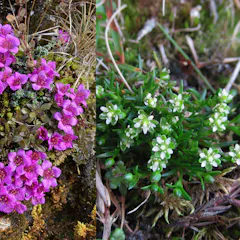
Why we need to pay more attention to these minute flowers and how they survive in some of the harshest places in the world.
Top contributors
-

Senior Research Fellow, Center for War Studies, University of Southern Denmark
-
Professor of Natural Resources and Environmental Science, University of Vermont
-
Alaska Climate Specialist, University of Alaska Fairbanks
-
Deputy Lead Scientist, National Snow and Ice Data Center (NSIDC), Cooperative Institute for Research in Environmental Sciences (CIRES), University of Colorado Boulder
-
Senior Scientist, National Snow and Ice Data Center (NSIDC), Cooperative Institute for Research in Environmental Sciences (CIRES), University of Colorado Boulder
-
Professor of Glaciology and Earth Observation, University of Bristol
-
Lecturer in International Studies, University of Washington
-
Associate Director, Climate System Research Center and Associate Professor of Climatology, UMass Amherst
-
Senior Lecturer in Physical Geography, Loughborough University
-
Professor and Director of the Centre for Defence and Security Studies, University of Manitoba
-
Chief Scientist, Australian Antarctic Division and Professor of Climate Science, Australian National University
-
Professeur associé/Adjunct professor, École nationale d'administration publique, École nationale d'administration publique (ENAP)
-
Distinguished Professor of Marine Science, King Abdullah University of Science and Technology
-
Research Professor of Geography and Director, National Snow and Ice Data Center, University of Colorado Boulder
-
Postdoctoral Fellow, Department of Biological Sciences, Simon Fraser University