
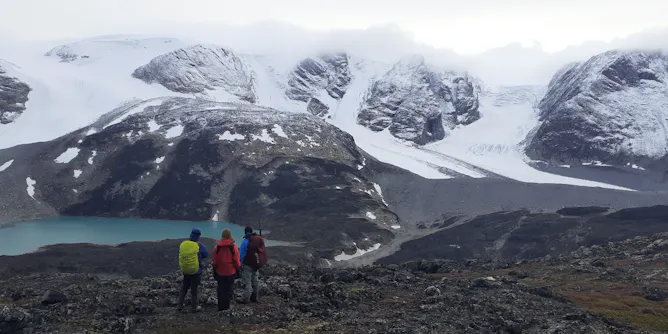
Snow loss is making the Arctic darker, reducing its ability to reflect solar radiation.
Articles on Arctic
Displaying 41 - 60 of 286 articles
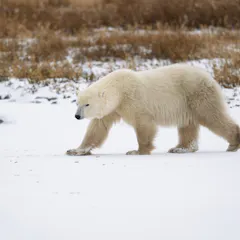
Polar bears are expected to become extinct but there are some signs their DNA is changing and they are adapting to new temperatures.
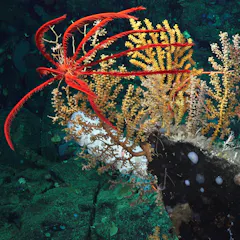
The momentum of COP30 and the first global agreement for marine areas beyond national jurisdiction creates a unique opportunity to further integrate the ocean, particularly the deep sea, into the climate agenda.

Del Toro’s film presents the Arctic of the 1800s as a barren wasteland, which overlooks the existence of Indigenous peoples who have lived there for millennia.

A polar scientist explains the changes hunters who rely on the ice are seeing off Utqiagvik, and how those shifts are echoed in satellite data and climate models.
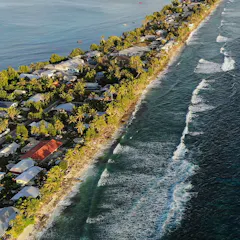
From rising global temperatures to the fast-warming Arctic, early climate models predicted the changes half a century ago.

More than 6,000 bone fragments were found and dated, giving a rare ecological snapshot of the last ice age.
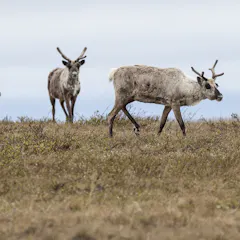
Caribou, migrating birds and many other types of wildlife rely on this expanse of wetlands and tundra. But about 5.5 million acres are being put up for oil and gas leases in March 2026.
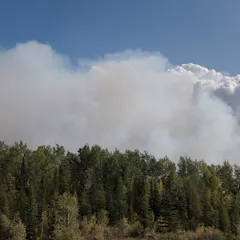
As global temperatures rise, wildfires are advancing further north. Many of them burn through peat, which contains massive amounts of carbon.

Bill 5 and C-5 threaten to bypass environmental safeguards and the duty to consult with Indigenous communities for the sake of short-term profits.

A recent survey of Canadian international relations experts finds they don’t always agree, but the majority view the U.S. as Canada’s most important region, with the Arctic gaining ground.

Using fast-evolving DNA-based techniques requires awareness, community buy-in, and, most importantly, trust and respect to tackle urgent challenges in the Arctic.

The polar regions are cold, remote and off-putting, but there are thousands of polar words in English – and not just words for snow and ice.
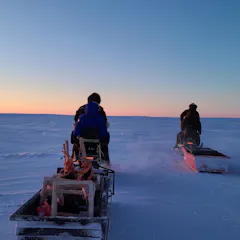
Scientists are pumping seawater onto existing ice to make it thicker and more resilient.
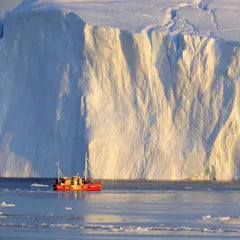
Melting ice in the Arctic is opening up shipping routes and making the region a valuable strategic asset.

Beyond how beautifully Elisapie interprets classic rock songs, with creative choices like using throat singing to cover Metallica, her music also brings the Inuktitut language to a wider audience.
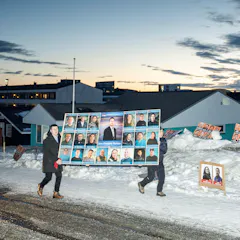
The new government is prioritising economic development and a bid to make their country a major player in the global supply chain.
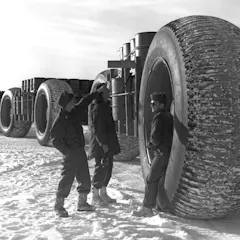
During the Cold War, the US poured support into Arctic military outposts and climate research amid fears of a Russian invasion. Climate change is still on the military’s radar as a threat multiplier.
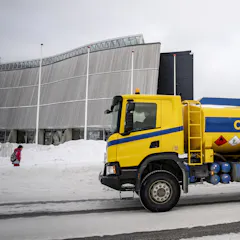
Fossil fuels are a dangerous way to secure the economic foundation of an independent Greenland.
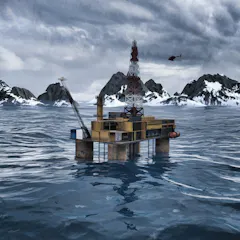
There are growing concerns that Russia and the US could be aiming to carve up Arctic mineral resources.
Top contributors
-

Senior Research Fellow, Center for War Studies, University of Southern Denmark
-
Professor of Natural Resources and Environmental Science, University of Vermont
-
Alaska Climate Specialist, University of Alaska Fairbanks
-
Deputy Lead Scientist, National Snow and Ice Data Center (NSIDC), Cooperative Institute for Research in Environmental Sciences (CIRES), University of Colorado Boulder
-
Senior Scientist, National Snow and Ice Data Center (NSIDC), Cooperative Institute for Research in Environmental Sciences (CIRES), University of Colorado Boulder
-
Professor of Glaciology and Earth Observation, University of Bristol
-
Lecturer in International Studies, University of Washington
-
Associate Director, Climate System Research Center and Associate Professor of Climatology, UMass Amherst
-
Senior Lecturer in Physical Geography, Loughborough University
-
Professor and Director of the Centre for Defence and Security Studies, University of Manitoba
-
Chief Scientist, Australian Antarctic Division and Professor of Climate Science, Australian National University
-
Professeur associé/Adjunct professor, École nationale d'administration publique, École nationale d'administration publique (ENAP)
-
Distinguished Professor of Marine Science, King Abdullah University of Science and Technology
-
Research Professor of Geography and Director, National Snow and Ice Data Center, University of Colorado Boulder
-
Postdoctoral Fellow, Department of Biological Sciences, Simon Fraser University