

A regional permafrost map can’t tell a builder if a particular foundation or road will survive as temperatures rise. Engineers need to see beneath the surface to find the weaknesses.
Articles on Permafrost
Displaying 1 - 20 of 47 articles

The abrupt disappearance of a lake is one clear sign that the ice below is melting, and a clue to wider permafrost changes.
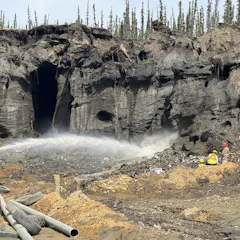
Permafrost holds an extraordinary molecular record of ancient life — and we are only now learning to read it, just as warming begins to erase it.

Permafrost supports homes and communities across Northern Canada. However, as the climate warms, melting permafrost poses significant challenges for infrastructure.
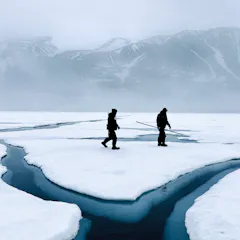
The 20th anniversary of the annual report tracks how sea ice, snow cover and many other vital signs of the Arctic have changed, and the impact that’s having on people and wildlife.
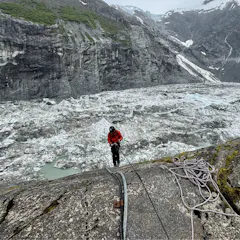
Suicide Basin, an ice-dammed lake on an arm of Mendenhall Glacier, has filled up with meltwater and sent destructive surges of water into Juneau for 3 straight summers.
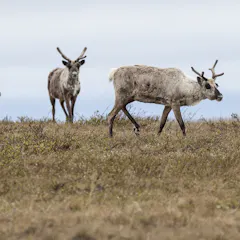
Caribou, migrating birds and many other types of wildlife rely on this expanse of wetlands and tundra. But about 5.5 million acres are being put up for oil and gas leases in March 2026.
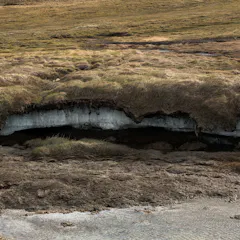
We wanted to find out how much carbon and nitrogen is being released from the northern permafrost. Here’s the region’s first full greenhouse gas budget covering CO₂, methane, and nitrous oxide.
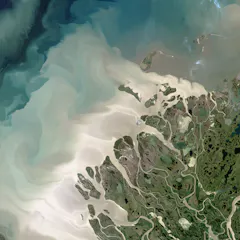
A new study shows how thawing permafrost and intensifying storms will change how water moves into and through Arctic rivers.
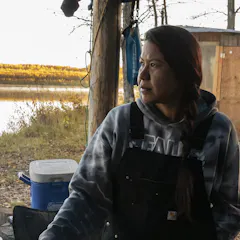
The early heat melted snow and warmed rivers, heating up the land and downstream ocean areas. The effects harmed salmon fisheries, melted sea ice and fueled widespread fires.
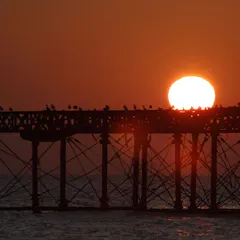
Releasing reflective particles into the upper atmosphere would help us tackle climate change – but it’s not without risk.
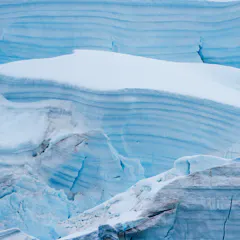
The world is on track to exceed 2°C warming within the next five years, with dire consequences for polar ice, mountain glaciers and permafrost – and human society.
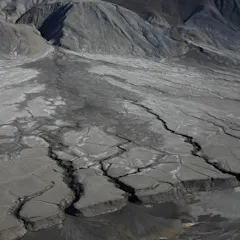
While a seemingly remote and unfamiliar landscape, the Arctic shares many surprising similarities with contemporary Canadian cityscapes.
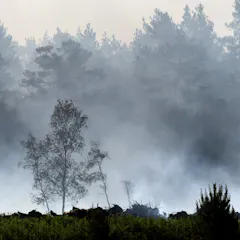
Large stretches of the Arctic are carbon-rich peat bogs. As the region warms and dries, lightning strikes can spark underground fires that can burn for years.
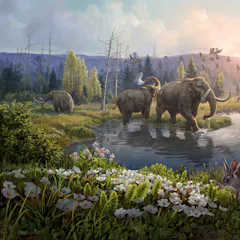
DNA frozen for 2 million years paints a picture of an extinct ecosystem.
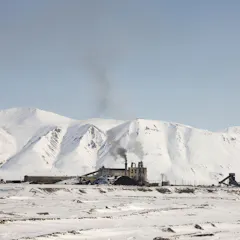
A Pandoravirus has been revived after remaining dormant in the Siberian permafrost for nearly 50,000 years.
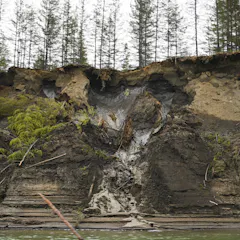
Ground is collapsing and massive lakes are draining in a matter of days. Thawing permafrost is having profound effects on the region and its infrastructure.
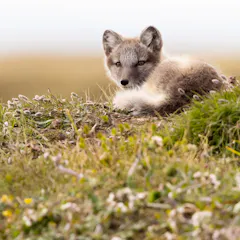
The growing season on the tundra is starting earlier as the planet warms, but the plants aren’t sequestering more carbon, a new study finds.
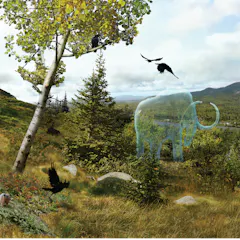
Permafrost in the Yukon is a treasure trove of ancient environmental DNA, but climate change threatens these rich historical archives.

Sea ice is thinning at an alarming rate. Snow is shifting to rain. And humans worldwide are increasingly feeling the impact of what happens in the seemingly distant Arctic.
Top contributors
-

Deputy Lead Scientist, National Snow and Ice Data Center (NSIDC), Cooperative Institute for Research in Environmental Sciences (CIRES), University of Colorado Boulder
-
Senior Scientist, National Snow and Ice Data Center (NSIDC), Cooperative Institute for Research in Environmental Sciences (CIRES), University of Colorado Boulder
-
Research Professor of Geography and Director, National Snow and Ice Data Center, University of Colorado Boulder
-
Alaska Climate Specialist, University of Alaska Fairbanks
-
Professor, Physical Geography, Stockholm University
-
Scientist, Ancient DNA Lab (Biodiversity Genomics division) at the Hakai Institute and Adjunct Assistant Professor, Anthropology, McMaster University
-
Professor of Glaciology and Earth Observation, University of Bristol
-
Associate Director, Climate System Research Center and Associate Professor of Climatology, UMass Amherst
-
Senior Lecturer, Queen's University Belfast
-
Professor Emeritus of Climate and Space Sciences and Engineering, University of Michigan
-
Senior Lecturer, Geography and Environmental Sciences, Northumbria University, Newcastle
-
Lecturer in Biogeochemical Cycles, University of Liverpool
-
-
Professor, Department of Civil Engineering, Queen's University, Ontario
-
Adjunct Professor, Charles Sturt University
