
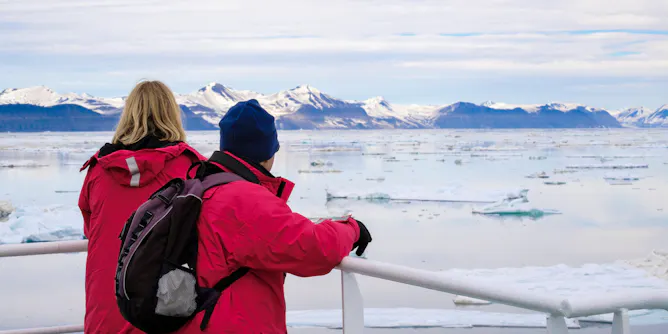
Arctic sea ice algae contaminated with microplastics have serious consequences for ecosystems and the climate.
Articles on Arctic
Displaying 101 - 120 of 286 articles
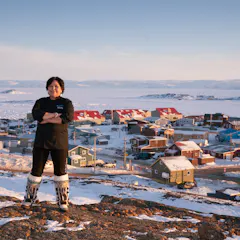
Indigenous women are using sustainable tourism to overcome generational challenges and as an entrepreneurial means of generating income.
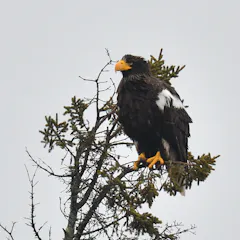
A Steller’s sea eagle, native to the Asian Arctic, has traveled across North America since 2021. A scholar questions whether the bird is lost – and how well humans really understand animals’ actions.
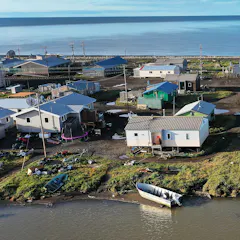
In the years since the Supreme Court rejected Kivalina’s appeal on May 20, 2013, the community’s search and rescue team has faced increasing climate disasters: ‘We just can’t adapt this fast.’

By analyzing small samples of killer whale fat, scientists can learn about the diets of different killer whale populations. This has implications for our understanding of changing ecosystems.
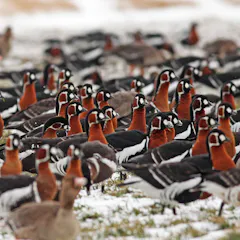
Russia has vast natural resources and is involved in many conservation efforts. Its diplomatic isolation as a result of the war in Ukraine is making it harder to protect many wild species and places.

Atmospheric rivers can melt fragile new sea ice. When these storms arrive in waves, the sea ice doesn’t have a chance to recover.

Close relatives of primates adapted to life in the High Arctic 52 million years ago – this may offer insight into future changes in the Arctic.

NORAD is having a moment in the wake of growing tensions between the United States, China and Russia. Will it last?
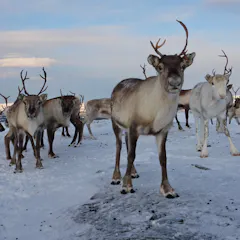
The annual report is also a reminder that what happens in the Arctic affects the rest of the world.
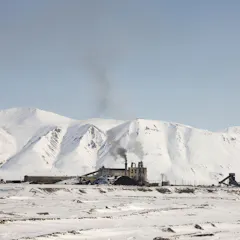
A Pandoravirus has been revived after remaining dormant in the Siberian permafrost for nearly 50,000 years.
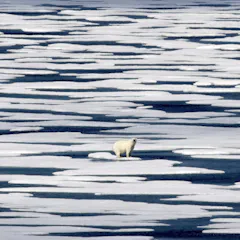
Transnational Arctic co-operation has stalled due to Russia’s invasion of Ukraine. Here’s what will be required to get it back on track.
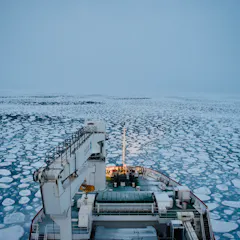
The place where oceans turn into ice holds the key to understanding some of the complex interactions of Earth’s climate. Thankfully, we’re making progress.

The new discovery echoes a mission in 1931, when a five-day zeppelin flight sent robots to the stratosphere and redrew the maps of the high Arctic.
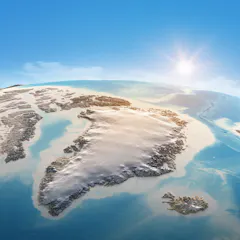
Here are two possible forms of regional geoengineering.
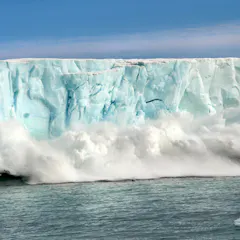
The Arctic is on average around 3°C warmer than it was in 1980.

Polar bears are increasingly seeking sustenance in human trash because of melting sea ice and a loss of hunting opportunities. The result is a rise in human-bear conflict – and dead bears.
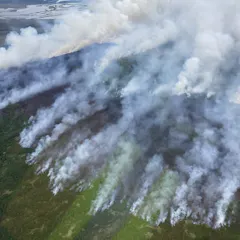
Fires today are hotter and more destructive, thanks in part to a warming climate.

The Danish drama has become popular around the globe.
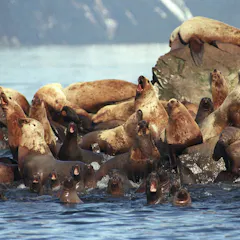
ToxChips study the changes in the DNA of animals exposed to contaminants, like those found in oil spills.
Top contributors
-

Senior Research Fellow, Center for War Studies, University of Southern Denmark
-
Professor of Natural Resources and Environmental Science, University of Vermont
-
Alaska Climate Specialist, University of Alaska Fairbanks
-
Deputy Lead Scientist, National Snow and Ice Data Center (NSIDC), Cooperative Institute for Research in Environmental Sciences (CIRES), University of Colorado Boulder
-
Senior Scientist, National Snow and Ice Data Center (NSIDC), Cooperative Institute for Research in Environmental Sciences (CIRES), University of Colorado Boulder
-
Professor of Glaciology and Earth Observation, University of Bristol
-
Lecturer in International Studies, University of Washington
-
Associate Director, Climate System Research Center and Associate Professor of Climatology, UMass Amherst
-
Senior Lecturer in Physical Geography, Loughborough University
-
Professor and Director of the Centre for Defence and Security Studies, University of Manitoba
-
Chief Scientist, Australian Antarctic Division and Professor of Climate Science, Australian National University
-
Professeur associé/Adjunct professor, École nationale d'administration publique, École nationale d'administration publique (ENAP)
-
Distinguished Professor of Marine Science, King Abdullah University of Science and Technology
-
Research Professor of Geography and Director, National Snow and Ice Data Center, University of Colorado Boulder
-
Postdoctoral Fellow, Department of Biological Sciences, Simon Fraser University