
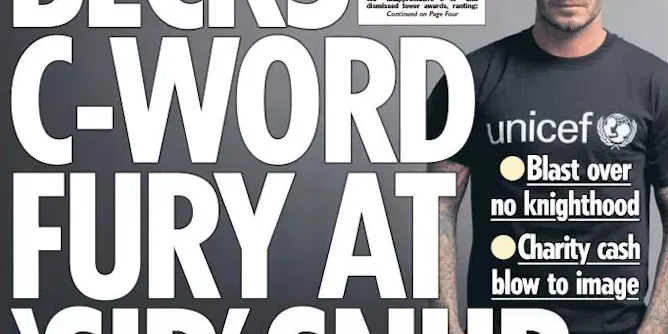
He’s one of Britain’s biggest brands – it’ll take more than a few grumpy messages to spoil that.
Articles on Advertising
Displaying 321 - 340 of 474 articles

Alcohol companies used controversial marketing practices in their Super Bowl commercials – including using animals and themes that are appealing to youth.

You might think you’re anonymous when you’re browsing the web. But a new study shows that browsing history can often be tied to your real-world identity.

Ratings across a number of sports are in decline. But this doesn’t spell the end of live sport, rather it shows why we should strive to keep it on free TV.

New research shows how marketers get away with making their food look and sound healthier than it really is.

From women in the kitchen to Santa’s huge ego, Christmas ads are still ridden with conservative gender messaging.

The science of making us watch … and then spend.

Using intellectual property laws to try to shut down Mark Rogers’ ‘Save Medicare’ website shows how these laws serve to restrict free speech and advance government privatisation agendas.

Campaign pits power of press against social media activism.

People with anosmia have no sense of smell, and there is no cure for the condition.
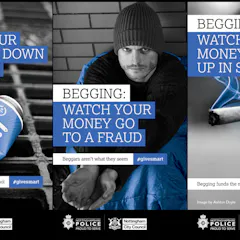
Nottingham City Council are in trouble over a series of anti-begging posters – it’s important to know if their claims stack up.

It has long been claimed that subliminal messages work. Now two studies have set the record straight.

When the inevitable backlash happens, little changes.

Social media feedback has made businesses think twice about what makes a good customer.

TV talk and makeover shows have a preference for spectacle and conflict. But new collaborative models may be the future.

Marketers take advantage of the fact that children sometimes can’t recognise the difference between product placement and advertising.
The food industry says it wants to help in the fight against obesity – but it needs regulation.

It’s the adverts we notice least which work the most.

Eye-tracking technology helps us understand how people interact with their environment. This can improve policy and design, but can also be a tool for surveillance and control.
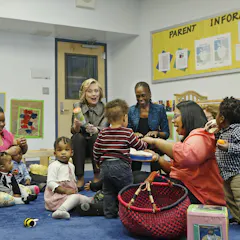
Both Trump and Clinton’s reference to children in their campaigns could be cause for concern.
Top contributors
-

Director of Undergraduate Studies, School of Journalism, Media and Cultural Studies, Cardiff University
-
Associate Professor in Marketing, Director Centre for Organisations and Social Change, RMIT University
-
Professor, University of Technology Sydney
-
Senior Lecturer at Westminster School of Media and Communication, University of Westminster
-
Director of UWA Centre for Software Practice, The University of Western Australia
-
Senior Lecturer in Marketing and Advertising, University of Portsmouth
-
Professor of Marketing and Consumer Behaviour, Queensland University of Technology
-
Emeritus Professor of Marketing, University of Birmingham
-
Lecturer in Marketing, Research School of Management, Australian National University
-
Senior Lecturer in Marketing, University of Nottingham
-
Lecturer in Politics, The University of Melbourne
-
Professor of AfroEurasian Sport, EM Lyon Business School
-
Associate Professor of Marketing, Tasmanian School of Business and Economics, University of Tasmania
-
Associate Professor of Marketing, Dalhousie University
-
Professor of Technology & Society, Bangor University