

By expanding our understanding of streets and enhancing their design, every street corner could become a space to socialise, to exercise, to play, or to trade.
Articles on Urban design
Displaying 121 - 140 of 218 articles
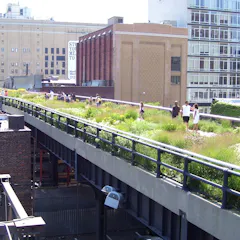
If the nature we desire is, in fact, its expression as untamed wildness, then we should turn to the creativity of artists as well as urban designers when building our cities.
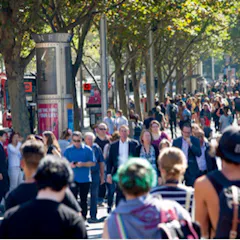
The vitality that defines central Melbourne today did not emerge overnight. Rather than being born of one grand vision, it’s the result of many astute, incremental changes that revitalised the city.
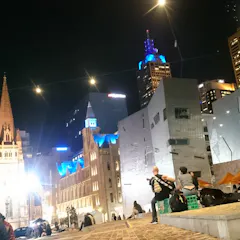
It took Melbourne a very long time to create a civic square that served the citizens rather than commerce. Now an Apple store is to be built there, unless parliament supports a disallowance motion.
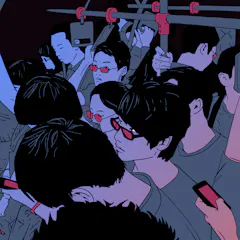
Big data provides a rich picture of the physical city, but it won’t tell us much about the social city – that’s where agent-based modelling comes in.
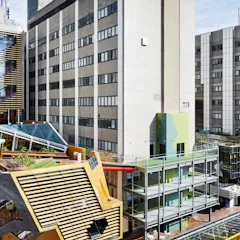
European ideas of the campus as a place apart shaped Australia’s “sandstone” universities. Now universities are adopting urban regeneration strategies, bringing the city to the campus and vice versa.

Toronto has entered a joint venture with a Google sister company to create a high-tech urban development area. The goal is to ‘re-imagine cities from the internet up’ – Google’s internet, of course.
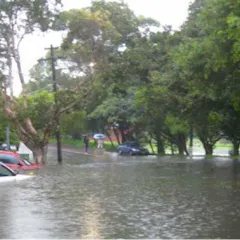
A massive residential development in a flood-prone inner-city suburb sounds like a recipe for disaster. But good urban design can deliver higher density and reduce the flood risk.
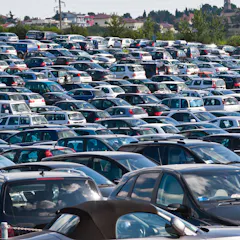
Cities around the world are starting to rethink the vast areas of land set aside for parking. The convergence of several trends likely will mean this space becomes available for other uses.
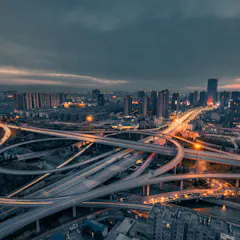
Choreographers could offer engineers tools to stimulate new ideas in city-making.
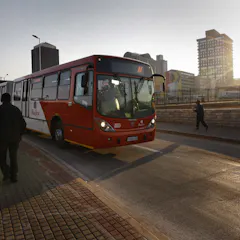
South Africa needs to review its approach to rolling out Bus Rapid Transit systems as the current model is proving to be too expensive and unsustainable.
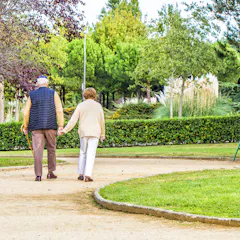
Our ageing population presents several social and economic challenges, particularly for the health sector. Physical activity can tackle many of these.
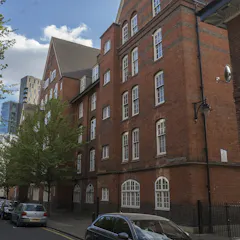
The physical segregation of cities has a crucial role in poverty and access to public services.
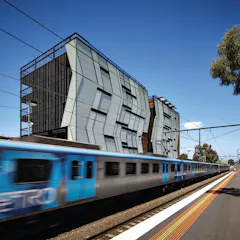
New South Wales is the only state that has made meaningful progress on legislation and enforcement of standards capable of creating a sustainable built environment.
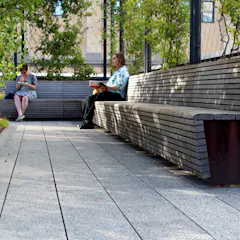
With cities becoming more dense and housing more crowded, people rely more than ever on well-designed public spaces, so why hasn’t the furniture changed with the times?
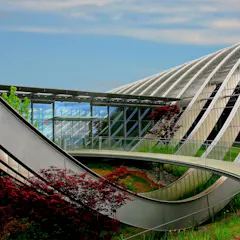
By putting the users of buildings – people – at the centre of the process of designing buildings and infrastructure, we can create healthier, more human-centred spaces.

Successful parks and urban green spaces encourage us to linger, to rest, to walk for longer. That, in turn, provides the time to maximise the restorative mental benefits.
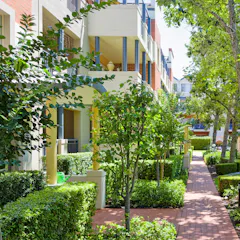
Being crowded into poor-quality high-density units harms residents’ health, but design features that are known to promote wellbeing can make a big difference to the lives of low-income households.

Despite the rise of feminism, strip clubs and other ‘sexual entertainment’ businesses have proliferated in our cities. And women are feeling the harmful impacts of the industry’s presence.

While many talk about 30-minute cities, some aim for residents to be able to get to most services within 20 minutes. But cities like Melbourne have an awful lot of work to do to achieve their goal.
Top contributors
-

Director, XYX Lab, and Professor, Faculty of Art, Design and Architecture, Monash University
-
Professor of Architecture and Urban Design, The University of Melbourne
-
Lecturer and Researcher, Urban Design and Town Planning, University of the Sunshine Coast
-
Urban Designer and Sessional Lecturer, La Trobe University
-
Senior Lecturer in Industrial Design, UNSW
-
Professor, Social Design, Faculty of Design and Society, University of Technology Sydney
-
Professor of Planning and Associate Director, City Futures Research Centre, UNSW
-
Senior Lecturer in Urban Planning, University of Auckland, Waipapa Taumata Rau
-
Senior Lecturer in Urban Planning and Urban Design, The University of Melbourne
-
Research assistant, Western Sydney University, UNSW
-
PhD Candidate and Sessional Tutor, The University of Melbourne
-
Lecturer, Monash University, Monash University
-
Associate Professor, University of the Sunshine Coast
-
Professor in Architecture, Griffith University
-
Vice Chancellor’s Senior Research Fellow, School of Global, Urban and Social Studies, RMIT University