
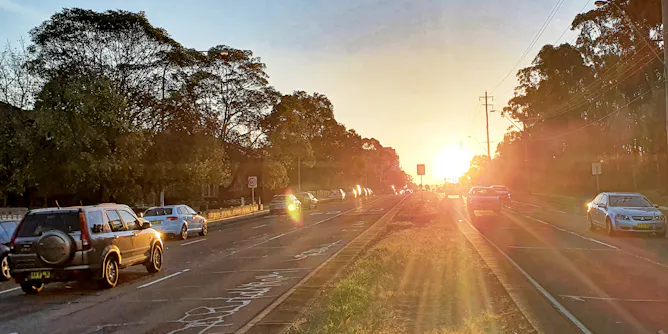
NSW is developing a comprehensive new planning policy with the goal of creating healthy places. A new study finds those people who work as placemakers want these goals embedded in laws and budgets.
Articles on Urban design
Displaying 61 - 80 of 218 articles
The earth our towns and cities are built on is teeming with potential. It is under threat too
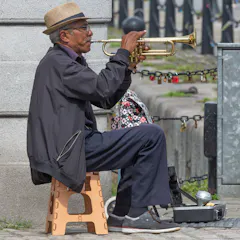
Performances could return sooner than planned if cities are ready to adapt.
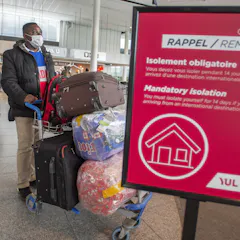
Our buildings and cities were not designed to handle a pandemic. But countries around the world are coming up with design ideas, some high-tech and some more basic, to reduce the infection risks.

As our cities get hotter, rebuilding whole suburbs better suited to the heat is not an option. Instead, we can draw from the best examples of how to adapt neighbourhoods and behaviours.

A study of preschoolers’ understanding of their urban environments suggests their voices should be heard more in city planning.

Valuing children’s views could lead to better urban space for everyone.
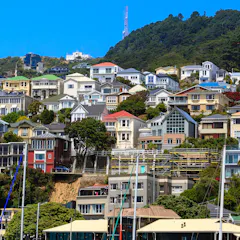
Proposals to improve the capital’s urban design and density must also take account of the city’s unique streetscapes.

Lowering urban density to protect against the coronavirus would be a misguided response. Density is not a key driver of infection, and keeps people active and healthy.
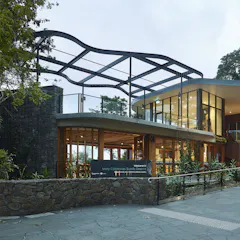
The council, developers, architects and the local community got together to set the principles of what they consider good design in this fast-growing region.
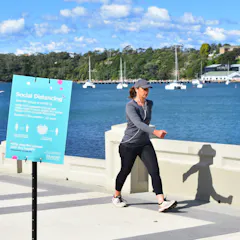
The Gender Equality Act in Victoria creates an obligation to understand how gender affects needs and experiences, and to design, assess and manage public spaces so women feel safe in those places.

First trains, then cars and, now, COVID-19 have all spurred New York to reimagine how its scarce space should be used – and what residents need to survive.

A friendly wave from a neighbour is one of life’s incidental but invaluable interactions. Porches, balconies, front yards and footpaths have proven their importance as cogs of neighbourhood life.
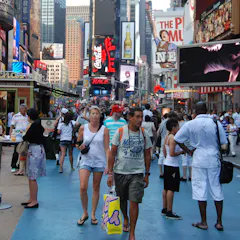
The internal density and layout of buildings are key factors in COVID-19 transmission risk. This is not an argument against high-density cities, some of which have successfully contained the virus.

Instead of isolating and excluding older Australians, communities that are designed to embrace the growing numbers of Australians over 65 will have all kinds of benefits for Australia.

When urban spaces work well they are highly social spaces. How do we safely manage them and people’s fears about mingling when ‘being together but apart’ is the norm?

Temporary use of land and buildings plays a role in the aftermath of crisis.
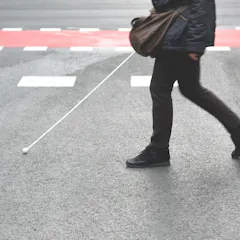
Urban safety is as much about inclusion and belonging as it is about better lighting and CCTV.

The current outbreak of COVID-19 underscores the need to study urban growth to understand the spread and control of future epidemics.
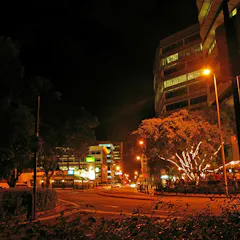
‘Smart cities’, featuring networks of automatic lights, video cameras and environmental sensors, have been hailed as an enhancement to urban life. But they are also tools of surveillance and control.
Top contributors
-

Director, XYX Lab, and Professor, Faculty of Art, Design and Architecture, Monash University
-
Professor of Architecture and Urban Design, The University of Melbourne
-
Lecturer and Researcher, Urban Design and Town Planning, University of the Sunshine Coast
-
Urban Designer and Sessional Lecturer, La Trobe University
-
Senior Lecturer in Industrial Design, UNSW
-
Professor, Social Design, Faculty of Design and Society, University of Technology Sydney
-
Professor of Planning and Associate Director, City Futures Research Centre, UNSW
-
Senior Lecturer in Urban Planning, University of Auckland, Waipapa Taumata Rau
-
Senior Lecturer in Urban Planning and Urban Design, The University of Melbourne
-
Research assistant, Western Sydney University, UNSW
-
PhD Candidate and Sessional Tutor, The University of Melbourne
-
Lecturer, Monash University, Monash University
-
Associate Professor, University of the Sunshine Coast
-
Professor in Architecture, Griffith University
-
Vice Chancellor’s Senior Research Fellow, School of Global, Urban and Social Studies, RMIT University