
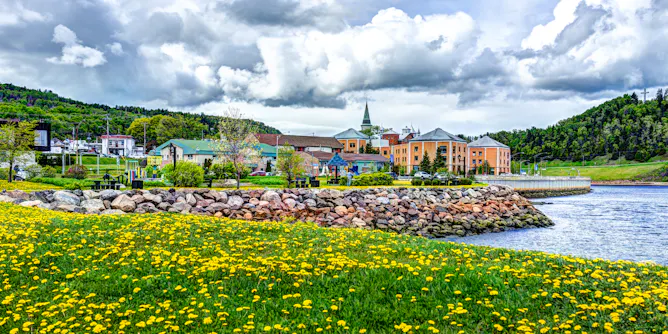
The sustainable and inclusive development of the St. Lawrence River is essential. A prolonged laissez-faire attitude will have harmful consequences on people and the environment.
Articles on Urban design
Displaying 41 - 60 of 218 articles
My research shows how urban design can make it harder for women in some countries to make sustainable choices.
Cities are defined as much by their buildings as what people do in between them. Designing them comes with great responsibility.
The debate over new urban density rules is further dividing an already divided city. The challenge for Auckland is to stop social and spatial fragmentation being baked into its character forever.
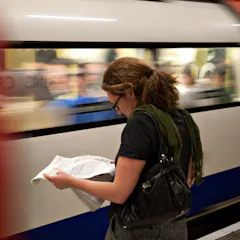
Research shows apps designed to make journeys more environmentally friendly aren’t considering women’s transport needs.
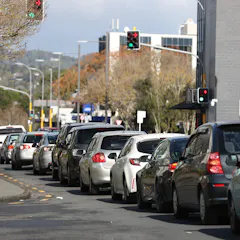
How we design our cities can make it harder to be healthy. City planners are now able to quantify the different elements that are affecting our health and well-being.
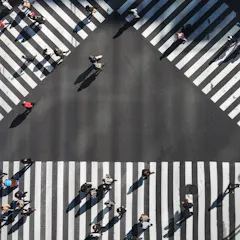
There is a reason your body draws you back to the same place again and again. It’s not simply habit, it is also the ways a place makes our body feel.

important decisions must be made today for urban greening programs to succeed in a warmer world.
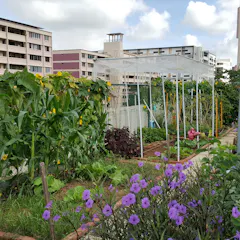
For a long time the roof has been an afterthought in urban design, but the future is definitely looking up.
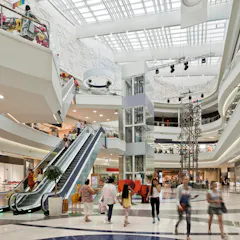
If you’re stuck in mall traffic this holiday season, spare a thought for Victor Gruen, whose grand urban vision turned into today’s suburban reality.

In cities across Europe, 62% of the population doesn’t have access to the amount of nature the World Health Organisation recommends.
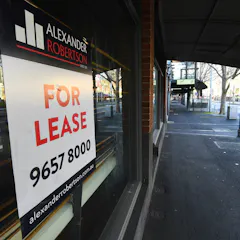
City centres have been hit hard by lockdown measures - but can artists and entrepreneurs really breathe life into the space?

99% of people below the floors where the planes struck the twin towers evacuated successfully, although their journey was fraught with danger. Their stories have influenced today’s skyscraper designs.

The research, focused on the Jordan Springs estate in Western Sydney, found houses were built close together and made from materials which exacerbate hot weather.
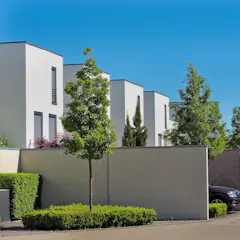
Generic urban landscape design is damaging for people and nature: an ecomimicry approach instead encourages nature to flourish even in cities.
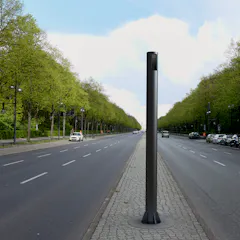
Smart street furniture can do a lot of things at once. Some of these functions offer the public clear benefits, but the data collection and surveillance capabilities raise a number of concerns.
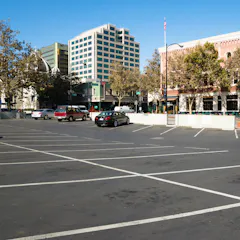
When Buffalo, New York, changed its zoning code so that developers no longer had to provide specified amounts of parking, space was freed up for public transit and people.
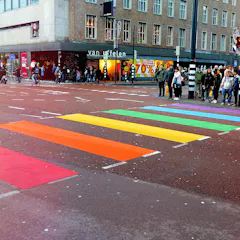
The gaybourhood gave LGBTQ+ communities the space they urgently needed to simply be themselves. But our cities should be built in such a way that everyone feels at home

The utopian 20th-century model of a modern city – one that has been replicated around the world – is being exposed as unsuitable for adapting to the pace of change in the 21st century.

Roadsides have long been reserved for parking cars, but the pandemic led to many experiments with other ways of using scarce and valuable public space. We can put it to better and more flexible uses.
Top contributors
-

Director, XYX Lab, and Professor, Faculty of Art, Design and Architecture, Monash University
-
Professor of Architecture and Urban Design, The University of Melbourne
-
Lecturer and Researcher, Urban Design and Town Planning, University of the Sunshine Coast
-
Urban Designer and Sessional Lecturer, La Trobe University
-
Senior Lecturer in Industrial Design, UNSW
-
Professor, Social Design, Faculty of Design and Society, University of Technology Sydney
-
Professor of Planning and Associate Director, City Futures Research Centre, UNSW
-
Senior Lecturer in Urban Planning, University of Auckland, Waipapa Taumata Rau
-
Senior Lecturer in Urban Planning and Urban Design, The University of Melbourne
-
Research assistant, Western Sydney University, UNSW
-
PhD Candidate and Sessional Tutor, The University of Melbourne
-
Lecturer, Monash University, Monash University
-
Associate Professor, University of the Sunshine Coast
-
Professor in Architecture, Griffith University
-
Vice Chancellor’s Senior Research Fellow, School of Global, Urban and Social Studies, RMIT University