
Research shows planners and built environment professionals have surprisingly poor knowledge about how cities might harm mental health. The good news is that simple steps can make a big difference.
Articles on Urban design
Displaying 141 - 160 of 218 articles
Many new housing developments are being built along busy roads and rail lines, but lack design features that would reduce occupants’ exposure to harmful traffic pollution.
Most women feel unsafe when using public transport. Instead of gender segregation, researchers suggest gender-sensitive design could be a better way to ensure safety for all.
Extreme heat divides people from the environment and from each other. So with the rapid densification of our cities, what kind of legacies are we building for future generations?
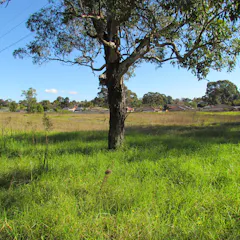
New research shows many good intentions for creating urban environments that promote good health were not carried through. The solutions start with engaging more closely with residents themselves.
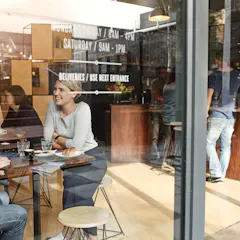
The ubiquitous cafes across Australian cities attract locals and tourists alike, but surely there’s more to thriving neighbourhoods than a flat white.
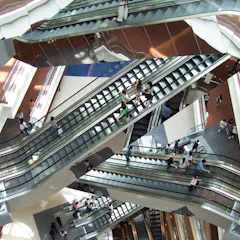
The mall’s inventor, Victor Gruen, envisioned thriving hubs of civic activity, rather than bland, asphalt-enclosed shopping centers. Is his original vision now being realized – or further corrupted?

Urban bushland has health benefits beyond being a great place to go for a walk. Planners need to consider these when making decisions about the future of our cities.
There are very few approaches that examine all aspects of the complexity of urban design and development. Ergonomics, human factors and sociotechnical systems methods offer a way forward.
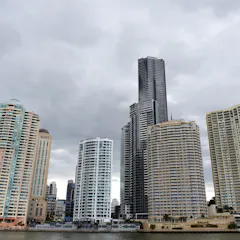
Research suggests stakeholders’ understandings of urban consolidation vary. And they often subvert policies to suit their own ends.
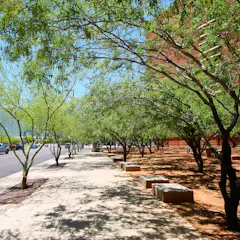
Ambience is a result of a whole range of processes and physical objects. We can use a systems approach to examine and describe what needs to be done to achieve such a subjective quality in a street.
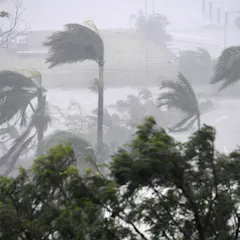
Cities would suffer much less damage and avoid the huge financial losses if we designed them to cope with the effects of cyclones.

Where do women feel safe - or unsafe - in city streets? A new research project has unearthed some disturbing responses.
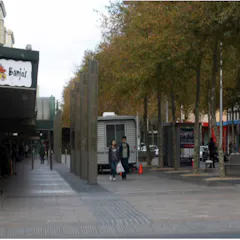
Redesigning spaces of conflict starts with creating life on the edges. Geelong offers contrasting examples of city centre spaces: one with problems inherent in its design and a nearby one that works.
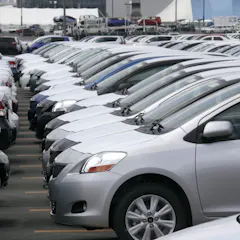
Think you couldn’t possibly do without your car? There are more options than you might think.
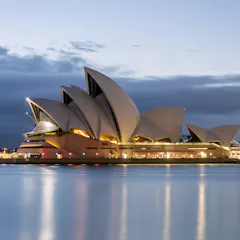
Construction should have stopped once the roofs were erected. Any citizen could then have walked up to the terraced amphitheatre, sat down and gazed back at the country from this shrine to the nation.

The Melbourne suburb of Richmond is prime inner-city real estate, but the community is paying a price for redevelopment that jars with the existing neighbourhood.

From high chairs in public bathrooms to handbag baskets in cafes, Japan is a considerate place. Australia can learn from a society where material culture acts as a reminder to be aware of the needs of others.
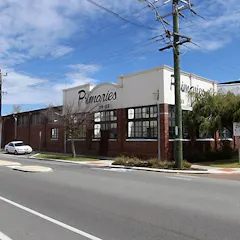
Exceptional projects can emerge when regulations are sensibly relaxed due to context. A Fremantle project is a model of progressive higher-density possibilities resulting from flexible planning rules.
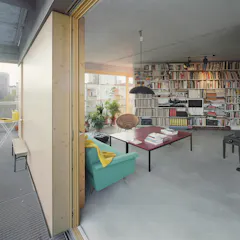
Citizens can switch from being consumers to pioneers who drive new designs for living. The German baugruppe model is a leading example.
Top contributors
-

Director, XYX Lab, and Professor, Faculty of Art, Design and Architecture, Monash University
-
Professor of Architecture and Urban Design, The University of Melbourne
-
Lecturer and Researcher, Urban Design and Town Planning, University of the Sunshine Coast
-
Urban Designer and Sessional Lecturer, La Trobe University
-
Senior Lecturer in Industrial Design, UNSW
-
Professor, Social Design, Faculty of Design and Society, University of Technology Sydney
-
Professor of Planning and Associate Director, City Futures Research Centre, UNSW
-
Senior Lecturer in Urban Planning, University of Auckland, Waipapa Taumata Rau
-
Senior Lecturer in Urban Planning and Urban Design, The University of Melbourne
-
Research assistant, Western Sydney University, UNSW
-
PhD Candidate and Sessional Tutor, The University of Melbourne
-
Lecturer, Monash University, Monash University
-
Associate Professor, University of the Sunshine Coast
-
Professor in Architecture, Griffith University
-
Vice Chancellor’s Senior Research Fellow, School of Global, Urban and Social Studies, RMIT University