
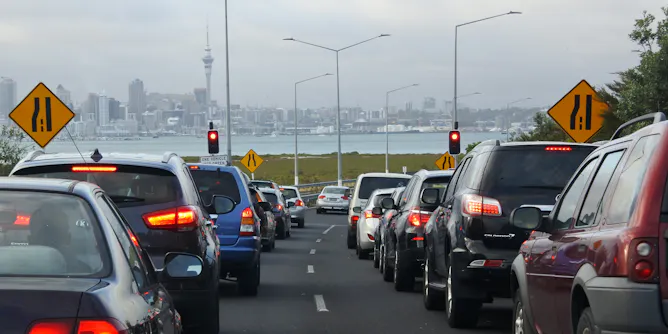
New research highlights the overlooked role of road dust in Auckland’s air pollution, with heavy vehicles having an outsized impact.
Articles on Transport policy
Displaying 1 - 20 of 134 articles
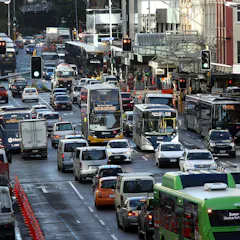
Auckland has settled on how congestion charging could work. But overseas experience shows the alternatives to driving are just as important.
One party wants to lower fares. The other wants more services. Neither proposal represents a serious plan to address decades of public transport underfunding.
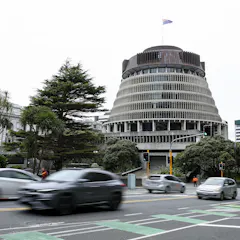
An analysis of former transport ministers’ diaries shows which interest groups get face-to-face time with decision-makers – and which voices are largely absent.
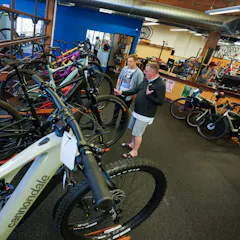
Rebates may well increase ownership but won’t overcome the main obstacles to riding e-bikes and e-scooters, which are lack of infrastructure and concerns about safety.

Despite loud calls for tough policing of e-scooters and even outright bans, the problems can be better managed with technology and public education.

The High Speed Rail Authority has publicly outlined plans that allow for some optimism that Australia could have these trains in the late 2030s.
There’s a risk that the belief that electric vehicles are much greener results in owners driving more often or faster, or using cars instead of public transport.
Shared e-scooters are much more regulated and monitored than privately owned e-scooters, which are likely to pose greater risks as a result.
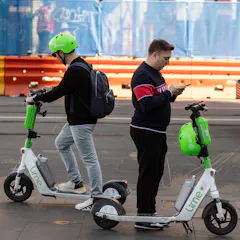
The parking of e-scooters is a source of fierce debate, but technology offers a solution to control the problem.
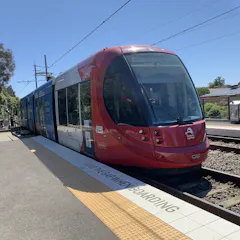
Between them, the Queensland and ACT trials of almost free and free public transport could change how fares are set in Australia.
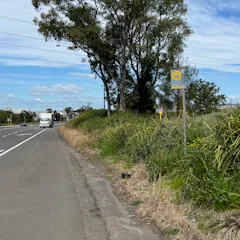
Upgrading Sydney’s bus stops would greatly improve access, equity, comfort and dignity for public transport users – at much less cost than the new rail project.

Shared e-scooters have safety features that private e-scooters lack, but accident data don’t distinguish between them, nor tell us about the economic and environmental harms of other transport modes.
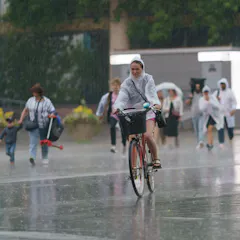
Male cyclists greatly outnumber female cyclists in Australia. New research points to ways to close the gap.
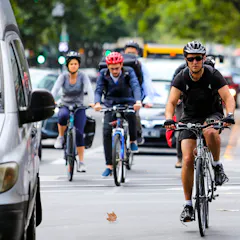
We want healthy, liveable cities and to cut emissions to net zero. Getting more people to use bicycles instead of cars will go a long way towards achieving these goals.
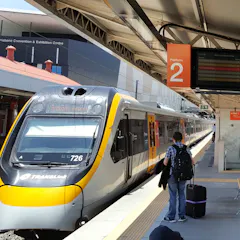
Free or heavily discounted public transport can help achieve social goals. But governments must carefully navigate equity considerations.

Low-income customers who qualify for subsidised rates are five times more likely to use shared e-scooters and e-bikes for daily travel. People with disabilities also value them.

Brisbane was the first Australian city to accept rideshare e-scooters. After some growing pains, residents, visitors and the city itself are enjoying the benefits, a new study finds.

The National Party’s transport policy risks locking the country into a car-dependent, high-carbon future.
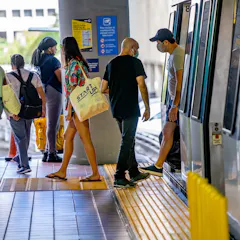
Around the world, very few public transport agencies make money, while ride-sharing companies are making huge losses. So why partner up, and how do those partnerships work?
Top contributors
-

Transport and Cities Program Director, Grattan Institute
-
Honorary Professor of Planning, The University of Queensland
-
Associate Professor in Urban Planning, The University of Queensland
-
Associate Professor of Urban Planning, The University of Melbourne
-
Senior Lecturer in Urbanism, University of Sydney
-
Professor of Human Geography, The University of Queensland
-
Professor and Director, Institute of Transport and Logistics Studies, University of Sydney
-
Professor of Transport Technology and Sustainability, Swinburne University of Technology
-
Professor of Sustainability, Curtin University
-
Professor of Urban Policy and Director, Urban Futures Enabling Impact Platform, RMIT University
-
Associate, Grattan Institute
-
Honorary Principal Fellow, University of Wollongong
-
Adjunct Professor, School of Engineering and Built Environment, Griffith University
-
Senior Research Fellow, School of Global, Urban and Social Studies, RMIT University
-
Postdoctoral Research Associate, Faculty of Architecture, Building and Planning, University of Sydney