

Roads versus public transport: for decades, these have been the battle lines in debates over transport in our cities. But a revolution in mobility is under way that will transform our thinking.
Articles on Transport policy
Displaying 121 - 134 of 134 articles

Transport infrastructure projects are conceived, planned and assessed in a way that makes it difficult to properly consider their major public health impacts.
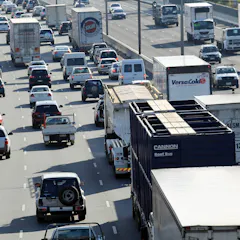
Most enlightened governments have realised the focus on private cars at the expense of active and public transport is not viable.
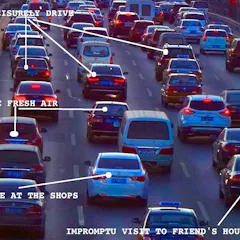
Charging people to drive has been the dream of policy wonks – serving politicians tend to see it as political poison. So when federal minister Paul Fletcher raises it, that’s a step forward.
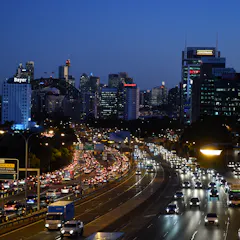
The Australian Automobile Association said that a new report showed that “the average Australian family is spending up to $22,000 every year to get around.” Is that accurate?
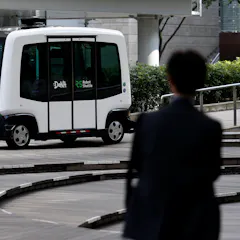
New technologies do not exist in a vacuum. To succeed, new transport technology needs to match the ways we want to move around cities and be accommodated by laws and regulations.
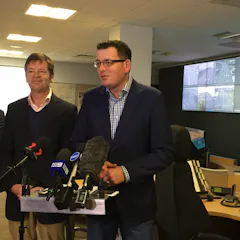
It’s a project that creates benefits for Melbourne’s western suburbs and the state as a whole. But the inner-city elite don’t like it and recent experience suggests their opinion holds sway.
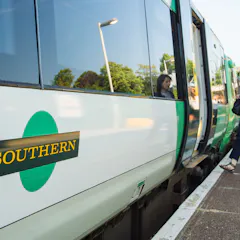
The government knows the system is a shambles – but refuses to admit that rail privatisation has failed.
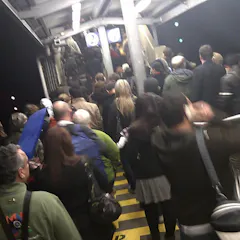
Using elements of game play, we can create incentives for people to change how and when they make various transport choices in ways that enable the whole system to work better.
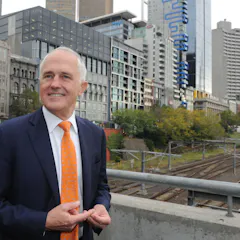
The budget paints a picture of higher debt, little relief for growing cities crying out for infrastructure investment, and no detail of how City Deals might work to fix this.

If the system was fixed project funding would be more likely to be based on merit.
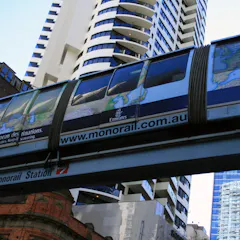
Infrastructure Australia’s latest report is substantial but, critically, it fails to incorporate the transport thinking needed to develop more compact cities that work better for everyone.
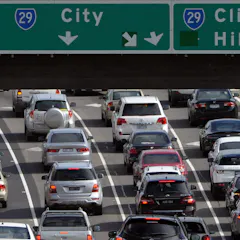
On average, people won’t accept a commuting time of more than an hour. As cities grow ever bigger, new road projects can’t achieve this, yet policymakers still rely on modelling that defies evidence.
Allowing infrastructure to take over the job of keeping our vehicles running sends us further down a troublesome road.
Top contributors
-

Transport and Cities Program Director, Grattan Institute
-
Honorary Professor of Planning, The University of Queensland
-
Associate Professor in Urban Planning, The University of Queensland
-
Associate Professor of Urban Planning, The University of Melbourne
-
Senior Lecturer in Urbanism, University of Sydney
-
Professor of Human Geography, The University of Queensland
-
Professor and Director, Institute of Transport and Logistics Studies, University of Sydney
-
Professor of Transport Technology and Sustainability, Swinburne University of Technology
-
Professor of Sustainability, Curtin University
-
Professor of Urban Policy and Director, Urban Futures Enabling Impact Platform, RMIT University
-
Associate, Grattan Institute
-
Honorary Principal Fellow, University of Wollongong
-
Adjunct Professor, School of Engineering and Built Environment, Griffith University
-
Senior Research Fellow, School of Global, Urban and Social Studies, RMIT University
-
Postdoctoral Research Associate, Faculty of Architecture, Building and Planning, University of Sydney